The User that Copilot Health Forgot

The User that Copilot Health Forgot

Caregiving Health Tech

Half the people logging into patient portals aren’t patients. They’re caregivers, and the AI being built on top of those systems doesn’t know that.

In March 2026 I attended a Microsoft Copilot Health demo and a patient-centered AI panel hosted by the National Health Council. The technology was impressive. The conversation was thoughtful. And the caregiver — the person managing someone else’s health, signing forms under pressure, and navigating systems that were never built for them…

… was invisible.

This article reflects what I think needs to change before we build the next layer of health AI on the same blind spot.

Contents


The Demo

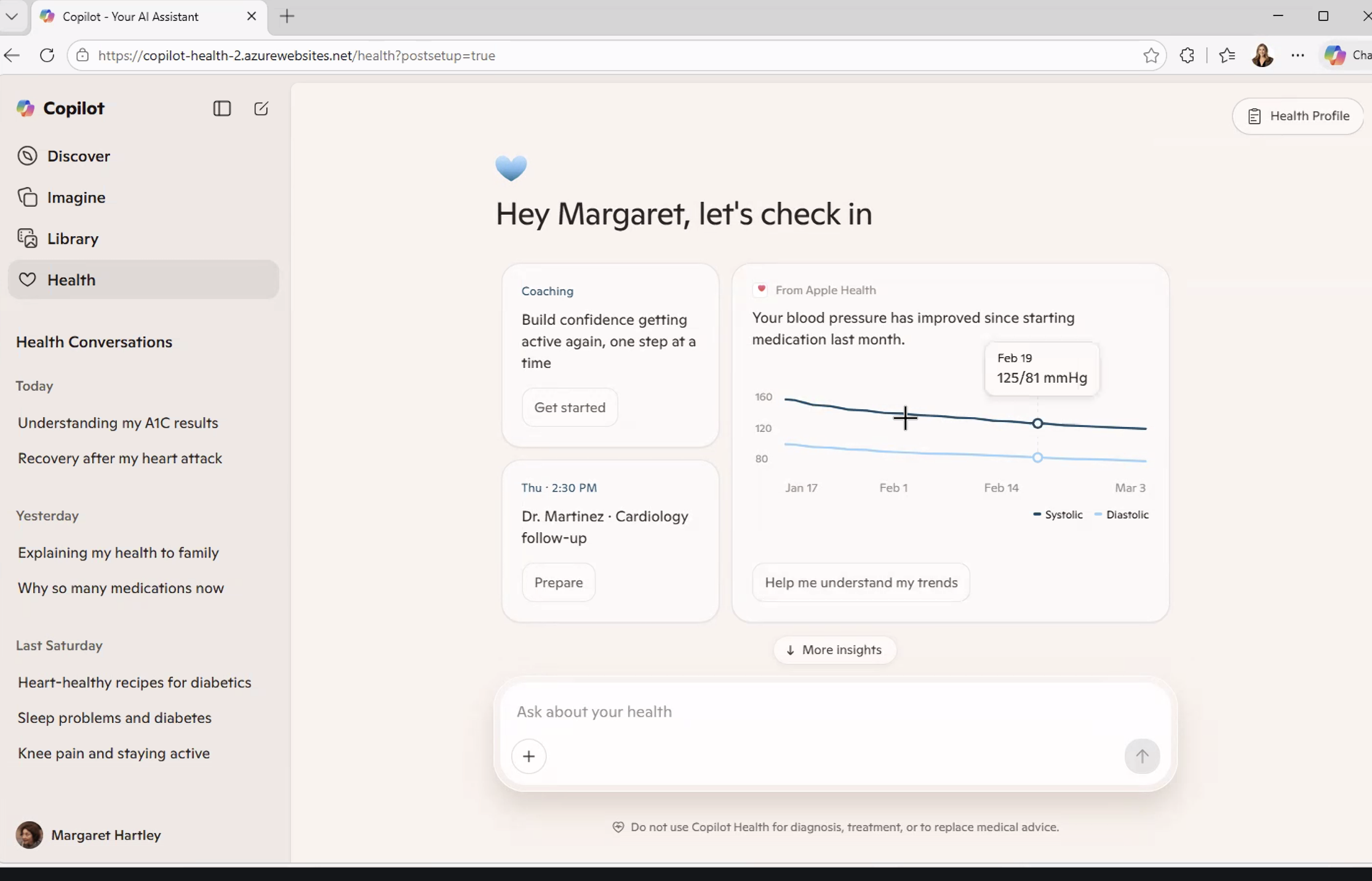
Copilot Health is a consumer-facing AI health companion that pulls from multiple data sources simultaneously with:

  • Medical records from connected providers
  • Lab results
  • Wearable data from Apple Health or an Oura ring
  • Previous health conversations from within the Copilot ecosystem
  • Uploaded documents

It’s all synthesized into a single, conversational interface.

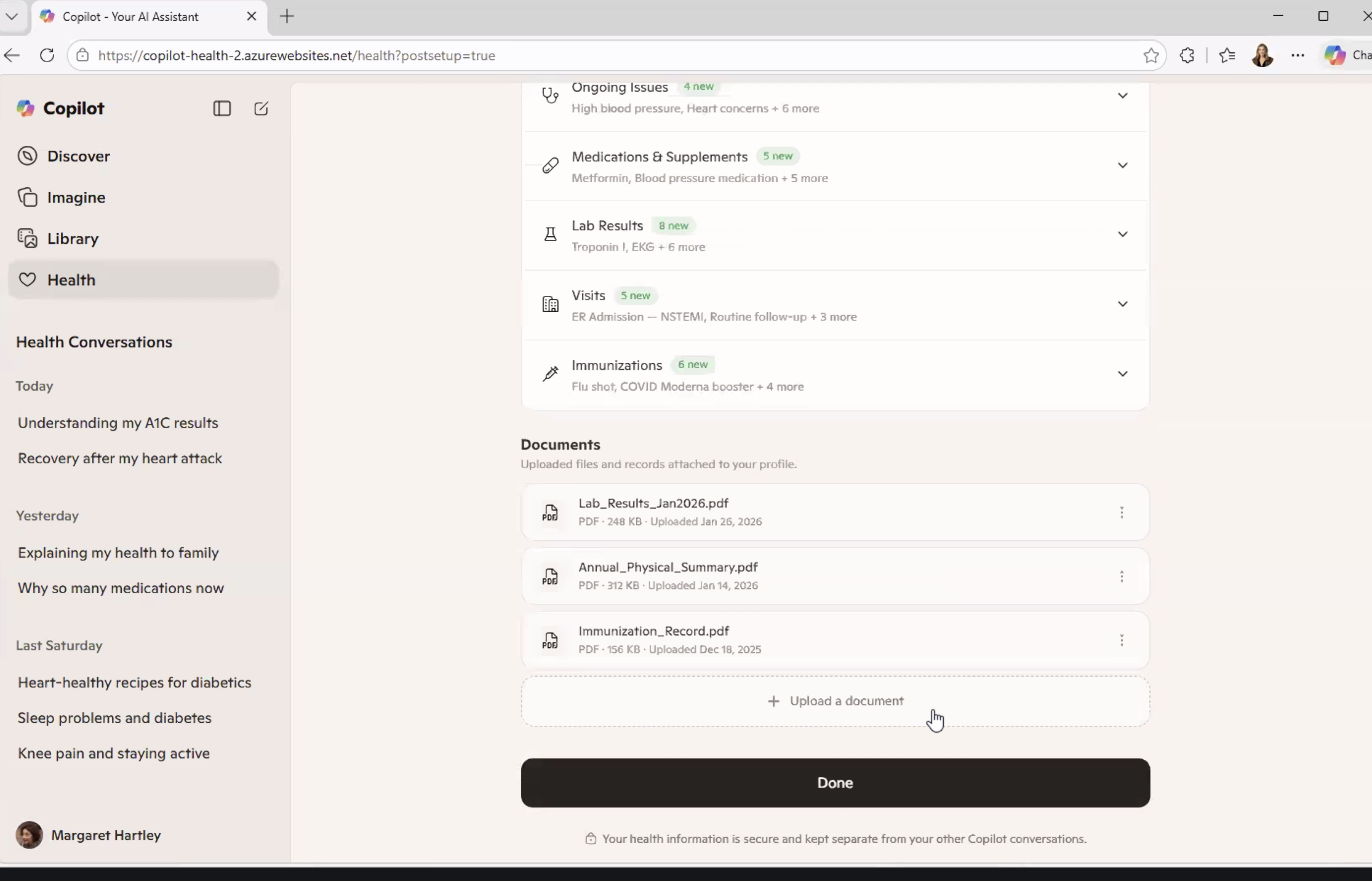
The demo persona was “Margaret.” She’s 50 years old with a history of hypertension, Type 2 diabetes, high cholesterol, and a recent heart attack (an NSTEMI requiring emergency hospitalization in January 2026). Her health profile showed 7 active medications, an HbA1c of 8.1% against a target of 7%, a resting blood pressure averaging 136/87, and sleep averaging 5 hours a night from her wearable data.
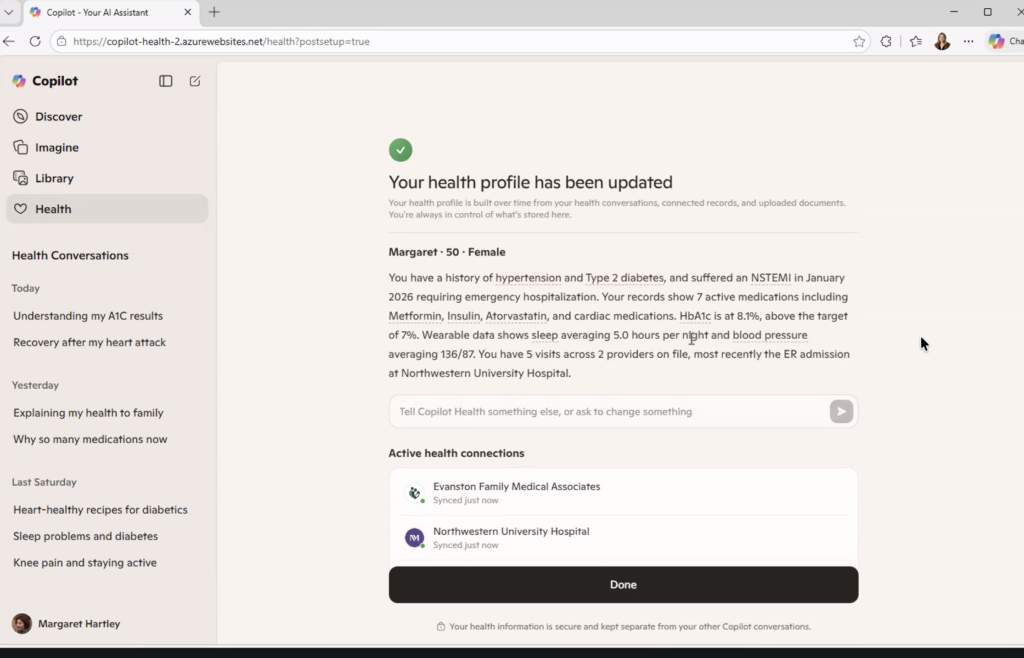
She asked why she was taking metoprolol, which is common after a serious cardiac event when discharge summaries are hard to process in real time. The system explained the medication, what it does, and invited follow-up questions about side effects.

When she entered in the Copilot that she’d woken up with severe jaw pain, Copilot flagged it as a potential cardiac symptom and recommended calling 911 immediately.

That’s not a trivial capability. For someone managing multiple chronic conditions, trying to understand why they’re on seven medications, wondering whether a symptom is serious, this tool offers something the healthcare system rarely does: an answer, in plain language, right now.
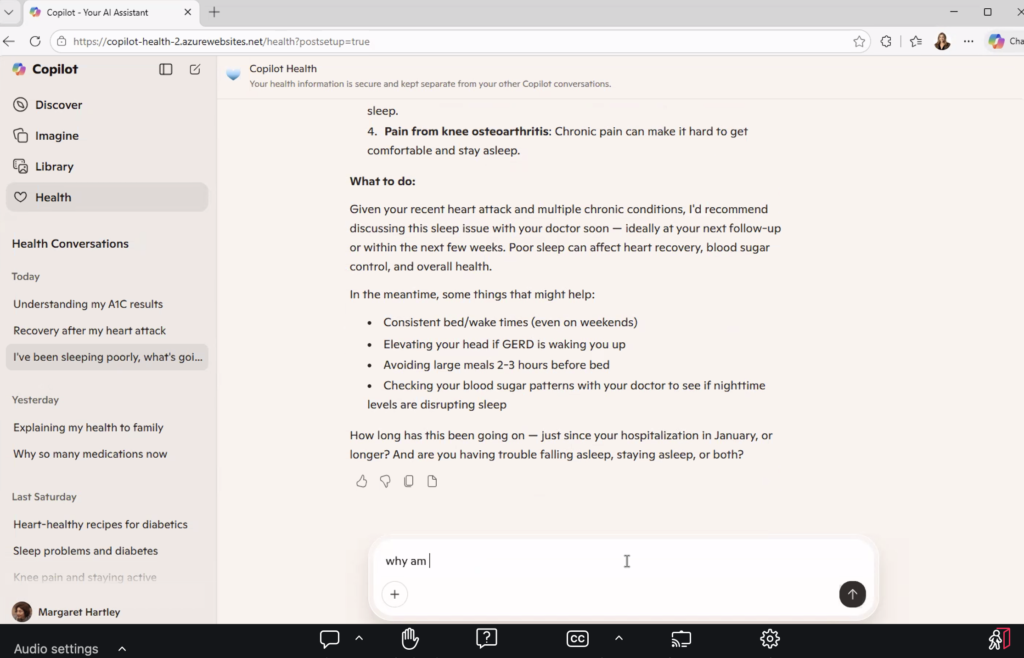
Rachel Gruner led the demo for Microsoft, and described the goal clearly: bring everything together, make it usable, help people navigate care. She named the 3 a.m. moment explicitly, being someone searching for health answers because they can’t reach a doctor. Someone who needs information and has nowhere else to turn.

She was describing a patient. But she was also unknowingly describing a caregiver.


The Number Nobody Mentioned

Here is a statistic that did not come up once during the demo, nor during the hour-long panel that followed it.

According to the Health Information National Trends Survey (federal data collected by the National Cancer Institute), the number of people logging into a patient portal on behalf of someone else more than doubled between 2020 and 2024. It went from 24% to 51%.

Half the people navigating these systems aren’t patients. They’re caregivers, like:

  • A daughter checking her mother’s lab results after a cancer scare.
  • A husband refilling his wife’s prescriptions while she recovers from surgery.
  • An adult child scheduling a follow-up for a parent who doesn’t speak English.
  • A spouse who has memorized every medication, every specialist, every prior authorization number (because if they don’t, no one will)

They’re exhausted, scared, and running someone else’s health on top of everything going on in their own life. And they are doing it inside systems that were never built to recognize them.
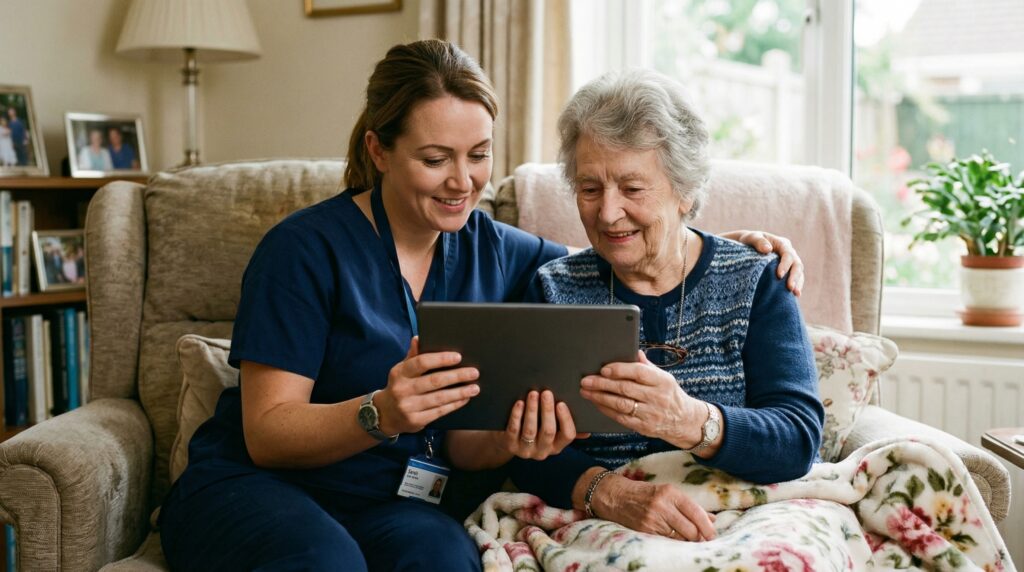
Most patient portals still don’t have a proper caregiver login. The formal proxy access process, where it exists, is often so confusing or slow that caregivers just use the patient’s credentials instead. So there’s no:

  • Audit trail
  • Role separation
  • Way for the system to know who’s logged in asking questions, making decisions, or interpreting results

Copilot Health connects to health records, wearables, and labs. It builds a profile over time based on conversations and data. It learns.

But what is it learning from? And about whom?

If half the behavioral data flowing through these systems is caregiver behavior that the system is reading as patient behavior (usage patterns, questions asked, drop-off points, topics searched at all hours of the night), then the AI being trained on that data has a foundational problem.

Patient-centered AI built on a misread of who the patient actually is isn’t patient-centered. It’s just a more confident version of the same blind spot.


What the AI Actually Learns

Maya Friedman, Director of Product Design and UX at Tidepool, made an observation about Copilot Health that she shared during a CES session in January 2026. She noted that the system synthesizes data across multiple sources to provide guidance. And in doing so, it creates a layer of coherence on top of information that was never designed to fit together.

Health records, wearables, and labs all operate on different standards, different levels of reliability, and different contexts.

Copilot doesn’t fix that fragmentation. It builds a coherent surface on top of it.

That coherence is genuinely useful for the person searching for answers at midnight. It’s also the source of risk.

A confident answer that’s built on misidentified behavior is harder to question than an incomplete answer. Think of the person on the other end of that conversation. A caregiver who has learned medical terminology not in school but out of necessity, who is tired and has 17 other things to manage, is not going to interrogate the data sources behind the insight. They’re going to act on it.

There’s a compounding problem that goes beyond accuracy. As these tools learn over time, they build profiles with personalization. They adapt to the user.

But if the system thinks the user it’s serving is Margaret, while the actual user is Margaret’s daughter navigating her mother’s post-cardiac recovery from three states away, then the personalization is wrong from the first conversation. And it compounds with every interaction.

The AI is getting better and better at serving the wrong person.

This isn’t an argument against tools like Copilot Health. It’s that the founders who build these tools should be precise about who they’re actually serving and build it accordingly. The 3 a.m. user isn’t always the patient. Sometimes she’s the person who can’t sleep because she’s worried about someone she loves and doesn’t know who else to ask.

She deserves a system that knows she’s there.


Ownership vs. Control

David Jost, Chief Technology Innovations Officer at the Epilepsy Foundation, said something during the panel that I haven’t been able to stop thinking about.

“Ownership and control are not the same thing.”

He was making a technical point about data governance — about the difference between having rights to your data and having actual agency over how it moves, who sees it, and what it’s used for.

But as a former family caregiver, I heard it as something more personal.

I owned my husband’s story. I was in every appointment. I tracked every medication change, every lab result, every specialist referral across multiple chronic conditions (diabetes, kidney failure, cancer, and limb loss). I knew his conditions better than most of the providers treating him.

But I didn’t control what happened to his data.

When we signed intake forms — and we signed a lot of them — we did it because we needed to get into the room. Steve Winawer, Head of Data, Digital, and Technology at Takeda described this dynamic plainly during the panel: “You walk into a doctor’s office. You sign the forms because what you want to do is see the doctor. You don’t really read them.”

That consent is what the entire data ecosystem is built on.

Not informed consent in the full sense of the phrase.

Transactional consent. The kind you give because the alternative is not being seen.

For caregivers, this is even more layered. You’re not just consenting on your own behalf. You’re consenting or not, because often there’s no mechanism to do so separately on behalf of someone else. Someone who may not be able to read the form themselves. Someone whose data is being collected, moved, and used in ways neither of you will ever fully trace.

Owning your health data and controlling it are two different things. Most of us have the first. Almost none of us have the second.

As AI health tools expand to connect more records, pull more data and build richer profiles, the gap between ownership and control will widen.

And caregivers, who have always been the system’s most active unpaid navigators, will feel that gap the most.


The Longer History

At the end of the panel, I asked about Henrietta Lacks.

Henrietta Lacks Source: Jstor.org

For those unfamiliar: Henrietta Lacks was a Black woman whose cancer cells were taken during a medical procedure in 1951, without her knowledge or consent. Those cells, known as HeLa cells, became one of the most important biological tools in modern medicine. They contributed to the polio vaccine, to cancer research, to countless pharmaceutical breakthroughs. The medical system built billions of dollars of value on her biology.

Her family only found out decades later.

I asked the panel: as AI systems become better at attributing value to data — tracking whose information contributed to which insight, which drug, which discovery — what can we learn from Henrietta Lacks about making sure that value flows back to the people it came from?

Heather Flannery, Founder and CEO of AI MINDSystems Foundation, gave the only answer, and it was direct.

She said that the same technologies being developed for computational governance and democratic-scale consent (making it possible to track and trace how data moves through a system) can also administer value attribution. Verifiably, continuously, and at scale.

Contributions of training data, lived experience, insight, problem-framing and caregiving itself are all valuable. None of it is currently tracked, traced, or remunerated.

The same infrastructure that fixes consent, Heather said, can fix attribution.

Henrietta Lacks didn’t consent. Caregivers consent constantly to forms they don’t read, in moments when they have no other choice, on behalf of people who are too sick or too scared to read them either.

The extraction looks different, but the pattern is the same.

The history of health data in America is, in part, a history of taking value from people who were never designed to benefit from the systems they fed. That history didn’t end in 1951. It continues every time a caregiver logs into a portal, answers a chatbot’s questions, uploads a discharge summary, and walks away having contributed data to a system that will use it to build something she will never own and cannot control.

National Minority Health Month exists to name these patterns. The question for this moment in health AI is whether we’re going to repeat them, or build something different.


What Caregivers Should Ask For

This is not an argument against AI in healthcare. The Copilot Health demo showed real capability. The panel included people genuinely committed to getting this right. The conversation about data sovereignty, computational governance, and equitable AI is happening — slowly, imperfectly, but sincerely.

This is an argument for specificity.
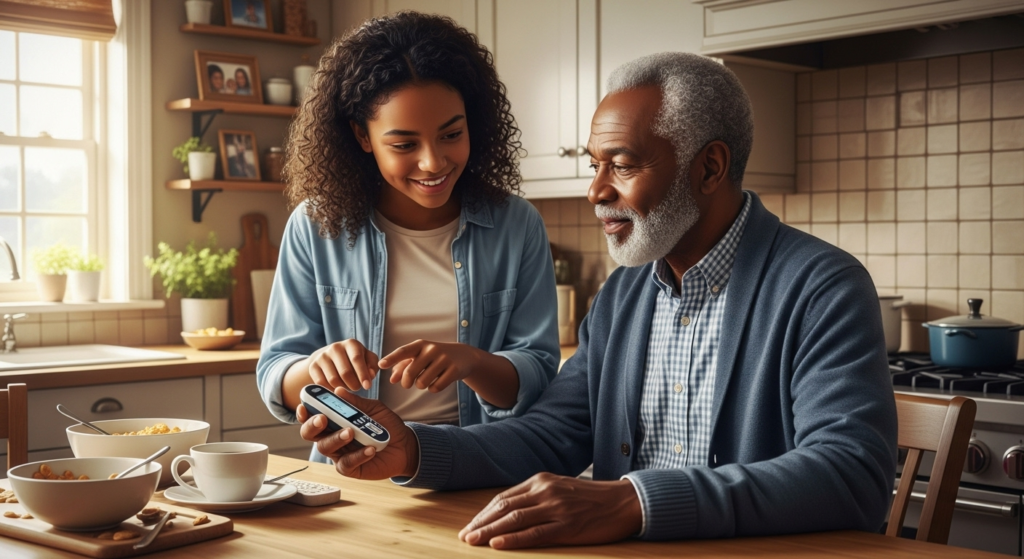
Girl at kitchen table with her grandpa

Patient-centered design that ignores the caregiver isn’t patient-centered. It’s incomplete. And the window for building these systems correctly is now, before:

  • the behavioral data compounds
  • the profiles deepen
  • the coherence layer becomes too established to question

So here’s what caregivers should be asking for, from the tools being built, from the organizations building them, and from the policymakers shaping the rules:

  • A login that knows who you are. Not a workaround. Not a borrowed password. A formal caregiver access model that distinguishes your behavior from the patient’s, maintains an audit trail, and allows the AI to serve you based on your actual role.
  • Proxy access that takes minutes, not phone calls. The formal process exists in some systems. It is almost universally too slow, too confusing, and too rarely completed. If half your users are caregivers, that’s not an edge case for product teams to accommodate. That’s their primary use case.
  • Consent that means something. Not a form signed under duress. A clear, plain-language explanation of what data is being collected, how it will be used, and what the caregiver retains the right to revoke. Separately from the patient’s consent, because the caregiver is a separate user with separate stakes.
  • AI trained on who’s actually in the room. If the behavioral data flowing through these systems includes caregiver behavior, the models need to know that. Not to exclude it — to interpret it correctly. The questions a caregiver asks at 3 a.m. are different from the questions a patient asks. The guidance each one needs is different too.
  • Recognition that caregiving is a data contribution. The labor of coordinating care, navigating systems, tracking medications, interpreting results, and advocating in clinical settings generates information that health AI is being built on. That contribution deserves to be visible, and eventually, as the infrastructure Heather described matures, remunerated.

If you’re a caregiver navigating any of this, my newsletter Care Without Compromise goes deeper on the practical and systemic dimensions of what it means to manage someone else’s health in a system that wasn’t built for either of you.

The tools are getting smarter. Let’s make sure they’re learning about the right person.

Sources

Health Information National Trends Survey (HINTS) 2024, National Cancer Institute.

PXI Q1 Convening: Building the Patient-Centered AI Ecosystem, National Health Council, March 26, 2026. Microsoft Copilot Health demo presented by Rachel Gruner. Panel quotes from David Jost (Epilepsy Foundation), Heather Flannery (AI MINDSystems Foundation), Steve Winawer (Takeda), Ian Miller (Digital Medicine Society); moderated by Rene Quashie (Consumer Technology Association).

Wearable Pain Management Devices: A Non-Invasive Alternative

Wearable Pain Management Devices: A Non-Invasive Alternative

AI Health Tech

Pain is more than just a physical sensation—it’s a complex experience that can dramatically alter your daily life. Chronic pain affects almost 33% of adults, impacting their quality of life and daily activities. As traditional pain management methods often fall short, wearable pain management technologies offer hope for anyone struggling with ongoing pain.

These smart devices can:

  • Track pain signals
  • Provide quick relief
  • Help you understand your pain better

Let’s see how.

Contents

Chronic Pain and Wearable Technologies

Pain closeup word in dictionary

Types of chronic pain and pain conditions

Chronic pain can stem from various conditions, each presenting unique challenges:

  • Fibromyalgia
  • Lower back pain
  • Multiple sclerosis (MS)
  • Rheumatoid arthritis
  • Neuropathic pain
  • Endometriosis
  • Migraines

woman holding her knee radiating in pain

Along with different conditions that cause chronic pain, there are different types of chronic pain:

  • neuropathic (nerve) pain – related to nerve damage
  • nociceptive pain – pain caused by an injury, inflammation, or pressure
  • somatic pain – pain that starts in your face, limbs, or muscles
  • visceral pain – pain from the internal organs with sensory nerves

Problems with traditional pain management

Timed pill box

Traditional pain treatments often rely on medications, physical therapy, and lifestyle modifications. However, these methods have drawbacks:

  1. Medication side effects
  2. The risk of addiction
  3. Inconsistent pain relief
  4. Lack of personalization (one-size-fits-all approach)

Only about 17% of people living with chronic pain get enough pain relief from traditional treatments.

For example, Non-steroidal anti-inflammatory drugs (NSAIDs) have limited effectiveness in treating chronic pain and carry potential serious adverse effects, including an increased risk of heart attack or stroke. Opioids can be effective for short-term pain relief, but they have limited long-term effectiveness, and carry significant risks of addiction and misuse.

How wearable technologies detect and address pain

Wearable technologies offer a new approach to pain management:

A study published in the Interactive Journal of Medical Research reported that wearable devices improved pain management.

The science behind targeted pain relief

Wearable pain management devices use various scientific principles to provide targeted relief:

One example is Transcutaneous Electrical Nerve Stimulation (TENS), which works to reduce nociceptor activity and unwanted pain sensations.

Research from NXSTIM demonstrated that its TENS wearable device EcoAI reduced pain intensity for 92% of study participants.

Patient-reported outcomes and effectiveness

Wearable pain management technologies have shown promising results in patient-reported outcomes:

  • Improved pain control
  • Reduced medication use
  • Enhanced quality of life
  • Increased physical activity

A study on Spinal Cord Stimulation (SCS) therapy showed significant improvements in pain intensity and quality of life.

Types of Wearable Pain Management Devices

The market for wearable pain management devices has expanded rapidly, offering various options for different kinds of pain and patient needs.

Transcutaneous electrical nerve stimulation (TENS) devices

Electrode pads on knee

TENS devices use low-voltage electrical currents to provide pain relief. These wearable units typically consist of:

  • A small, battery-powered device
  • Electrode pads
  • Adjustable intensity settings

The FDA approved the TensWave pain relief device, designed to be portable and user-friendly, to alleviate pain without medication.

Compression and support wearables

Compression bandage in black

Compression garments and support devices can be helpful for conditions like arthritis or sports-related injuries. They help manage pain by:

  • Improving blood circulation
  • Reducing inflammation
  • Providing joint stability

Research in the Arthritis Research and Therapy showed that a soft knee brace helped reduce pain, improve walking speed, and increase confidence for people with knee osteoarthritis.

Smart patches and biosensors

Woman with patch on her arm

These advanced wearables use technology to:

  • Monitor physiological signals
  • Detect pain patterns
  • Deliver targeted pain relief

For example, a DGIST research team has developed a smart patch capable of real-time biometric signal monitoring and drug delivery. This level of continuous monitoring and immediate response is impossible with traditional pain management methods.

Electromagnetic therapy devices

Electromagnetic therapy wearables use pulsed electromagnetic fields (PEMF) to:

  • Reduce inflammation
  • Promote tissue healing
  • Alleviate pain

These devices can be effective for conditions like chronic lower back pain. Research has found that PEMF therapy reduced chronic lower back pain intensity in study participants.

Neurostimulation wearables

These devices target specific nerves to interrupt pain signals and provide relief. They can be used for various chronic pain conditions, including:

A narrative review reported that a neurostimulation device reduced migraine pain within two hours.

Technology Behind Pain Relief Wearables

The effectiveness of wearable pain management devices relies on advanced technologies that work together to detect, analyze, and address pain.

Sensor technologies and pain detection

Wearable sensors measure body signals to understand how each person experiences pain. This helps create personalized pain treatment plans.

Wearable devices use various sensors to monitor physiological signals associated with pain:

AI-powered devices are changing how we handle pain. They use sensors to track pain signals in the body, along with AI algorithms to figure out the best way to treat each person’s pain. These tools can measure things like heart rate and skin changes to understand pain levels and suggest personalized treatments.

Electrical stimulation mechanisms

Electrical stimulation devices work by:

  1. Blocking pain signals
  2. Stimulating endorphin release
  3. Improving local blood circulation

Research published in the Scientific Reports showed that electrical stimulation wearables reduced chronic pain and improved the walking gait of participants.

Biofeedback and pain tracking

Biofeedback is a method that helps you learn more about how your body works. By using special electronic devices, you can track things like your heart rate, muscle tension, or breathing. The main goal is to teach you how to control these body functions on purpose, almost like learning to control a muscle you didn’t know you could move before.

Biofeedback features in wearable devices help patients:

  • Identify pain triggers
  • Track pain patterns
  • Learn pain management techniques

By providing real-time feedback on physiological responses, these devices can empower you to take a more active role in managing your pain.

Machine learning and personalized pain management

AI and machine learning algorithms enhance the effectiveness of wearable pain management devices by:

  • Analyzing individual pain patterns
  • Predicting pain episodes
  • Optimizing treatment parameters

For instance, a study on digital biomarkers collected from wearables during SCS treatment showed that machine learning models can predict pain levels with an accuracy of 76.8%.

Integration with smartphone applications

Most wearable pain management devices connect to smartphone apps, offering:

  • Real-time pain tracking
  • Treatment customization
  • Data sharing with healthcare providers

In one study, a pain management app helped participants track and manage chronic pain. Those experiencing higher pain intensity and disability found it the most valuable. Some users appreciated the tracking features, while others found frequent monitoring intrusive.

Integrating apps into your healthcare regime promotes more comprehensive pain management and better communication between you and your healthcare team.

Clinical Applications and Research

Wearable pain management technologies have shown promise in various clinical settings and for different types of pain.

Pain management for specific conditions

Researchers have studied wearable devices to see how effective they are when managing pain associated with:

  • Fibromyalgia
  • Osteoarthritis
  • Lower back pain
  • Neuropathic pain

For example, a study on SCS therapy showed significant improvements in pain intensity and quality-of-life metrics for people with chronic pain conditions.

Sports injury recovery

Athletes and sports medicine professionals turn to wearable pain management devices for:

  • Faster recovery from injuries
  • Reduced reliance on pain medications
  • Improved rehabilitation outcomes

Compression wearables for instance, have shown promise in reducing pain and improving function in patients with knee osteoarthritis.

A study in BMC Sports Science, Medicine and Rehabilitation used advanced tracking devices like accelerometers, GPS, and force plates to monitor athletes’ performance. By collecting data on things like distance, speed, and impact, coaches can spot early signs of fatigue and prevent injuries. The technology can help sports coaches decide when to push athletes harder, and when to let them rest.

Chronic illness support

Wearable pain management technologies offer valuable support for people with chronic illnesses by:

  • Providing continuous pain relief
  • Reducing medication side effects
  • Improving quality of life

The integration of these devices into chronic pain management strategies can lead to more personalized and effective treatment plans.

Researchers frequently use wearable devices in clinical trials to test their effectiveness.

Rehabilitation and physical therapy

Wearable pain management devices are increasingly integrated into rehabilitation programs, offering:

  • Targeted pain relief during exercises
  • Progress tracking
  • Improved compliance (people following through with doctor instructions)

This integration can lead to more effective rehabilitation outcomes and faster recovery times.

A clinical trial in the Archives of Physical Medicine and Rehabilitation showed that TENS alone or combined with exercise or physical therapy, helped reduce knee pain and improve mobility. The combined therapy was particularly effective, showing a significant decrease in light-intensity activity time and potentially lowering psychological barriers to exercise. The results suggest this approach could be a valuable strategy for people struggling with knee pain and sedentary behavior.

Workplace ergonomics and injury prevention

Healthcare providers use wearable technologies in occupational health settings to:

  • Prevent workplace injuries
  • Manage chronic pain for employees
  • Improve ergonomics (physical comfort)

A study in Advanced Intelligent Systems found that implementing wearable pain management devices in the workplace can alleviate work-related pain and injuries.

By providing real-time feedback and pain management, these devices can help create safer and more comfortable work environments.

How to Choose the Right Wearable Pain Management Solution

With numerous options available, you should carefully consider several factors to select the right wearable pain management device for you.

Considerations when selecting a device

When choosing a wearable pain management solution, make note of its:

  1. Functions that help relieve your type of pain condition
  2. Device features and functionality
  3. Ease of use and comfort
  4. Battery life and portability
  5. Clinical evidence supporting its effectiveness

It’s important to consult with your healthcare provider to determine which device is best suited for your specific needs and condition.

Cost and insurance considerations

The cost of wearable pain management devices can vary widely. Consider:

While these devices may have higher upfront costs, they could lead to long-term savings in pain-related healthcare expenses. Research published in Cureus showed that despite higher upfront costs, wearable pain management devices resulted in lower overall pain-related healthcare expenses for participants.

User experience and comfort

The effectiveness of a wearable pain management device often depends on whether you use it correctly and consistently, and your comfort. Look for devices that offer:

  • Adjustable settings
  • Lightweight and discreet design
  • Easy-to-use controls

85% of the 90% of participants in a 2020 pilot study who used a device more than half of the study period reported high user satisfaction scores. This suggests that you’re more likely to use a device that’s comfortable and easy to use consistently, leading to better pain management outcomes.

Clinical validation and research

When selecting a wearable pain management device, prioritize those with strong clinical evidence that shows they’re effective. Look for:

Personalization and adaptability

Choose a device tailored to your specific needs and pain patterns. Look for features such as:

Future of Wearable Pain Management

The field of wearable pain management is rapidly evolving, with exciting developments on the horizon.

Emerging technologies

Future wearable pain management devices may incorporate:

These emerging technologies could significantly improve pain management outcomes in the coming years.

A report in Frontiers in Bioengineering and Biotechnology predicts that these emerging technologies will improve pain management outcomes.

Artificial intelligence integration

AI plays an important role in wearable pain management, offering:

For example, an automated pain recognition system using AI holds promise as an unbiased method to detect pain before, during, and after surgery.

Personalized medicine approaches

The future of wearable pain management includes highly personalized solutions, such as:

These personalized approaches could lead to significantly better health outcomes and more effective pain management strategies.

Potential for home-based pain management

Advancements in wearable technologies may lead to more comprehensive home-based pain management solutions, offering:

This shift towards home-based care can reduce hospital visits and improve the overall quality of life for chronic pain patients.

Research in Pain Therapy suggests that home-based wearable pain management devices reduce hospital visits for chronic pain.

Interdisciplinary research developments

The future of wearable pain management will likely involve collaboration across various fields, including:

This interdisciplinary approach could lead to breakthroughs in pain management, which could decrease how many people have chronic pain in the coming years.

Wearable pain management represents a promising frontier in healthcare technology. As devices become more sophisticated, personalized, and accessible, individuals suffering from chronic pain can look forward to more targeted, non-invasive relief strategies. The future of pain management is not just about treating symptoms, but understanding and addressing pain at its source.

References

AI pain recognition system could help detect patients’ pain before, during and after surgery. (2023). American Society of Anesthesiologists. Retrieved from https://www.asahq.org/about-asa/newsroom/news-releases/2023/10/ai-pain-recognition-system

Alberts, N.M., Leisenring, W., Flynn, J.S., Whitton, J., et al. (2020). Wearable Respiratory Monitoring and Feedback for Chronic Pain in Adult Survivors of Childhood Cancer: A Feasibility Randomized Controlled Trial From the Childhood Cancer Survivor Study. JCO Clinical Cancer Informatics, 4. doi.org/10.1200/CCI.20.00070

Andrade, R., Duarte, H., Pereira, R., Lopes, I., Pereira, H., Rocha, R., & Espregueira-Mendes, J. (2016). Pulsed electromagnetic field therapy effectiveness in low back pain: A systematic review of randomized controlled trials. Porto Biomedical Journal, 1(5), 156. doi.org/10.1016/j.pbj.2016.09.001

Bara, R. O., Lee, M., Phan, T., Pacheco, M., Camargo, A. F., Kazmi, S. M., Rouzi, M. D., Modi, D., Shaib, F., & Najafi, B. (2024). Transcutaneous electrical nerve stimulation for fibromyalgia-like syndrome in patients with Long-COVID: A pilot randomized clinical trial. Scientific Reports, 14(1), 1-11. doi.org/10.1038/s41598-024-78651-5

Beyond Traditional Healing: How AI Enhances Biofeedback for Pain Management. (2023). Retrieved from https://ospinamedical.com/orthopedic-blog/beyond-traditional-healing-how-ai-enhances-biofeedback-for-pain-management

Casarin, S., Haelterman, N. A., & Machol, K. (2024). Transforming personalized chronic pain management with artificial intelligence: A commentary on the current landscape and future directions. Experimental Neurology, 382, 114980. doi.org/10.1016/j.expneurol.2024.114980

Chen, J., Jin, T., & Zhang, H. (2020). Nanotechnology in Chronic Pain Relief. Frontiers in Bioengineering and Biotechnology, 8, 557957. doi.org/10.3389/fbioe.2020.00682

Chronic pain: Medication decisions. MayoClinic. Retrieved from https://www.mayoclinic.org/chronic-pain-medication-decisions/art-20360371

Cox, A. (2024). Insights into Emerging Technologies in Pain Medicine. Retrieved from https://www.managedhealthcareexecutive.com/view/insights-into-emerging-technologies-in-pain-medicine

Cudejko T, van der Esch M, van der Leeden M, van den Noort JC, Roorda LD, Lems W, Twisk J, Steultjens M, Woodburn J, Harlaar J, Dekker J. The immediate effect of a soft knee brace on pain, activity limitations, self-reported knee instability, and self-reported knee confidence in patients with knee osteoarthritis. (2017). Arthritis Research and Therapy;19(1):260. doi: 10.1186/s13075-017-1456-0

Deswal, P. (2024). NXTSTIM’s wearable nerve stimulation device helps manage long-term pain. Clinical Trials Arena. Retrieved from https://www.clinicaltrialsarena.com/news/nxtstims-wearable-nerve-stimulation-device-helps-manage-long-term-pain/

Different Types of Chronic Pain. (2020). Southern Pain and Neurological. Retrieved from https://southernpainclinic.com/blog/different-types-of-chronic-pain/

El-Tallawy, S.N., Pergolizzi, J.V., Vasiliu-Feltes, I., et al. (2024). Innovative Applications of Telemedicine and Other Digital Health Solutions in Pain Management: A Literature Review. Pain and Therapy, 13, 791–812. doi.org/10.1007/s40122-024-00620-7

Gagnon, M.P., Ouellet, S., Attisso, E., Supper, W., Amil, S., Rhéaume, C., Paquette, J.S., Chabot, C., Laferrière, M.C., Sasseville, M. (2024). Wearable Devices for Supporting Chronic Disease Self-Management: Scoping Review. Interactive Journal of Medical Research,3:e55925. doi: 10.2196/55925

How Wearable Devices Are Shaping the Future of Chronic Pain Management. Pain Mgmt Advancements. Retrieved from https://advancementsinpainmanagement.com/therapeutic-care/patient-monitoring/how-wearable-devices-shaping-chronic-pain-management/

Huhn, S., Axt, M., Gunga, C., Maggioni, M. A., Munga, S., Obor, D., Sié, A., Boudo, V., Bunker, A., Sauerborn, R., Bärnighausen, T., & Barteit, S. (2022). The Impact of Wearable Technologies in Health Research: Scoping Review. JMIR MHealth and UHealth, 10(1), e34384. https://doi.org/10.2196/34384

Johnson, M. I., & Jones, G. (2017). Transcutaneous electrical nerve stimulation: current status of evidence. Pain Management, 7(1), 1-4. Retrieved from Transcutaneous electrical nerve stimulation: current status of evidence

Koch, R. Researchers discover localised pain relief using known chemical reaction. (2024). University of Adelaide. Retrieved from https://www.adelaide.edu.au/newsroom/news/list/2024/11/04/researchers-discover-localised-pain-relief-using-known-chemical-reaction

Management of Chronic Pain. (2023). National Commission on Correctional Health Care (NCCHC). Retrieved from  https://www.ncchc.org/position-statements/management-of-noncancer-chronic-pain-2023/

Non-Traditional Pain Management. (2023). ProCare Rx HospiceCare. Retrieved from https://www.procarehospicecare.com/non-traditional-pain-management

Nowosielski, B. Biofeedback Shows Promising Results in Treating Chronic Pain. (2025). Retrieved from https://www.drugtopics.com/view/biofeedback-shows-promising-results-in-treating-chronic-pain

Objective wearable measures correlate with self-reported chronic pain levels in people with spinal cord stimulation systems. (2023). npj Digital Medicine. Retrieved from https://www.nature.com/articles/s41746-023-00892-x

Patel, V., Chesmore, A., Legner, C. M., & Pandey, S. (2022). Trends in Workplace Wearable Technologies and Connected-Worker Solutions for Next-Generation Occupational Safety, Health, and Productivity. Advanced Intelligent Systems, 4(1), 2100099. doi.org/10.1002/aisy.202100099

Rebelo, A., Martinho, D.V., Valente-dos-Santos, J. et al. (2023). From data to action: a scoping review of wearable technologies and biomechanical assessments informing injury prevention strategies in sport. BMC Sports Science, Medicine and Rehabilitation, 15, 169 doi.org/10.1186/s13102-023-00783-4

Ross, E. L., Jamison, R. N., Nicholls, L., Perry, B. M., & Nolen, K. D. (2020). Clinical Integration of a Smartphone App for Patients With Chronic Pain: Retrospective Analysis of Predictors of Benefits and Patient Engagement Between Clinic Visits. Journal of Medical Internet Research, 22(4), e16939. doi.org/10.2196/16939

Sensors and Devices Guided by Artificial Intelligence for Personalized Pain Medicine. (2024). Cyborg and Bionic Systems. Retrieved from https://spj.science.org/doi/10.34133/cbsystems.0160

Smart patch combines real-time health monitoring and drug delivery. (2025). Medical Xpress. Retrieved from https://medicalxpress.com/news/2025-02-smart-patch-combines-real-health.html

Spiegel, B., Fuller, G., Lopez, M., Dupuy, T., Noah, B., Howard, A., Albert, M., Tashjian, V., Lam, R., Ahn, J., Dailey, F., Rosen, B. T., Vrahas, M., Little, M., Garlich, J., Dzubur, E., IsHak, W., & Danovitch, I. (2019). Virtual reality for management of pain in hospitalized patients: A randomized comparative effectiveness trial. PLoS ONE, 14(8), e0219115. doi.org/10.1371/journal.pone.0219115

Tepper, S.J., McAllister, P., Monteith, T. (2024). Update on Noninvasive Neuromodulation for Headache Treatment. Practical Neurology (US).;23(4):23-28.

Trafton, A. Wearable patch can painlessly deliver drugs through the skin. (2023). Massachusetts Institute of Technology. Retrieved from https://news.mit.edu/2023/wearable-patch-can-painlessly-deliver-drugs-through-skin-0419

Transcutaneous Electrical Nerve Stimulation for Pain Control. (2024). Head & Neck Pain Clinic. Retrieved from https://mhnpc.com/2024/10/28/transcutaneous-electrical-nerve-stimulation-for-pain-control/

Weatherly, S., McKenna, T., Wahba, S., Friedman, A., Goltry, W., Wahid, T., Abourahma, H., Lee, K., Rehman, A., Odeh, A., & Costin, J. (2024). Effectiveness of Digital Health Interventions (DHI) in Chronic Pain Management: A Scoping Review of Current Evidence and Emerging Trends. Cureus, 16(10), e72562. doi.org/10.7759/cureus.72562

Why Traditional Pain Management Doesn’t Work for Many With Chronic Pain. Michigan Integrative Health. Retrieved from https://michiganih.com/why-traditional-pain-management-doesnt-work-for-many-with-chronic-pain/

Yamada, K., Shimizu, H., Doi, N., Harada, K., et al. (2025). Usefulness and Safety of a Wearable Transcutaneous Electrical Nerve Stimulation Device for Promoting Exercise Therapy in Patients With Chronic Knee Pain: A Randomized Controlled Trial. Archives of Physical Medicine and Rehabilitation, 106 (2), 167-176. doi: 10.1016/j.apmr.2024.08.021

Zhu, Y., Yao, Y., Kuang, R., Chen, Z., Du, Z., & Qu, S. (2023). Global research trends of nanotechnology for pain management. Frontiers in Bioengineering and Biotechnology, 11, 1249667. https://doi.org/10.3389/fbioe.2023.1249667

Sleep Tracking Technology: A Comprehensive Guide for Better Rest

Sleep Tracking Technology: A Comprehensive Guide for Better Rest

AI Health Tech Med Tech

Have you ever wondered why you sometimes wake up feeling groggy despite getting a full night’s sleep? Or perhaps you’re curious about how your daily habits affect your sleep quality? Sleep tracking technology might just be the answer. 

From wearable devices to smartphone apps, these innovative tools are helping people understand their sleep patterns, but it’s debatable whether these tools are accurate, and how to choose the right one.  So we’re to explore how these innovative devices and apps can help you understand your sleep patterns and improve the quality of your rest.

Contents

What is Sleep Tracking Technology?

Fun fact: The average person spends about 26 years of their life sleeping. 

Red illustration of man in bed tracking sleep and heart rate

The basics 

Sleep tracking technology refers to devices and applications designed to monitor and analyze your sleep patterns. These tools collect data on various aspects of your sleep, such as duration, quality, and stages, to provide insights into your nightly rest.

Types of sleep tracking devices and methods

There are several ways to track your sleep:

  1. Wearable devices (smartwatches, fitness trackers)
  2. Bedside monitors
  3. Under-mattress sensors
  4. Smartphone apps

Each type of tracker uses different methods to collect data, from motion sensors to heart rate monitors.

Key metrics measured by sleep trackers

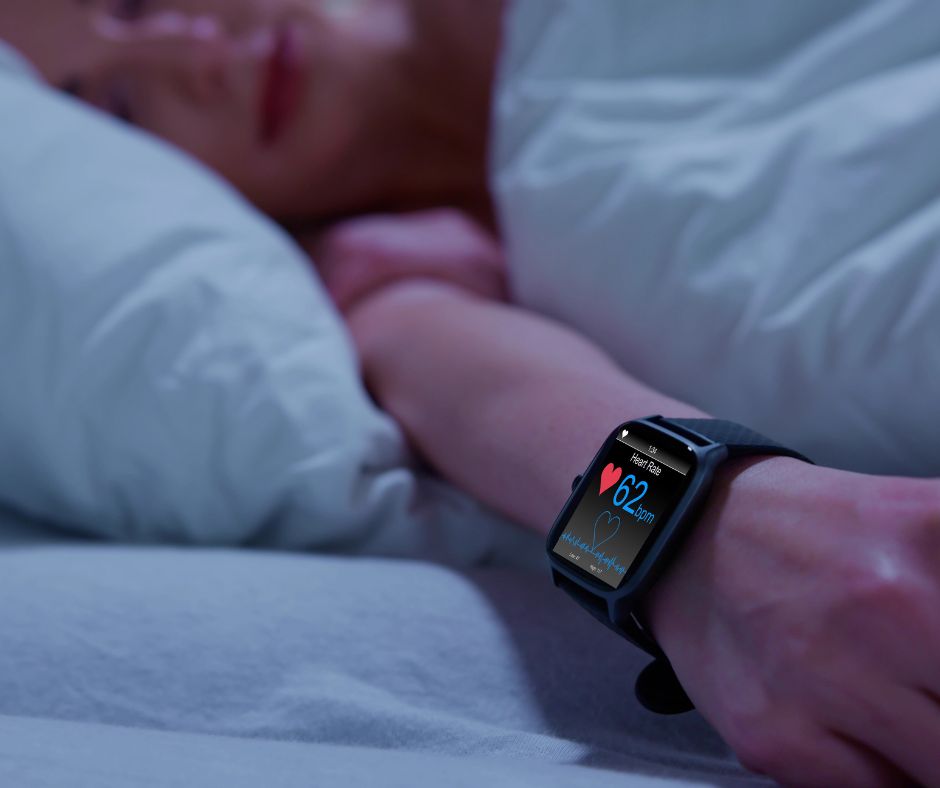
Woman sleeping in bed with smartwatch

Most sleep trackers measure the following:

  • Total sleep time
  • Sleep efficiency (time asleep vs. time in bed)
  • Sleep stages (light, deep, and REM sleep)
  • Nighttime awakenings
  • Sleep latency (time taken to fall asleep)
  • Heart rate and breathing rate

A study published in the journal Sleep found that consumer sleep trackers can provide valuable insights into sleep patterns and duration (Zheng et al., 2024). The researchers noted that these devices were very accurate in detecting sleep, and most performed as good or better than actigraphy (a sleep test based on data from a wearable device only available from a healthcare professional) in detecting wakefulness.

The Science Behind Sleep Tracking

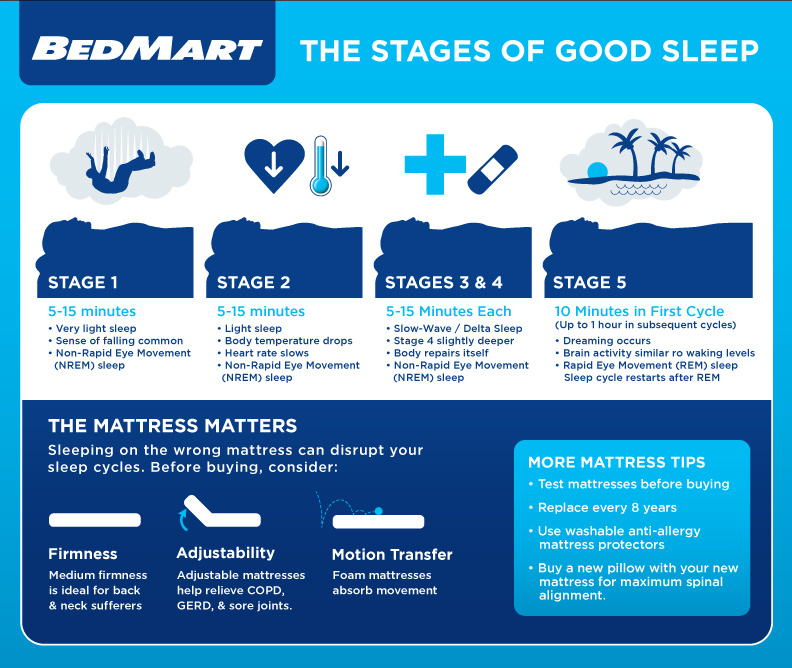
There are several stages of sleep as shown in the BedMart illustration.

Source: BedMart

How sleep trackers monitor different sleep stages

Sleep trackers use a combination of sensors to estimate your sleep stages:

  • Accelerometers, devices that detect movement
  • Heart rate sensors monitor changes in pulse
  • Some advanced devices use electroencephalogram (EEG)-like technology to measure brain waves

(EEG is a test that measures the brain’s electrical activity through sensors on the scalp.)

Particle Swarm Optimization (PSO) and EEG

A study in India introduced a new way to track sleep at home. They combined PSO (Particle Swarm Optimization) with XGBoost to analyze EEG data, using a method called PSO-XGBoost. It combines two techniques to analyze brain waves (EEG signals) and classify sleep stages more accurately (Radhakrishnan, Ezra, Jebadurai, Selvakumar, & Karthikeyan, 2024).

The researchers tested their method on data from ten people and got very good results, with 95% accuracy. This approach could also be used with wearable devices that measure brain activity from the forehead. It’s fast enough to work in real time, making it useful for tracking sleep as it happens. While this method works well for real-time sleep monitoring at home, it needs more training on different data sets to improve its accuracy.

Accuracy of consumer sleep tracking devices

Man asleep in bed with smartwatch

While consumer sleep trackers have improved significantly in recent years, they’re less accurate than clinical sleep studies. 

A 2021 study compared 7 consumer sleep trackers to polysomnography (PSG), the gold standard in sleep measurement. The researchers found that most devices were reasonably accurate in detecting total sleep time but less reliable in distinguishing between sleep stages (Chinoy, et al., 2021).

A more recent study by the University of Massachusetts Amherst showed that all devices they used (Fitbit Inspire, Fitbit, Versa, Garmin Vivosmart, the Oura Ring, Withings Mat, and Actiwatch) had software or user errors. And they all either under- or overestimated total sleep time (Kainec et al., 2024).

Comparison with clinical sleep studies

Clinical sleep studies, such as polysomnography, provide more detailed and accurate data than consumer devices. However, sleep trackers offer the advantage of long-term, non-invasive monitoring in your natural sleep environment.

With the science explained, let’s look at the top tools available in today’s market.

Older woman asleep wearing smartwatch next to cell phone

Wearable devices (smartwatches, fitness trackers)

Many popular fitness trackers and smartwatches now include sleep-tracking features. For example:

These devices are convenient as they can be worn throughout the day and night, providing a comprehensive view of your health and activity.

Dedicated sleep-tracking gadgets

Some devices are specifically designed for sleep tracking:

  • Oura Ring
  • Withings Sleep
  • Beddit Sleep Monitor

These often provide more detailed sleep data than general-purpose wearables.

Smartphone apps and their capabilities

If you’re not ready to invest in a dedicated device, smartphone apps can be a good starting point:

These apps use your phone’s sensors to track movement and sound during the night.

Benefits of Using Sleep Tracking Technology

Understanding the available options leads us to an important question: what can these devices do for you?

Woman stretching before getting out of bed
Source: Styled Stock Society

Identify sleep patterns and potential issues

Sleep trackers can help you spot patterns in your sleep habits. For instance, you might notice that you consistently get less sleep on weeknights or that your sleep quality decreases after consuming caffeine late in the day.

Sleep patterns for those with chronic conditions

A study published in Nature used data from wearable devices and electronic health records (EHRs) to see how sleep patterns affect chronic diseases. Researchers found that sleep duration, quality, and consistency are all important for health. 

People with poor sleep habits had higher risks of developing conditions like obesity, heart problems, high blood pressure, depression, and anxiety. Also, getting too little and too much sleep can both be harmful, as 7 to 9 hours per night is the ideal length of sleep for most adults (Zheng et al., 2024).

Sleep habits and mental health 

A study conducted in Bristol, UK explored the use of mobile sensors to predict mental health issues, focusing on the link between sleep quality and conditions like depression and anxiety. 

The researchers developed the SleepTracker app, which uses phone usage and movement data to identify potential signs of mental health disorders and detect insomnia early. The study suggests that understanding sleep patterns, especially in young adults, could be crucial for mental health intervention and improving the app’s accuracy when predicting insomnia symptoms (Alamoudi et al., 2024).

Improve sleep quality through data-driven insights

Woman asleep in bed in pink pajamas
Source: Styled Stock Society

You can make informed decisions about your sleep habits by analyzing your sleep data. 

A study in the Journal of Clinical Sleep Medicine found that using a sleep tracker increased participants’ sleep duration by an average of 31 minutes per night (Baron, Duffecy, Berendsen,  Cheung, Lattie, & Manalo, 2018).

An autoethnographic account (a combination of personal storytelling with academic analysis) in 2024 about using the Oura Ring found four themes about sleep tracking (Nagele & Hough, 2024):

  1. Good sleep-scores are motivating.
  2. Experience that matches the data help us understand sleep better.
  3. Conflicting information from the app can be frustrating.
  4. Sleep trackers compete with other social influences. 

Correlate sleep with daily habits and health metrics

Many sleep trackers allow you to log daily activities, such as exercise, diet, and stress levels. This can help you understand how these factors affect your sleep quality.

How to Choose the Right Sleep Tracker

With so many benefits and options available, here’s what to look for when choosing the right device for you.

Black and white illustration of sleep tracking

Factors to consider when selecting a sleep-tracking device

When choosing a sleep tracker, consider:

  • Your budget
  • Desired features
  • Comfort (for wearable devices)
  • Battery life
  • Compatibility with your smartphone

Features to look for based on individual needs

Depending on your goals, you might prioritize:

  • Detailed sleep stage analysis
  • Smart alarm features
  • Integration with other health apps
  • Snoring detection
  • Sleep environment monitoring (temperature, noise, light)

Price range and value for money

Sleep trackers range from free smartphone apps to high-end wearables costing several hundred dollars. Consider your budget and how seriously you want to track your sleep.

Interpreting Your Sleep Data

Once you have your tracker and start using it, the next step is making sense of the data.

Woman stretching in bed after waking up
Source: Styled Stock Society

Understand sleep score calculations

Many sleep trackers provide a “sleep score” to summarize your nightly rest. While the exact calculation varies by device, it typically considers factors like:

  • Total sleep time
  • Sleep efficiency
  • Time spent in each sleep stage
  • Nighttime awakenings

Analyze sleep stages and duration

Most trackers divide sleep into three main stages:

  1. Light sleep: The transition stage between wakefulness and deeper sleep
  2. Deep sleep: The most restorative stage, important for physical recovery
  3. REM sleep: Associated with dreaming and cognitive function

Aim for a balanced distribution of these stages throughout the night.

Use insights to make lifestyle changes

Use your sleep data to identify areas for improvement. For example, if you consistently have low deep sleep, you might try:

  • Exercising earlier in the day
  • Reducing alcohol consumption
  • Creating a cooler sleep environment

Combining Sleep Tracking with Healthy Sleep Habits

While data is valuable, it works best when paired with good sleep practices.

Woman in white pajamas stretching in bed
Source: Styled Stock Society

Set up a sleep-friendly environment

Your sleep tracker might reveal environmental factors affecting your sleep. Consider:

  • Keeping your bedroom cool (60-67°F or 15-19°C)
  • Using blackout curtains to block light
  • Investing in a comfortable mattress and pillows

Establish a consistent sleep schedule

Many sleep trackers can help you set and maintain a regular sleep schedule. A study in Sleep Health found that maintaining a consistent sleep schedule was associated with better sleep quality and daytime functioning.

Complement technology with relaxation techniques

While sleep trackers provide valuable data, don’t forget the importance of relaxation. Try incorporating techniques like:

Potential Limitations and Considerations

Despite their benefits, sleep trackers aren’t perfect solutions. Here are some things to watch out for.

Smart ring illustration in red

Privacy concerns with sleep-tracking apps

Be aware of the data you’re sharing with sleep-tracking apps. Review privacy policies and adjust settings to control what information is collected and shared.

Over-reliance on sleep data and sleep anxiety

While sleep tracking can be helpful, don’t become obsessed with the data. A phenomenon known as “orthosomnia” describes the anxiety some people experience when trying to achieve perfect sleep scores. Sleep trackers can’t diagnose a sleep disorder or substitute for a doctor’s analysis.

When to consult a healthcare professional

If your sleep tracker consistently shows poor sleep quality or you’re experiencing symptoms like excessive daytime sleepiness, it’s time to consult a healthcare professional. Sleep trackers can complement, but not replace, medical advice.

The Future of Sleep Tracking Technology

As technology advances, sleep tracking continues to evolve in exciting ways.

Future sleep trackers may incorporate more advanced sensors, such as:

  • EEG-like brain wave monitoring
  • Continuous blood oxygen level tracking
  • Stress hormone detection

Integration with smart home devices

Sleep trackers are increasingly integrating with smart home ecosystems. For example, your tracker might automatically adjust your room’s temperature or lighting based on your sleep patterns.

Advancements in AI and machine learning for sleep analysis

Artificial intelligence and machine learning are improving the accuracy and insights provided by sleep trackers. These technologies can help identify patterns and make personalized recommendations for improving sleep quality.

Sleep tracking offers insights that were once only available in sleep labs. 

While sleep trackers provide valuable data, they’re most effective when used with good sleep hygiene practices, as part of a holistic approach to health. Start exploring sleep-tracking options, and you might just find the key to unlocking your best night’s sleep yet.

References

5 Benefits of Sleep Tracking: Do They Really Improve Sleep? (n.d.) BedMart. Retrieved from https://www.shopbedmart.com/benefits-of-sleep-tracking/

Alamoudi, D., Nabney, I., & Crawley, E. Evaluating the Effectiveness of the SleepTracker App for Detecting Anxiety- and Depression-Related Sleep Disturbances. (2024). Sensors, 24(3), 722. doi.org/10.3390/s24030722

Baron, K. G., Duffecy, J., Berendsen, M. A., Cheung, I. N., Lattie, E., & Manalo, N. C. (2018). Feeling validated yet? A scoping review of the use of consumer-targeted wearable and mobile technology to measure and improve sleep. Journal of Clinical Sleep Medicine, 14(10), 1783-1803.

Chinoy, E. D., Cuellar, J. A., Huwa, K. E., Jameson, J. T., Watson, C. H., Bessman, S. C., … & Markwald, R. R. (2021). Performance of seven consumer sleep-tracking devices compared with polysomnography. Sleep, 44(5), zsaa291.

Exploring Sleep Wearables: Enhancing Benefits and Navigating Risks. (2024). Sleep Matters Perth. Retrieved from https://www.sleepmattersperth.com.au/exploring-sleep-wearables-enhancing-benefits-and-navigating-risks

Glazier, G. (2024). New Research Evaluates Accuracy of Sleep Trackers. Retrieved from https://www.sleepfoundation.org/sleep-news/new-research-evaluates-accuracy-of-sleep-trackers

Kainec, K. A., Caccavaro, J., Barnes, M., Hoff, C., Berlin, A., & Spencer, R. M. (2024). Evaluating Accuracy in Five Commercial Sleep-Tracking Devices Compared to Research-Grade Actigraphy and Polysomnography. Sensors, 24(2), 635. doi.org/10.3390/s24020635

Nagele, A. N., & Hough, J. (2024). “The sleep data looks way better than I feel.” An autoethnographic account and diffractive reading of sleep-tracking. Frontiers in Computer Science, 6, 1258289. doi.org/10.3389/fcomp.2024.1258289

Radhakrishnan, B. L., Ezra, K., Jebadurai, I. J., Selvakumar, I., & Karthikeyan, P. (2024). An Autonomous Sleep-Stage Detection Technique in Disruptive Technology Environment. Sensors, 24(4), 1197. doi.org/10.3390/s24041197

Shaw, G. (2024). What to Know About Sleep Tracking Devices. Retrieved from https://www.webmd.com/sleep-disorders/sleep-tracking-devices

Zheng, N. S., Annis, J., Master, H., Han, L., Gleichauf, K., Ching, J. H., Nasser, M., Coleman, P., Desine, S., Ruderfer, D. M., Hernandez, J., Schneider, L. D., & Brittain, E. L. (2024). Sleep patterns and risk of chronic disease as measured by long-term monitoring with commercial wearable devices in the All of Us Research Program. Nature Medicine, 30(9), 2648-2656. doi.org/10.1038/s41591-024-03155-8

Enhancing Research with Wearables in Clinical Trials

Enhancing Research with Wearables in Clinical Trials

AI Health Tech Med Tech

As clinical trials grow in number and complexity, wearables are becoming essential. They allow for remote patient monitoring (RPM) and can track multiple health metrics at once. This is crucial as the number of trial endpoints has increased by 10% in the last ten years. Let’s explore how using wearables in clinical trials helps accelerate medical research.

Contents

Wearables in Medical Research

What are wearables?

Wearables are small, smart devices like sensors that, combined with apps, collect health data. These devices can track everything from your heart rate to how well you sleep. They’re like having a mini-lab on your wrist or body. 

Wearables in clinical trials refers to all types of medical tech used in medical research.

Types of wearable devices used in clinical trials

Black woman gold top showing phone with glucose meter on arm

There’s a whole range of wearables being used in medical research:

The popularity of wearables in research

Wearables are taking the medical research world by storm. The use of wearables in clinical trials has grown by 50% from 2015 to 2020 (Marra et al., 2020). 

Wearable devices make collecting health data easier for medical researchers. They allow for real-time analysis of large data sets and help identify health trends, which brings ease and precision to clinical trials and medical studies.

Benefits of Using Wearables in Clinical Trials

Why are researchers so excited about wearables? Let’s break it down.

Real-time data collection and monitoring

Monitoring dashboard on a desk

Imagine getting a constant stream of health data from patients, 24/7. Wearables allow clinicians to monitor real-time data, so there’s no more waiting for patients to come in for check-ups or relying on their memory of symptoms.

Improved patient engagement and compliance

People are more likely to stick with a study when they’re using familiar devices. RPM systems often include medication reminders and tracking features, which can significantly improve adherence rates

Enhanced accuracy and objectivity of data

Wearables don’t forget or exaggerate. They provide hard data without human error or bias. Combining wearable sensors and advanced software in clinical trials is one of the best ways to make sure the data is accurate (Seitz, 2023).

Cost-effectiveness and efficiency in trial conduct

Wearable tech in healthcare shows promise for better data collection and analysis-–it can improve disease understanding, treatments, and clinical trials (Izmailova et al., 2018). 

By reducing the need for in-person visits and automating data collection, wearables can cut trial costs by up to 60% (Coravos et al., 2019).

How Wearables Are Used in Clinical Trials

How are wearables being used in real studies? Let’s look at some examples.

Continuous vital sign monitoring

Wearables can track heart rate, blood pressure, and even oxygen levels around the clock. This is especially useful in studies of heart conditions or respiratory diseases.

Activity and sleep tracking

Older woman asleep wearing smartwatch next to cell phone

These devices can measure how much you move and how well you sleep. This data is valuable for studies on conditions like insomnia or chronic fatigue syndrome.

Medication adherence tracking

Timed pill box

Some smart pill bottles can remind patients to take their medication and record when they do. This helps clinicians know if patients are following the treatment plan.

Remote patient monitoring and telemedicine integration

Wearables allow doctors to check on patients from afar. This is particularly helpful for patients who live far from research centers or have mobility issues.

In a study of patients with Parkinson’s disease, wearable sensors were used to track movement patterns. This allowed researchers to measure the effectiveness of a new treatment more accurately than traditional methods (Espay et al., 2016).

Challenges and Limitations of Wearables in Clinical Trials

While wearables offer many benefits, they also come with some challenges.

Data privacy and security concerns

Hacker in a red hoodie

With so much personal health data being collected, keeping it safe is a top priority. Researchers need to ensure that patient information is protected from hackers and unauthorized access.

Regulatory hurdles and FDA approval processes

Getting new devices approved for use in clinical trials can be a long and complex process. The FDA has strict rules about what devices can be used and how data can be collected.

Integration with existing clinical trial systems

Many research centers have established systems for collecting and analyzing data. Integrating wearable data into these systems can be tricky and time-consuming, but can be overcome.

Potential for data overload and interpretation issues

Wearables can generate massive amounts of data. Sorting through all this information and making sense of it can be overwhelming for researchers.

One study found that while 79% of clinical trials were interested in using wearables, only 39% felt confident in their ability to manage and analyze the data effectively (Walton et al., 2015).

Best Practices to Incorporate Wearables in Clinical Trials

To make the most of wearables in clinical trials, researchers should follow these best practices.

Monitor attached to back of a woman's left shoulder

Select appropriate wearable devices for specific trial needs

Not all wearables are created equal. Researchers must choose devices that are scientifically relevant to the study’s endpoints and can gather precise, valid data. 

The goal is to collect meaningful information that significantly contributes to the study’s outcomes and conclusions, rather than just monitoring for the sake of it (Rudo & Dekie, 2024). For example, a sleep study might need a device with advanced sleep-tracking capabilities.

Ensure data quality and validation

It’s crucial to verify that the data collected by wearables is accurate and reliable. This often involves comparing wearable data with data from traditional medical devices.

Train participants and researchers on proper device use

Both patients and research staff need to know how to use the wearables correctly. Good training can improve data quality and reduce errors.

Develop robust data management and analysis protocols

With so much data coming in, having a solid plan for managing and analyzing it is essential. This may involve using specialized software or working with data scientists.

Steinhubl et al. (2018) researched how heart failure patients used wearable sensors to track daily activity. By carefully selecting devices and training participants, the researchers collected high-quality data leading to new insights about the progression of heart failure.

What’s next for wearables in clinical trials? Let’s take a peek.

Smart watch illustration in blue and red

AI and machine learning integration for data analysis

As the amount of data grows, artificial intelligence (AI) and Internet of Things (IoT) will play a bigger role in making sense of it all. AI can help spot patterns and trends that humans might miss.

Multi-modal sensors

Multi-modal sensors in wearables combine different types of sensors in one device to give a more complete picture of a patient’s health (Sietz, 2023). It can include body sensors, environmental sensors, and even imaging tech to gather a wide range of data for clinical studies.

Expanded use of wearables in decentralized clinical trials

More trials are moving away from traditional research centers. Wearables make it possible to conduct studies with patients in their own homes, opening up research to a wider group of people.

Potential for personalized medicine and treatment optimization

By collecting detailed, individual health data, wearables help tailor treatments to each patient’s unique needs.

Conclusion

Wearables are becoming an integral part of clinical trials, offering new insights into patient health and treatment efficacy. These smart devices are likely to greatly impact medical research, leading to faster, more efficient, and patient-centric clinical trials. Who knows–the next big medical breakthrough might come from a small device you can wear.

References

Coravos, A., Khozin, S., & Mandl, K. D. (2019). Developing and adopting safe and effective digital biomarkers to improve patient outcomes. NPJ digital medicine, 2(1), 1-5.

Espay, A. J., Bonato, P., Nahab, F. B., Maetzler, W., Dean, J. M., Klucken, J., … & Papapetropoulos, S. (2016). Technology in Parkinson’s disease: Challenges and opportunities. Movement Disorders, 31(9), 1272-1282.

Izmailova, E. S., Wagner, J. A., & Perakslis, E. D. (2018). Wearable Devices in Clinical Trials: Hype and Hypothesis. Clinical Pharmacology & Therapeutics, 104(1), 42-52.

Marra, C., Chen, J. L., Coravos, A., & Stern, A. D. (2020). Quantifying the use of connected digital products in clinical research. NPJ digital medicine, 3(1), 50.

Seitz, S. (2023). Wearable sensors have already enhanced clinical trials and their impact in this market is only going to grow as technology advances. Find out what clinical trial applications and opportunities exist for your innovative wearable technology company. Sequenex. Retrieved from https://sequenex.com/blog/enhancing-clinical-trials-with-wearable-sensors-and-software-solutions/

Steinhubl, S. R., Waalen, J., Edwards, A. M., Ariniello, L. M., Mehta, R. R., Ebner, G. S., … & Topol, E. J. (2018). Effect of a home-based wearable continuous ECG monitoring patch on detection of undiagnosed atrial fibrillation: the mSToPS randomized clinical trial. Jama, 320(2), 146-155.

Todd Rudo, T., & Dekie, L. (2024). The Future Fit of Wearables for Patient-Centric Clinical Trials. Applied Clinical Trials, 33(4).

Walton, M. K., Powers, J. H., Hobart, J., Patrick, D., Marquis, P., Vamvakas, S., … & Burke, L. B. (2015). Clinical outcome assessments: conceptual foundation—report of the ISPOR Clinical Outcomes Assessment–Emerging Good Practices for Outcomes Research Task Force. Value in Health, 18(6), 741-752.

Wearable Technology Clinical Trials: All You Need To Know About 5 Wearable Devices And Wearable Sensors. Learning Labb Research Institute. (n.d.) Retrieved from https://llri.in/wearable-technology-clinical-trials/

Williams, K. (2023). The Future of Clinical Trials: Embracing Wearables and Beyond. Datacubed Health. Retrieved from https://www.datacubed.com/the-future-of-clinical-trials-embracing-wearables-and-beyond-2/

10 Best Meditation and Mindfulness Apps for Stress Relief

10 Best Meditation and Mindfulness Apps for Stress Relief

AI Health Tech

Mental health issues are at the forefront of today’s news and public health concerns. Finding moments of calm can be challenging. A 2023 study found that regular meditation can reduce stress and anxiety (Komariah et al.). 

Thankfully, there’s no shortage of available meditation and mindfulness apps available. 

This article contains a curated list of the 10 best meditation and mindfulness apps to help you find your perfect digital zen companion.

Contents

The Benefits of Meditation Apps

Woman standing in  a yoga pose in the park
Credit: Styled Stock Society

Mindfulness apps show promise in improving mental health and overcoming barriers to in-person treatments. Early research indicates they help with attention, reduce negative thinking, and promote psychological distance from thoughts (Macrynikola et al., 2024).

Meditation apps have many advantages:

Top 10 Meditation and Mindfulness Apps

1. Headspace

Headspace
Source: Headspace

Headspace is a popular meditation app known for its user-friendly interface and colorful animations. It offers a wide range of guided meditations for beginners to advanced practitioners.

Key Features:

  • Extensive library of guided meditations
  • Sleep stories and soundscapes for better rest
  • Focus music playlists for improved productivity
  • Animated videos explaining meditation concepts
ProsCons
Beginner-friendlyLimited free content
High-quality productionSubscription required for full access
Structured coursesMay feel repetitive for advanced users

Use case

A stressed office worker uses Headspace‘s short meditations during lunch breaks to refocus and reduce anxiety.

To learn more, visit:

2. Calm

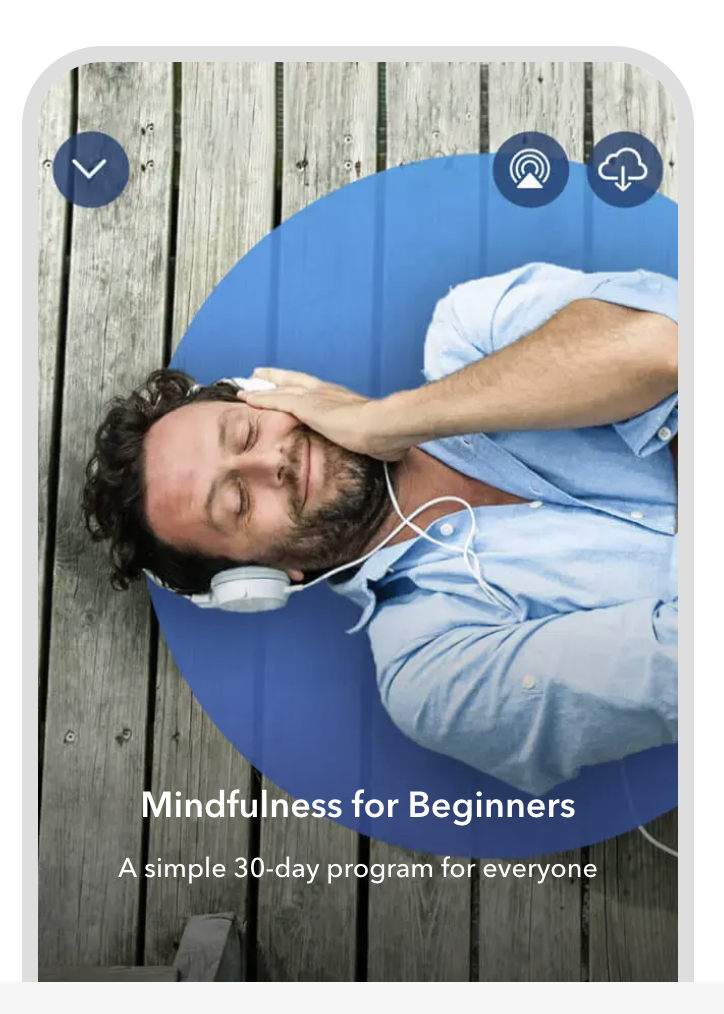
A man lying down smiling listening to headphones
Source: Calm app

Calm is a versatile meditation app that offers a variety of features to promote relaxation and improve sleep quality. It’s known for its celebrity-narrated sleep stories and daily meditation sessions.

An 8-week study by Huberty et al. (2019) with college students found that using the Calm app significantly improved mindfulness and self-compassion in short-term contexts. Results were comparable to in-person programs, but with added convenience and ease of use. 

Puzia et al. (2020) proposed that as kids grow older, they’re more likely to use Calm for stress, depression, and anxiety, while younger kids often use it for better sleep. 

Key Features:

  • Daily Calm feature for consistent practice
  • Celebrity-narrated sleep stories
  • Breathwork exercises and body scan meditations
  • Masterclasses taught by mindfulness experts
ProsCons
High-quality sleep contentExpensive subscription
Regular updatesLimited free features
Variety of meditation stylesSome users find narration too slow

Use case

An insomniac uses Calm’s sleep stories and soundscapes to create a relaxing bedtime routine and improve sleep quality. (This was me.)

To learn more, visit:

3. Insight Timer

Insight Timer app

Insight Timer boasts the largest free library of guided meditations, making it a popular choice for those seeking variety without a subscription. It also offers live events and courses led by renowned teachers.

Key Features:

  • Vast library of free guided meditations
  • Live events and group meditations
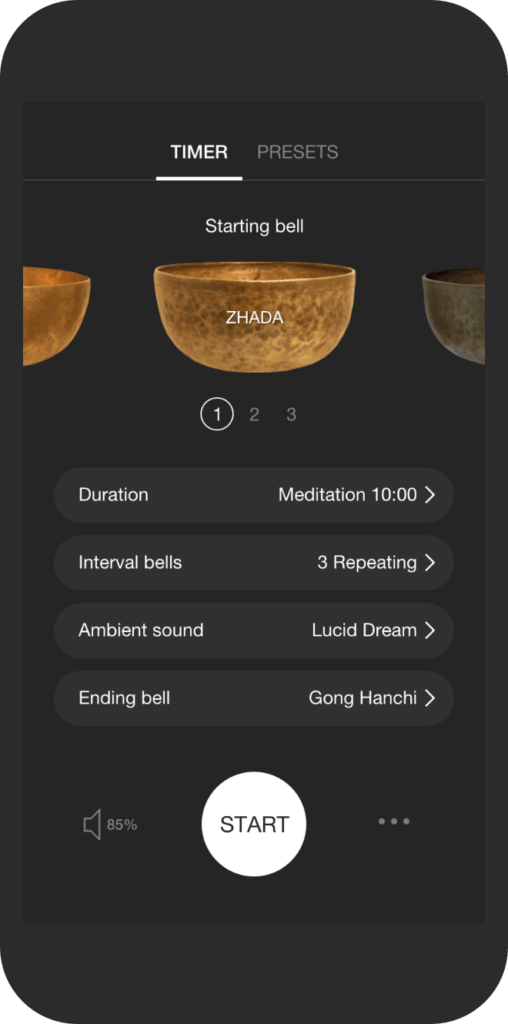
  • Customizable meditation timer with ambient sounds
  • Courses led by renowned teachers
ProsCons
Extensive free contentCan be overwhelming for beginners
Diverse range of teachersInconsistent audio quality
Strong community featuresPremium features require subscription

Use case

A curious meditator explores different meditation styles and teachers using Insight Timer’s vast free library.

To learn more, visit:

4. Buddhify

Source: Buddihify

Buddhify takes a unique approach with its wheel interface, offering meditations categorized by activity and mood. It’s designed for on-the-go practice and includes content for both adults and children.

Key Features:

  • Meditations categorized by activity and mood
  • Short sessions for on-the-go practice
  • Kid-friendly content for family mindfulness
  • Unique wheel interface for easy navigation
ProsCons
Affordable one-time purchaseLimited content compared to subscription apps
Offline access to all meditationsLess frequent updates
Situation-specific meditationsNo free trial available

Use case

A busy parent uses Buddhify’s short, activity-specific meditations to stay mindful throughout a hectic day.

To learn more, visit:

5. Ten Percent Happier

Source: 3PlayMedia

Founded by skeptic-turned-meditator Dan Harris, Ten Percent Happier offers a science-based approach to meditation. It features video lessons from respected teachers and personal coaching options.

Key Features:

  • Science-based approach to meditation
  • Video lessons from respected meditation teachers
  • Personal coaching option for personalized guidance
  • Integration with Apple Health for tracking
ProsCons
Evidence-based contentHigher price point
High-quality video productionLimited free content
Personal coaching availableMay not appeal to those seeking spiritual content

Use case

A meditation skeptic uses Ten Percent Happier to learn the scientific benefits of mindfulness and build a consistent practice.

To learn more, visit:

6. Smiling Mind

Developed by psychologists and educators, Smiling Mind is a completely free app offering age-specific programs for children and adults. It also includes workplace programs for stress management.

Key Features:

  • Age-specific programs for children and adults
  • Workplace programs for stress management
  • Completely free with no ads or in-app purchases
  • Evidence-based approach to mindfulness
ProsCons
Entirely freeLimited content compared to paid apps
Programs for all agesFewer features than some competitors
No ads or upsellsAustralian accent may not appeal to all users

Use case

A school implements Smiling Mind’s youth programs to teach mindfulness and emotional regulation to students.

To learn more, visit:

7. Simple Habit

Simple Habit focuses on short, 5-minute meditations designed for busy lifestyles. It offers situation-specific meditations and features to improve sleep quality.

Key Features:

  • 5-minute meditations for busy lifestyles
  • Situation-specific meditations (e.g., anxiety before a meeting)
  • Offline mode for meditation on-the-go
  • Sleep aid features for better rest
ProsCons
Quick, targeted meditationsLimited depth in short sessions
Offline accessSubscription required for full access
Situation-specific contentMay not suit those seeking longer practices

Use case 

A time-strapped entrepreneur uses Simple Habit’s 5-minute meditations between meetings to stay focused and calm.

To learn more, visit:

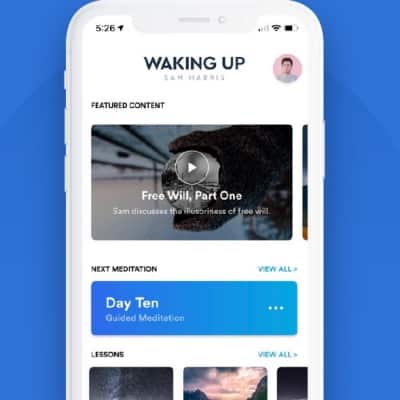
8. Waking Up

Source: Health Life Recovery

Waking Up offers in-depth exploration of meditation theory and practice. It includes conversations with spiritual teachers and scientists.

Key Features:

  • Founded by neuroscientist Sam Harris
  • In-depth theory and practice of meditation
  • Conversations with spiritual teachers and scientists
  • Moment feature for quick mindfulness breaks
ProsCons
Intellectual approachMay be too complex for beginners
High-quality contentLimited guided meditation variety
Combines science and spiritualityHigher price point

Use case 

A philosophy enthusiast uses Waking Up to deepen their understanding of consciousness while developing a meditation practice.

To learn more, visit:

9. Balance

Source: A Sweat Life

Balance offers personalized meditation plans that adapt to the user’s goals and experience. It provides mix-and-match meditation components and detailed progress insights.

Key Features:

  • Personalized plans based on user goals and experience
  • Adaptive programs that evolve with your practice
  • Mix-and-match meditation components
  • Progress insights and streak tracking
ProsCons
Highly personalizedRequires consistent use for best results
Adapts to user progressLimited community features
Flexible meditation buildingNewer app with less content than some competitors

Use case 

A goal-oriented meditator uses Balance to create a customized practice that evolves with their needs and tracks their progress over time.

To learn more, visit:

10. Aura

Aura offers short, science-backed mindfulness exercises, stories, and life coaching sessions to help patients manage stress, anxiety, and sleep issues.

Key Features:

  • Personalized daily meditations based on mood
  • 3-minute mindfulness exercises for quick stress relief
  • Sleep stories and sounds for better rest
  • Life coaching sessions on various topics
  • Mood tracking and gratitude journaling
ProsCons
AI-powered personalizationLimited free content
Short, manageable sessionsSome users find the AI recommendations repetitive
Wide variety of content typesSubscription required for full access
Integration with Apple HealthLess extensive library than some competitors

Use cases 

  • A busy professional uses Aura’s 3-minute mindfulness exercises during work breaks to reduce stress and improve focus throughout the day. 
  • A therapist recommends Aura to clients as a supplementary tool for managing anxiety between sessions, utilizing the app’s mood tracking and personalized meditation features.

To learn more, visit: https://www.aurahealth.io/

Choosing the Right App for You

Woman doing the Cobra yoga pose at the beach
Credit: Styled Stock Society

When selecting a meditation app:

  • Consider your specific goals (stress relief, sleep improvement, focus enhancement)
  • Take advantage of free trials to test different app features
  • Look for content and teaching styles that resonate with you
  • Check for integration with your devices and health apps
  • Read user reviews to get real-world perspectives on each app’s strengths and weaknesses

Conclusion

By carefully evaluating your needs and exploring these top meditation apps, you can find the perfect tool to support your mindfulness journey and reduce stress in your daily life.

Incorporating meditation into your daily routine can significantly reduce stress and improve overall well-being. With these top 10 meditation and mindfulness apps, you’re sure to find the perfect digital guide for your journey to inner peace.

The best app is the one you’ll use consistently. Try one today, and take the first step towards a calmer, more focused you.

References

Huberty, J., Green, J., Glissmann, C., Larkey, L., Puzia, M., & Lee, C. (2019). Efficacy of the Mindfulness Meditation Mobile App “Calm” to Reduce Stress Among College Students: Randomized Controlled Trial. JMIR MHealth and UHealth, 7(6). doi.org/10.2196/14273

Komariah, M., Ibrahim, K., Pahria, T., Rahayuwati, L., & Somantri, I. (2023). Effect of Mindfulness Breathing Meditation on Depression, Anxiety, and Stress: A Randomized Controlled Trial among University Students. Healthcare, 11(1). doi.org/10.3390/healthcare11010026

Macrynikola, N., Mir, Z., Gopal, T., Rodriguez, E., Li, S., Cox, M., Yeh, G., & Torous, J. (2024). The impact of mindfulness apps on psychological processes of change: A systematic review. Npj Mental Health Research, 3(1), 1-16. doi.org/10.1038/s44184-023-00048-5

Puzia, M. Laird, B., Green, J. & Huberty, J. (2020). Parents’ Perceptions of Their Children’s Engagement in a Consumer-Based Meditation Mobile App: Cross-Sectional Survey Study. JMIR Pediatrics and Parenting, 3(2). doi:10.2196/24536

10 Best Telehealth Platforms for Virtual Doctor Visits 

AI Health Tech Med Tech

Telehealth has become an essential part of modern healthcare, offering convenient access to medical professionals from the comfort of your home. 

According to a recent study by the American Medical Association, over 85% of physicians now see telehealth as a vital part of their practice. This surge in virtual healthcare has led to a proliferation of telehealth platforms, each offering unique features to connect patients with healthcare providers. 

But with so many options available, how do you choose the right platform for your needs?

This article reviews the 10 best telehealth platforms for virtual doctor visits, helping you move through virtual healthcare with confidence.

Contents

Factors to Consider When Choosing a Telehealth Platform

Before we dive into the top platforms, let’s look at some key factors to consider when selecting a telehealth service.

App icons on black background

User interface and ease of use

How user-friendly is the platform? Can you easily navigate the app or website to book appointments, chat with doctors, and access your medical records? A study found that user experience significantly impacts patient satisfaction and engagement in telehealth (Jiang et al., 2021).

Available medical specialties

Does the platform offer access to the type of healthcare providers you need? Some platforms focus on primary care, while others provide a wide range of specialties

Pricing and insurance acceptance

How much does the service cost, and does it accept your insurance? Some platforms offer flat-rate visits, while others use a subscription model. The National Association of Insurance Commissioners reports that 43 states and Washington D.C. have laws requiring private insurers to cover telehealth services.

Privacy and security features

Is the platform HIPAA-compliant and committed to protecting your personal health information? A study found that 71% of patients expressed concerns about data privacy in telehealth (Azad et al., 2021).

Prescription capabilities

Can doctors on the platform prescribe medications when necessary? Not all telehealth services offer this feature, so it’s important to check if you need regular prescriptions.

Top 10 Telehealth Platforms 

Now, let’s take a closer look at the top 10 telehealth platforms for online doctor visits.

1. Teladoc

Teladoc is one of the largest and most well-known telehealth providers, offering a wide range of medical services through its user-friendly platform.

Teladoc statistic: Over 50% of chronic care services live in underserved areas
Source: Teladoc Health’s LinkedIn page

Key Features:

  • 24/7 access to board-certified doctors
  • Covers a broad spectrum of medical conditions
  • Available via mobile app, web, or phone
ProsCons
Wide network of providersWait times can be long during peak hours
Accepts many insurance plansSome users report inconsistent care quality

Use case 

Sarah, a busy mom, uses Teladoc for late-night pediatric consultations when her children have minor illnesses.

To learn more, visit:

2. MDLive

MDLive provides on-demand healthcare services, including medical, dermatology, and behavioral health (mental health) consultations.

Doctor onscreen with patient - MDLive app
Source: MDLive

Key Features:

  • Virtual doctor visits are available within minutes
  • Offers both scheduled appointments and on-demand care
  • Integrates with many health plans and employers
ProsCons
Quick access to careLimited specialist options
User-friendly mobile appSome users report technical issues

Use case 

John, a frequent traveler, relies on MDLive for urgent care needs while he’s on the road.

To learn more, visit:

3. Amwell

Amwell offers a comprehensive telehealth platform with a focus on both urgent care and ongoing health management.

Screenshots from Amwell app in Apple's app store

Key Features:

  • Wide range of specialties available
  • 24/7 access to medical professionals
  • Integrates with many health systems and insurers
ProsCons
High-quality video consultationsHigher prices for some specialties
Easy-to-use interfaceLimited availability in some rural areas

Use case 

Emily uses Amwell to manage her chronic condition with regular check-ins with her specialist.

To learn more, visit:

4. Doctor on Demand

Doctor on Demand provides video visits with US-licensed healthcare providers for various medical and mental health concerns.

Patient using Doctor on Demand app
Source: Doctor on Demand

Key Features:

  • Offers both medical and mental health services
  • No subscription required pay per visit
  • Available nationwide
ProsCons
Transparent pricingLimited specialist options
Quick connection timesNot all services covered by insurance

Use case 

Mike uses Doctor on Demand for therapy sessions to manage his anxiety.

To learn more, visit:

5. PlushCare

PlushCare provides primary care services through its telehealth platform, with an emphasis on building ongoing relationships with providers.

Doctor onscreen - PlushCare app
Source: PlushCare

Key Features:

  • Same-day appointments often available
  • Offers ongoing primary care and prescription management
  • Works with many insurance plans
ProsCons
Continuity of care with the same doctorLimited specialist access
High patient satisfaction ratingsNot available in all states

Use case 

Lisa uses PlushCare as her primary care provider, managing her health through regular virtual check-ups.

To learn more, visit:

6. K Health

K Health LinkedIn post
Source: K Health’s LinkedIn page

K Health uses AI technology to provide personalized health assessments and connect users with doctors for virtual consultations.

Key Features:

ProsCons
Affordable pricing optionsLimited to certain medical conditions
Quick, AI-assisted triageSome users find the AI assessment confusing

Use case 

Tom uses K Health’s AI symptom checker to determine if he needs to speak with a doctor about his symptoms.

To learn more, visit:

7. Virtuwell

Virtuwell offers online diagnosis and treatment plans for common conditions, with a focus on quick, efficient care.

How Virtuwell Works

Key Features:

  • No video required text-based consultations
  • 24/7 availability
  • Treatment plans often ready within an hour
ProsCons
Fast turnaround timesLimited to specific conditions
Affordable flat-rate pricingNot available in all states

Use case 

Rachel uses Virtuwell for quick treatment of her recurring urinary tract infections.

To learn more, visit:

8. Lemonaid Health

Lemonaid LinkedIn post
Source: Lemonaid Health’s LinkedIn page

Lemonaid Health, part of 23andMe, provides online consultations and prescription services for a variety of common health concerns.

Key Features:

  • Same-day prescriptions for many conditions
  • Offers lab testing services
  • Flat-rate pricing for consultations
ProsCons
Quick and easy prescription processLimited to specific conditions
Transparent pricingNot covered by insurance

Use case 

David uses Lemonaid Health to manage his hair loss treatment.

To learn more, visit:

9. 98point6

98point6 offers text-based primary care consultations with board-certified physicians, using AI to streamline the process.

https://vimeo.com/98point6/experience?share=copy

Key Features:

  • On-demand, text-based care
  • Subscription model for unlimited visits
  • Available nationwide
ProsCons
Convenient text-based formatLimited to primary care
Affordable subscription pricingSome users prefer video consultations

Use case 

Amanda uses 98point6 for quick medical advice and prescriptions for common ailments.

To learn more, visit:

10. Ro

Ro focuses on specific health concerns, including sexual health, fertility, weight management, and smoking cessation.

Ro app
Source: Ro

Key Features:

  • Specialized care for specific health issues
  • Includes medication delivery services
  • Offers ongoing care plans
ProsCons
Comprehensive care for specific conditionsLimited to certain health concerns
Convenient medication deliveryHigher costs for some treatments

Use case 

Mark uses Ro to manage his erectile dysfunction treatment discreetly.

To learn more, visit:

Comparison of Key Features Across Platforms

Each platform offers a unique combination of features and services. To help you make an informed decision, let’s compare some key features across them.

PlatformPricing ModelAvailabilityDevice CompatibilityAdditional Services
TeladocPer visit or subscription24/7Mobile, web, phoneMental health, dermatology
MDLivePer visit24/7Mobile, webBehavioral health, dermatology
AmwellPer visit24/7Mobile, webNutrition counseling, breastfeeding support
Doctor on DemandPer visit24/7Mobile, webMental health, preventive health
PlushCareSubscription + per visitScheduledMobile, webLab testing, ongoing primary care
K HealthSubscription or per visit24/7MobileAI symptom checker, mental health
VirtuwellPer visit24/7Mobile, webTreatment plans, prescriptions
Lemonaid HealthPer visitExtended hoursMobile, webLab testing, birth control
98point6Subscription24/7MobileText-based primary care
RoSubscription or per treatmentVariesMobile, webMedication delivery, ongoing care plans

When choosing a telehealth platform, consider your specific healthcare needs, budget, and preferences for communication methods.

Remember, telehealth is not a replacement for all in-person medical care. A study published in the Journal of Medical Internet Research found that while 82% of patients were satisfied with their telehealth experience, 21% still preferred in-person visits for certain conditions (Ramaswamy et al., 2020).

Conclusion

Robust telehealth platforms have opened up new avenues for accessing healthcare, bringing convenience and efficiency to patient care. Each of the top 10 telehealth platforms for virtual doctor visits offers unique strengths to cater to diverse healthcare needs. 

Whether you’re seeking urgent care, mental health support, or specialist consultations, there’s likely a platform that fits your requirements. As virtual healthcare continues to evolve, staying informed about these platforms empowers you to make the best choices for your health. 

Ready to experience the benefits of telehealth firsthand? Choose a platform that resonates with your needs and take the first step towards more accessible healthcare.

References

American Medical Association. 2021 Telehealth Survey Report. Chicago, IL: American Medical Association; 2021. Retrieved from https://www.ama-assn.org/system/files/telehealth-survey-report.pdf

Azad, M., Arshad, J., Akmal, S. M. A., Riaz, F., Abdullah, S., Imran, M., & Ahmad, F. (2021). A First Look at Privacy Analysis of COVID-19 Contact Tracing Mobile Applications. IEEE Internet of Things Journal, 8(21), 15796-15806. doi.org/10.1109/JIOT.2020.3024180

Clarity Ventures. (2024). Updated for 2024: The 21 Best Telemedicine Software Providers.  Retrieved from https://www.clarity-ventures.com/hipaa-ecommerce/telemedicine-software-providers

Jiang, J., Zhu, Q., Zheng, Y., Zhu, Y., Li, Y., & Huo, D. (2021). Perceptions and Acceptance of mHealth in Patients With Cardiovascular Diseases: A Cross-Sectional Study. JMIR mHealth and uHealth, 9(2), e24260. doi.org/10.2196/24260

National Association of Insurance Commissioners. (2022). Telehealth Insurance Coverage. https://content.naic.org/cipr-topics/telehealth-insurance-coverage

Ramaswamy, A., Yu, M., Drangsholt, S., Ng, E., Culligan, P. J., Schlegel, P. N., & Hu, J. C. (2020). Patient Satisfaction With Telemedicine During the COVID-19 Pandemic: Retrospective Cohort Study. Journal of Medical Internet Research, 22(9), e20786. doi.org/10.2196/20786

How Digital Health Platforms Affect Healthcare Costs

AI Health Tech Med Tech

As healthcare costs continue to go up, digital health platforms are emerging as powerful cost-cutting tools. The global digital health market size was estimated at $240.9 billion in 2023 and is projected to grow at a compound annual growth (CAGR) of 21.9% from 2024 to 2030. 

These platforms are not just fancy apps or websites. From telehealth to AI-powered diagnostics, digital health applications are changing healthcare for the better. 

How do these platforms trim the fat from our bloated healthcare system? Let’s explore the ways digital health can make healthcare more affordable for everyone.

Contents

Telemedicine: Healthcare at Your Fingertips

Telemedicine brings healthcare right to your home, office, or wherever you are. It’s like having a doctor in your pocket! But how does this convenience translate to cost savings?

Woman in green sweater talking to doctor on Zoom

Virtual doctor visits reduce travel and waiting room costs

A study published in the Journal of Medical Internet Research found that telehealth visits saved patients an average of 100 minutes of travel time and $50 in travel costs per visit (Snoswell et al., 2020).

Think about the last time you went to the doctor. How much time did you spend traveling and sitting in the waiting room? With telehealth, those time and money costs disappear. 

Fewer ER visits

How often have you wondered if that late-night stomach ache was worth a trip to the ER? Telehealth tools like AI chatbots can help you make that decision without leaving home. 

Cost savings for both patients and healthcare providers

It’s not just patients who save money. Healthcare providers benefit too. Telehealth services have been found to reduce healthcare costs for providers and patients. Even better, many insurers now have an allowance to cover the cost of certain telehealth visits.

Preventive Care: Stopping Problems Before They Start

Have you ever heard the saying “an ounce of prevention is worth a pound of cure”? Digital health platforms are making this old adage more relevant than ever.

How digital platforms promote healthy habits

Fitness app in the gym

From step counters to diet trackers, digital health apps are helping us stay healthier. But do they really make a difference? A study by Ernsting et al. (2017) found that users of health and fitness apps were 34% more likely to meet physical activity guidelines compared to non-users.

Wearable devices and their impact on early detection

glucose monitor on arm with phone app showing glucose level

Smartwatches surpass the practical use of telling time–they’re becoming powerful health monitors. For example, Apple Watch’s ECG feature can detect atrial fibrillation with 98% accuracy, potentially preventing strokes and saving lives (Perez et al., 2019).

How AI and big data can predict health risks and reduce costs

Big Data Analytics in healthcare uses AI, machine learning and deep learning tools to help doctors find the best treatments for each patient, which can reduce waste. This lets doctors predict health problems  and start treatments early, which can save lives. This could change how common certain diseases are and save money on healthcare (Batko & Ślęzak, 202​​2).

Cost savings through prevention vs. treatment

Prevention isn’t just better for our health—it’s better for our wallets too. The Centers for Disease Control and Prevention estimates that chronic diseases that are avoidable through preventive care account for 75% of the nation’s healthcare spending.

Streamlined Administrative Processes

Paperwork is no one’s favorite part of healthcare. Digital platforms are making administrative tasks faster, easier, and more cost-effective.

Automated appointment scheduling and reminders

Have you ever forgotten a doctor’s appointment? Digital reminders can help. 

Smartwatch with phone and dumbbells

Ulloa-Pérez et al. (2022) found that sending an extra text reminder for high-risk appointments reduced no-shows in primary care and mental health offices, and same-day cancellations in primary care offices. 

Targeting reminders using risk prediction models (predictive analytics) can efficiently use healthcare resources, potentially preventing hundreds of missed visits monthly. This approach saves costs compared to messaging all patients, though implementing the risk model has some costs.

Digital health records reduce paperwork and administrative errors 

Nurse charting

Remember when doctors used to write prescriptions by hand? Digital health records make all kinds of admin work more efficient. A study in the Journal of the American Medical Informatics Association found that electronic health records with AI can reduce medication and billing errors.

Cost savings through improved workflow and resource allocation

Efficient workflows mean better care at lower costs. A study in the Journal of Medical Internet Research found that digital health platforms improved hospital workflow efficiency by 25%, leading to annual cost savings of $1.2 million for a mid-sized hospital (Luo et al., 2019).

Person looking at white overlay

Data-Driven Insights for Better Decision Making

In the age of big data, information is power. Healthcare is no exception. With all this digital information, doctors can make smarter choices about your health. 

How big data analytics improve treatment plans

A study in the Journal of Big Data found that big data analytics improved treatment efficacy by 30% and reduced treatment costs by 20% (Dash et al., 2019).

Cost savings from shorter and fewer hospital stays

Nurse standing in a recovery room

Have you ever wondered how hospitals decide how many beds they need? Predictive analytics is the answer. It can reduce hospital bed shortages and decrease operational costs.

Hospital stays are expensive, but RPM can help shorten them. RPM allows patients to be discharged an average of 2 days earlier, resulting in cost savings of $7,000 per patient.

Personalized medicine and its impact on cost reduction

One size doesn’t fit all in healthcare. Targeted treatments are more effective and cost-effective. 

  • Personalized treatment plans based on genetic data improve treatment efficacy and reduce adverse drug reactions (ADRs).
ECG monitor closeup on stomach

Remote Patient Monitoring: Reducing Hospital Stays

Sometimes, the best hospital care happens outside the hospital. 

Remote patient monitoring (RPM) allows health providers to keep an eye on patients without keeping them in the hospital. From smart pills to wearable sensors, remote monitoring technologies are diverse and growing. 

Impact on reducing hospital readmissions

Nobody likes going back to the hospital. Remote monitoring can help prevent that. A study in the New England Journal of Medicine found that remote monitoring reduced hospital readmissions for heart failure patients by 50% (Perez et al., 2019).

Management of chronic conditions from home

Gentleman taking his blood pressure in tan shirt

Chronic conditions are a major driver of healthcare costs. Remote monitoring can help manage these conditions more effectively. 

A 2024 study showed that telehealth reduces healthcare costs by cutting down on hospital visits, travel time, and missed work, especially for managing chronic conditions. This benefits both patients and healthcare systems financially (Prasad Vudathaneni et al., 2024).

Increasing Access to Specialized Care

Specialized care can be hard to access, especially in rural areas. Digital health isn’t just about general care – it’s also bringing expert help to more people.

Telehealth solutions for rural and underserved areas

Rural healthcare access is a major challenge. Telehealth can help bridge that gap. A study in Health Affairs found that telehealth increased access to specialty care in rural areas by 54%.

Telehealth also faces challenges like high setup costs and outdated payment models, especially in rural areas. Its success depends on cost distribution, clinical outcomes, and indirect savings. Hospitals need funding and strategies to reach underserved groups and ensure fair access to telehealth (Anawade et al., 2024).

Virtual second opinions and their impact on treatment decisions

Getting a second opinion can be life-changing. Virtual platforms make it easier than ever. Virtual second opinions can change the diagnosis or treatment plan in over one-third of cases, potentially avoiding unnecessary procedures and costs.

Conclusion

Digital health platforms are powerful allies to counteract rising healthcare costs. By leveraging technology for prevention, efficiency, and data-driven insights, these platforms are making healthcare more accessible and affordable. From applications like telehealth reducing unnecessary ER visits to catching illnesses early with AI-powered diagnostics, the potential for cost savings is huge. 

As patients, we can embrace these digital tools to take control of our health and potentially lower our healthcare expenses. For healthcare providers, adopting these platforms could lead to more efficient operations and better patient outcomes. 

What do you think about these digital health innovations? Have you used any of these technologies in your own healthcare journey? 

References

Anawade, P. A., Sharma, D., & Gahane, S. (2024). A Comprehensive Review on Exploring the Impact of Telemedicine on Healthcare Accessibility. Cureus, 16(3). doi.org/10.7759/cureus.55996

Batko, K., & Ślęzak, A. (2022). The use of Big Data Analytics in healthcare. Journal of Big Data, 9(1). doi.org/10.1186/s40537-021-00553-4

Centers for Disease Control and Prevention. (2021). Chronic diseases in America. Retrieved from https://www.cdc.gov/chronicdisease/resources/infographic/chronic-diseases.htm

Dash, S., Shakyawar, S. K., Sharma, M., & Kaushik, S. (2019). Big data in healthcare: Management, analysis and future prospects. Journal of Big Data, 6(1), 1-25. doi.org/10.1186/s40537-019-0217-0

Ernsting, C., Dombrowski, S. U., Oedekoven, M., & Kanzler, M. (2017). Using smartphones and health apps to change and manage health behaviors: A population-based survey. Journal of Medical Internet Research, 19(4), e101.

Grand View Research. (2024). Digital Health Market Size, Share & Trends Analysis Report By Technology (Healthcare Analytics, mHealth), By Component (Hardware, Software, Services), By Application, By End-use, By Region, And Segment Forecasts, 2024 – 2030. Retrieved from https://www.grandviewresearch.com/industry-analysis/digital-health-market

Luo, L., Li, J., Liang, X., Zhang, J., & Guo, Y. (2019). A cost-effectiveness analysis of a mobile-based care model for community-dwelling elderly individuals. Journal of Medical Internet Research, 21(5), e13563.

Perez, M. V., Mahaffey, K. W., Hedlin, H., Rumsfeld, J. S., Garcia, A., Ferris, T., Balasubramanian, V., Russo, A. M., Rajmane, A., Cheung, L., Hung, G., Lee, J., Kowey, P., Talati, N., Nag, D., Gummidipundi, S. E., Beatty, A., Hills, M. T., Desai, S., … Turakhia, M. P. (2019). Large-scale assessment of a smartwatch to identify atrial fibrillation. New England Journal of Medicine, 381(20), 1909-1917.

Personalized Medicine Coalition. (2020). The personalized medicine report: Opportunity, challenges, and the future. Retrieved from http://www.personalizedmedicinecoalition.org/Userfiles/PMC-Corporate/file/The-Personalized-Medicine-Report1.pdf

Prasad Vudathaneni, V. K., Lanke, R. B., Mudaliyar, M. C., Movva, K. V., Kalluri, L. M., & Boyapati, R. (2024). The Impact of Telemedicine and Remote Patient Monitoring on Healthcare Delivery: A Comprehensive Evaluation. Cureus, 16(3). doi.org/10.7759/cureus.55534

Snoswell, C. L., Taylor, M. L., Comans, T. A., Smith, A. C., Gray, L. C., & Caffery, L. J. (2020). Determining if telehealth can reduce health system costs: Scoping review. Journal of Medical Internet Research, 22(10), e17298.

Ulloa-Pérez, E., Blasi, P. R., Westbrook, E. O., Lozano, P. , Coleman, K. F., & Coley, R. Y.  (2022). Pragmatic Randomized Study of Targeted Text Message reminders to Reduce Missed Clinic Visits. The Permanente Journal, 26(1), doi/10.7812/TPP/21.078

Winstead, E. (2023). Telehealth Can Save People with Cancer Time, Travel, and Money. National Cancer Institute. Retrieved from https://www.cancer.gov/news-events/cancer-currents-blog/2023/telehealth-cancer-care-saves-time-money

How Health Apps Promote Preventive Care and Early Disease Detection

How Health Apps Promote Preventive Care and Early Disease Detection

AI Health Tech

Health apps have become powerful tools for preventive care and early disease detection. From tracking daily habits to advanced symptom checkers, these apps have made it much easier to manage our health, putting vital information and monitoring capabilities right at our fingertips. 

Let’s see how these innovative health apps promote preventive care, empowering users to take proactive steps towards better health outcomes.

Contents

Preventive Care and App Usage

Preventive Care sign and stethoscope

Health apps play a crucial role in preventive care by empowering people to take a proactive approach to manage their health. They include features to monitor vital signs, track fitness goals, and assess disease risks–all from the convenience of a smartphone.

Before we discuss how health apps promote preventive care, let’s define and review that concept.

What is preventive care?

Preventive care refers to routine healthcare services aimed at preventing illnesses and detecting health issues before they become serious. This includes regular check-ups, vaccinations, screenings, and lifestyle counseling. 

Focusing on prevention can help people stay healthier, save money, and catch issues early when they’re more treatable. Preventing diseases is often easier and more cost-effective than treating them. 

Growth of health app market in recent years

The health app market isn’t just growing; it’s booming. With over 300,000 health apps available and about 200 new ones released daily, we have a vast array of options available anytime. 

As of 2023, there’s been over 200 million diet and nutrition app downloads, and 20% of Americans use wearable devices integrated with health and fitness apps. This growth is driven by increasing smartphone usage, rising awareness about health and fitness, and the convenience these apps offer.

The health app market has seen explosive growth in recent years. In fact, the global mHealth apps market size was estimated at USD 32.42 billion in 2023 and is anticipated to grow at a compound annual growth rate (CAGR) of 14.9% from 2024 to 2030

This surge reflects a big shift in healthcare from reactive treatment to proactive prevention.

Key features of successful preventive care apps

What makes a preventive care app successful? The most effective apps share some common features:

  • User-friendly interfaces

  • Personalized health recommendations

  • Integration with wearable devices

  • Data visualization tools

  • Social sharing capabilities

  • Regular updates based on the latest health guidelines

These features help users stay engaged and motivated in their health journey.

Woman with headphones stretching before a run outside
Source: Styled Stock Society

Who’s using these apps? While health apps appeal to a broad audience, certain demographic trends are emerging. 

A study found that 84 million people in the U.S. used healthcare apps to monitor their health-related activities in 2022. Millennials and Gen Z lead the charge in health app adoption, with a particular focus on fitness and mental health apps.

Apps for Health Monitoring and Tracking

As health apps continue to grow in popularity, let’s explore some of the most popular categories and how they’re helping users monitor their health.

Apps to track vital signs 

Purple pulse oximeter and mask

Vital sign tracking apps have become increasingly sophisticated. Many can now measure heart rate, blood pressure, and even blood oxygen levels using just a smartphone camera or with wearable devices. 

For example, the Cardiio app uses a smartphone camera to measure heart rate with 97% accuracy compared to clinical pulse oximeters.

Apps to monitor sleep patterns and quality

Older woman asleep wearing smartwatch next to cell phone

Poor sleep can increase your risk of various health issues. 

Sleep tracking apps help users understand their sleep patterns and quality. Apps like Sleep Cycle use your phone’s microphone and accelerometer to analyze your sleep stages and wake you up during your lightest sleep phase.

Apps for nutrition and diet tracking 

Measuring tape with grapes apples phone

Maintaining a healthy diet is crucial for preventive care. Nutrition apps like MyFitnessPal allow users to log their food intake, track calories, and monitor nutrient balance. These apps often include extensive food databases and barcode scanners for easy logging.

Physical activity and fitness monitoring

Fitness apps have come a long way from simple step counters. Apps like Strava or Nike Run Club can track various activities, provide workout plans, and even offer virtual coaching. Many integrate with wearable devices for more accurate data collection.

Man with sarcopenia and a cane

One study of older adults found that the Sit to Stand app can detect older adults with both frailty/pre-frailty and sarcopenia (Montemurro et al., 2024). The app was very accurate, with an 80-92% success rate. People the app identified with both frailty and sarcopenia were more likely to have other health problems like falls, hospitalization, depression, and low income. 

Early Detection: Symptom Checkers and Risk Assessment Apps

One of the most exciting developments in health apps is their potential for early disease detection. Let’s look at how these apps are helping users identify potential health issues early.

Symptom checker apps like Ada or WebMD Symptom Checker allow users to input their symptoms and receive potential diagnoses. While these apps shouldn’t replace professional medical advice, they can help users decide whether to seek medical attention. 

A study of 22 symptom checker apps had low average diagnostic accuracy rates, highlighting the need for continued improvement in this area (Schmieding et al., 2022).

Risk assessment tools for common diseases

Many apps now offer risk assessment tools for common diseases like diabetes, heart disease, or certain cancers. These tools typically use questionnaires about lifestyle factors, family history, and sometimes integrate data from other health tracking features to provide a personalized risk assessment.

Elderly woman with pills and a walker

A UK study by Reid et al. (2024) looked at how well older adults could use a digital test for dementia risk and brain function. The test was easy for participants to complete. 

Age affected all brain tests, while gender and education only impacted verbal skills. Women and those with more education did better on word-related tasks. Age was linked to lower scores on all tests, which matches what we know about aging and brain health, and could help spot early signs of brain decline.

AI-powered apps for skin cancer detection

Skin cancer detection apps are a prime example of how AI is enhancing early detection capabilities. 

Man examining a skin lesion on his arm

Apps like SkinVision use machine learning algorithms to analyze photos of skin lesions and provide a risk assessment. A study found that SkinVision had a 95.1% sensitivity in detecting malignant skin lesions (Smak Gregoor et al., 2023).

Mental health screening and mood tracking applications

Mental health apps are playing an increasingly important role in early detection of mental health issues. Apps like Moodfit or Daylio allow users to track their mood over time, potentially identifying patterns that could indicate underlying mental health concerns.

Integrating Health Apps with Healthcare Systems

The real power of health apps lies in their ability to integrate with broader healthcare systems. This integration changes how we interact with healthcare providers and manage our health data.

Apps that connect users with healthcare providers

Telehealth apps like Teladoc or Doctor On Demand allow users to consult with healthcare providers remotely. These apps have become particularly valuable during the COVID-19 pandemic, providing safe access to medical advice.

Electronic health record integration capabilities

Some health apps can now integrate with electronic health records (EHRs), allowing for seamless sharing of health data between patients and healthcare providers. This integration can lead to more informed medical decisions and better continuity of care.

Telehealth features in preventive care apps

Many preventive care apps now include telehealth features, allowing users to share their health data directly with healthcare providers and receive personalized advice. This integration of tracking and consultation features creates a more comprehensive health management experience.

Data sharing and privacy considerations

With the increasing amount of health data being collected and shared, privacy concerns are paramount. 

Health apps must comply with regulations like HIPAA to protect user data. Users should always review an app’s privacy policy and understand how their data will be used and protected.

Conclusion

Health apps for preventive care and early detection are more than just trendy tools–they’re becoming essential allies in our quest for better health. Putting the power of prevention in our pockets, these apps can help users spot potential issues early, track important health metrics, and make informed decisions about their well-being. 

While health apps are valuable, they should complement professional medical advice–not replace it. Don’t wait for a health problem to arise. Start exploring these apps, and take the first step towards a healthier, more proactive lifestyle.

References

8 Types of Preventive Care to Ensure Health Life for Seniors. (2022). EliteCare Health Centers. Retrieved from https://www.elitecarehc.com/blog/8-types-of-preventive-care-to-ensure-healthy-life-for-seniors/

Deb, T. (2024). Diet and Nutrition Apps Statistics 2024 By Tracking, Health and Wellness. Market.us Media. Retrieved from https://media.market.us/diet-and-nutrition-apps-statistics/

Deb, T. (2024). Home Gyms in Your Pocket: The Fitness App Market is on Fire, Reaching USD 4.9 Billion in 2023. Market.us Media. Retrieved from https://media.market.us/fitness-app-market-news/

Grand View Research. (2023). mHealth Apps Market Size, Share & Growth Report, 2030. Retrieved from https://www.grandviewresearch.com/industry-analysis/mhealth-app-market

Gupta, I. (2024). Trends in Telemedicine App Development 2024. iMark Infotech. Retrieved from https://www.imarkinfotech.com/trends-in-telemedicine-app-development-2024/

Jayani, P. (n.d.). The Ultimate Guide to EHR Integration for Mobile Health Apps. Blue Whale Apps. Retrieved from https://bluewhaleapps.com/blog/the-ultimate-guide-to-ehr-integration-for-mobile-health-apps

mHealth Apps Market Size | share and Trends 2024 to 2034. (2024). Precedence Research. Retrieved from https://www.precedenceresearch.com/mhealth-apps-market

Montemurro, A., Rodríguez-Juan, J. J., Martínez-García, M., & Ruiz-Cárdenas, J. D. (2024). Validity of a video-analysis-based app to detect prefrailty or frailty plus sarcopenia syndromes in community-dwelling older adults: Diagnostic accuracy study. DIGITAL HEALTH. doi.org/10.1177/20552076241232878

Reid, G., Vassilev, P., Irving, J., Ojakäär, T., Jacobson, L., Lawrence, E. G., Barnett, J. Tapparel, M., & Koychev, I. (2024). The usability and reliability of a smartphone application for monitoring future dementia risk in ageing UK adults. The British Journal of Psychiatry; 224(6):245-251. doi:10.1192/bjp.2024.18

Schmieding, M., Kopka, M., Schmidt, K., Schulz-Niethammer, S., Balzer, F., Feufel, M. (2022).

Triage Accuracy of Symptom Checker Apps: 5-Year Follow-up Evaluation. Journal of Medical Internet Research; 24(5):e31810, doi.org/10.2196/31810

Smak Gregoor, A. M., Sangers, T. E., Bakker, L. J., Hollestein, L., A., C., Nijsten, T., & Wakkee, M. (2023). An artificial intelligence based app for skin cancer detection evaluated in a population based setting. Npj Digital Medicine, 6(1), 1-8. doi.org/10.1038/s41746-023-00831-w

What is Preventive Care? (2018). ConnectiCare. Retrieved from https://www.connecticare.com/live-well/blog/wellness-and-prevention/whats-preventive-care

Fitness Apps vs. Personal Trainers: Which is Right for You?

Fitness Apps vs. Personal Trainers: Which is Right for You?

AI Health Tech

Author’s note: I teach a few group exercise classes each week, and recently, my manager asked if anyone wanted to become a personal trainer to lighten his load. This got me thinking about why some people hire personal trainers while others opt for group classes or the DIY route with fitness apps.

Since fitness enthusiasts can opt for the convenience of fitness apps or the personalized, real-time guidance of a personal trainer, which route is more effective for overall health? 

Fitness apps and personal training are both popular ways to get fit:

This article discusses what to think about when deciding between using fitness apps and personal trainers, to see which option is the best fit for this phase of your overall physical and mental wellness.

Contents

The Rise of Fitness Apps

Fitness apps have become a staple in modern fitness, offering a convenient and often cost-effective way to stay active. But how did we get here, and what makes them so appealing?

Evolution of fitness technology

The journey of fitness technology has been remarkable. From simple pedometers to sophisticated apps that track every aspect of your health, technology has changed how we approach fitness. Advancements with AI and machine learning allow for personalized workout plans and real-time feedback.

Source: 3DLOOK

Fitness apps offer a wide range of features that cater to different fitness needs. Some of the most popular features include:

Types of fitness apps available

Woman at the beach meditating on a mat
Source: Styled Stock Society

There are various types of fitness apps available, each catering to different aspects of fitness:

As fitness apps continue to evolve, they offer increasingly sophisticated and personalized experiences, making them an attractive option for many fitness enthusiasts.

The Enduring Appeal of Personal Trainers

Despite the rise of digital fitness solutions, personal trainers remain a popular choice for many individuals seeking a more personalized approach to fitness.

Deadlift with a personal trainer

The traditional role of personal trainers

Personal trainers have long been a cornerstone of the fitness industry, offering one-on-one guidance and support. 

They’re not just exercise instructors, but also mentors and motivators who help clients achieve their fitness goals. Trainers provide a structured environment that can be crucial for those who struggle to maintain discipline on their own.

Qualifications and expertise

A good personal trainer possesses a wealth of knowledge and expertise. They are certified professionals who understand exercise science and can tailor programs to individual needs. This expertise ensures that clients receive safe and effective workouts, reducing the risk of injury.

Personalized approach to fitness

One of the greatest advantages of working with a personal trainer is the personalized approach they offer. 

Trainers create customized workout plans that consider a client’s fitness level, goals, and any physical limitations. This tailored approach ensures that every session is effective and aligned with the client’s objectives.

Personal trainers provide a level of personalization and accountability that apps can’t, making them an enduring choice for many fitness enthusiasts.

Comparing Costs: Apps vs Trainers

When it comes to fitness, cost is a significant factor for many people. How do fitness apps and personal trainers compare in terms of expenses?

Rollouts with a personal trainer

Subscription models for fitness apps

Fitness apps typically operate on a subscription model, offering both free and premium options. 

The freemium model allows you to access basic features for free, while premium subscriptions unlock advanced features like personalized coaching and detailed progress tracking. Monthly subscriptions can range from $10 to $30, making them a cost-effective option.

Average rates for personal training sessions

In contrast, personal trainers charge by the session, with rates varying based on location and trainer experience. 

On average, a one-hour in-person personal training session can cost anywhere from $20 to $300 depending on whether you’re in a large metro area or a small city. While this is a higher upfront cost compared to apps, the personalized attention and expertise provided by trainers can justify the expense for many individuals.

In contrast, online personal trainers charge from $25 to $75 per hour.

Long-term financial considerations

Woman in white walking on treadmill
Source: Styled Stock Society

Over the long term, the cost of personal training can add up significantly compared to fitness apps. However, the investment in a personal trainer may lead to better results and a deeper understanding of fitness, potentially reducing healthcare costs related to inactivity or improper exercise. 

Ultimately, the choice between apps and trainers will depend on individual priorities and financial considerations.

Motivation and Accountability

Staying motivated and accountable is crucial for achieving fitness goals. How do fitness apps and personal trainers differ in this regard?

How apps encourage consistent workouts

Fitness apps use various strategies to keep users motivated. Gamification elements, such as earning points and badges, make workouts more engaging and competitive. Additionally, many apps offer progress tracking and reminders to help users stay on track. 

Social features also play a significant role, with many users motivated by the ability to share achievements and join challenges with friends.

The motivational impact of a personal trainer

3 women doing bicycle leg exercises outside
Source: Styled Stock Society

Personal trainers provide a level of motivation that apps cannot match. They act as constant sources of encouragement, pushing clients beyond their comfort zones and helping them achieve things they never thought possible. 

Trainers hold clients accountable by setting goals, tracking progress, and providing regular feedback, which can be crucial for maintaining consistency.

Self-discipline factors in both approaches

Both fitness apps and personal trainers require a degree of self-discipline from the user. While apps offer flexibility and convenience, they rely on the user to stay committed. 

Personal trainers, on the other hand, provide external accountability, which can be beneficial for those who struggle with self-motivation. Ultimately, the choice between apps and trainers will depend on an individual’s ability to stay disciplined and motivated.

Customization and Adaptability

Customization and adaptability are key factors in achieving fitness goals. Here’s how fitness apps and personal trainers compare in this regard.

AI-driven personalization in fitness apps

Person touching their fitness watch
Source: Styled Stock Society

Fitness apps leverage AI to offer personalized workout plans tailored to individual needs and preferences. 

AI algorithms analyze user data, such as fitness level and exercise history, to create customized routines that optimize results. This level of personalization ensures that workouts are effective and engaging, catering to the user’s specific goals.

However, some apps don’t offer personalized adjustments to their programs, so if you need a program tailored to your needs, like getting back into an exercise routine after an injury, a personal trainer may be a better choice.

Tailored programs from personal trainers

Personal trainers excel at creating customized workout plans that consider a client’s unique needs, goals, and limitations. They conduct comprehensive assessments to understand the client’s fitness level and preferences, allowing them to design effective and personalized routines. 

This hands-on approach ensures that every session is aligned with the client’s objectives and capabilities.

Addressing individual needs and limitations

Both fitness apps and personal trainers address individual needs and limitations but in different ways. 

Apps offer flexibility and convenience, so you can work out at your own pace and schedule. Personal trainers, on the other hand, provide real-time feedback and adjustments, ensuring that exercises are performed correctly and safely. 

The choice between apps and trainers will depend on the level of customization and adaptability an individual requires.

Exercise Form and Safety

Proper exercise form and safety are crucial for preventing injuries and achieving fitness goals. Fitness apps and personal trainers address these aspects a little differently.

Squats with a personal trainer

Video demonstrations in apps

Many fitness apps offer video demonstrations of exercises, providing visual guidance on proper form and technique. These videos can be helpful for those new to certain exercises or who need a refresher on form. However, they can’t provide real-time feedback and corrections, which can be a limitation for some.

Real-time form correction from trainers

Personal trainers provide real-time feedback and corrections, ensuring their clients perform exercises with proper form and technique. This hands-on approach reduces the risk of injury and maximizes the effectiveness of each workout. 

Trainers can also modify exercises to accommodate any physical limitations or injuries, providing a level of safety that apps can’t.

Injury prevention considerations

Both fitness apps and personal trainers emphasize injury prevention but in different ways. Apps offer instructional videos and reminders about proper form, while trainers provide personalized guidance and adjustments. For individuals who prioritize safety and form, working with a personal trainer may be the better option.

Community and Support

Community and support play a significant role in achieving fitness success. How do fitness apps and personal trainers compare in this regard?

3 women running together
Source: Styled Stock Society

Virtual communities in fitness apps

Fitness apps often include social features that allow users to connect with others, share progress, and participate in community challenges. 

These virtual communities provide a sense of camaraderie and support, motivating users to stay committed to their fitness goals. However, the level of interaction is limited to digital communication, which may not be as fulfilling for some.

In-person interactions with trainers and gym-goers

Personal trainers offer in-person interactions that can be more engaging and supportive than virtual communities. 

Trainers provide personalized attention and encouragement, fostering a strong sense of accountability and motivation. Additionally, working with a trainer in a gym setting allows for interactions with other gym-goers, creating a supportive environment that can enhance the fitness experience.

The role of social support in fitness success

3 women stretching outside
Source: Styled Stock Society

Fitness apps and personal trainers provide social support in different ways. 

Apps offer virtual communities that connect like-minded individuals, while trainers provide personalized support and motivation. The choice between apps and trainers will depend on an individual’s preference for digital or in-person interactions.

Training with an exercise partner vs. using a personal trainer

Lu et al. (2024) ran a 12-week study to compare results from working with a personal trainer, exercising with a friend, or doing it on your own with an app.

The results showed that:

  • Participants working out alone had no weight loss.

  • Participants who exercised with a friend had more improvements to their strength training, but didn’t have much weight loss.

  • Those working with a personal trainer had significantly better leg training improvements and weight loss than those working out alone or with a friend.

Flexibility and Convenience

Flexibility and convenience are important factors for many people when choosing a fitness solution. How do fitness apps and personal trainers compare in this regard?

Woman doing a yoga pose at the beach
Source: Styled Stock Society

24/7 access to workout plans via apps

Fitness apps offer unparalleled flexibility and convenience to access workout plans and resources anytime, anywhere. This 24/7 availability is ideal for individuals with busy schedules or those who prefer to work out at home.

Apps also offer a wide range of workout options, from bodyweight exercises to high-intensity interval training, catering to different preferences and fitness levels.

Scheduling sessions with personal trainers

Personal trainers require scheduling sessions in advance, which may not be as convenient for individuals with unpredictable schedules. However, trainers offer personalized attention and guidance that apps can’t replicate, making them a valuable option for those who prioritize one-on-one coaching.

Balancing fitness with busy lifestyles

Fitness apps and personal trainers offer solutions for balancing fitness with busy lifestyles. 

Apps provide flexibility and convenience, allowing users to fit workouts into their schedules. Trainers offer personalized guidance and motivation, helping clients stay committed to their fitness goals despite a busy lifestyle. The choice between apps and trainers will depend on an individual’s priorities and preferences.

Conclusion

Choosing between fitness apps and personal trainers ultimately depends on your individual needs, goals, and preferences. Both options offer unique advantages in the pursuit of a healthier lifestyle. Consider factors such as your budget, schedule, motivation level, and desired level of personalization when making your decision. 

The best fitness solution is one that you’ll stick with consistently. Whether you opt for the tech-savvy approach of a fitness app or the hands-on guidance of a personal trainer, the most important step is committing to your health and wellness journey.

References

Barker, B. (2023). 36 Personal Trainer Statistics, Facts, and Figures. Muscle + Brawn. Retrieved from https://muscleandbrawn.com/statistics/personal-trainers/

Carreras, E. Navigating the Average Cost of Personal Trainers: What Aspiring Personal Trainers Should Know. (2023). Virtuagym. Retrieved from  https://business.virtuagym.com/blog/average-cost-of-personal-trainer/

Deb, T. (2024). Home Gyms in Your Pocket: The Fitness App Market is on Fire, Reaching USD 4.9 Billion in 2023. Market.us Media. Retrieved from https://media.market.us/fitness-app-market-news/

Do Personal Trainers Create Customized Workout Plans? (2024). Crunch Fitness. Retrieved from https://www.crunch.com/thehub/do-personal-trainers-create-customized-workout-plans/

Grace, D. (2023). The Role of Artificial Intelligence in Personalized Fitness Apps. Linkedin Pulse. Retrieved from  https://www.linkedin.com/pulse/role-artificial-intelligence-personalized-fitness-apps-daisy-grace

How a Personal Trainer Has an Impact on Clients’ Fitness & Lifestyles. (2023). Fitness Global Academy. Retrieved from https://fitnessglobalacademy.com/articles/how-a-personal-trainer-has-an-impact-on-clients-fitness-lifestyles

Lu, Y., Leng, X., Yuan, H., Jin, C., Wang, Q., & Song, Z. (2024). Comparing the impact of personal trainer guidance to exercising with others: Determining the optimal approach. Heliyon; 10(2). doi.org/10.1016/j.heliyon.2024.e24625

Skladany, J. (2024). Fitness Apps vs. Personal Trainers. AskMen. Retrieved from https://www.askmen.com/fitness/workout/fitness-apps-vs-personal-trainers.html

Theunissen, S. (2023). 13 Reasons to Hire a Personal Trainer. Gymdesk. Retrieved from https://gymdesk.com/blog/reasons-hire-personal-trainer/

Top Trends and Features in Fitness Apps: A Guide for Innovators and Trendsetters. (2024). 3DLOOK. Retrieved from https://3dlook.ai/content-hub/top-trends-and-features-in-fitness-apps/

Waugh, K. & Kirkpatrick, L. (2024). What to Look for in a Good Personal Trainer. Waugh Personal Training. Retrieved from https://www.waughpersonaltraining.com/blogposts/what-to-look-for-in-a-good-personal-trainer

Why Personal Trainers Outperform Exercise Apps. (2023). First Class Personal Training. Retrieved from https://www.firstclasspt.com/why-personal-trainers-outperform-exercise-apps

Nutrition and Diet Apps: Do They Really Help with Weight Loss? 

Nutrition and Diet Apps: Do They Really Help with Weight Loss? 

AI Health Tech

In an era where smartphones are our constant companions, nutrition and diet apps have emerged as popular tools for those seeking to shed pounds and encourage healthy eating habits. But when you look past the hype and cool interfaces, do they really work? 

It appears so. Research shows that users who regularly use diet and nutrition apps to track their food intake experience 10% more weight loss compared to those who don’t use such apps. 

The effectiveness of diet apps depends on many factors. Let’s explore nutrition and diet apps to learn about their true impact on weight loss and overall health.

In this article, we’ll use the terms “diet app” and “nutrition app” interchangeably.

Contents

Understanding Diet Apps

Diet apps have become a staple in the health and wellness industry, offering users a convenient way to track their nutritional intake and manage their diets. But what exactly are diet apps, and how do they work?

Checking strawberries with phone

Definition and types of diet apps

Diet apps help users track food, manage diets, and support weight loss or maintenance goals. They come in various forms, including:

  • Calorie counter apps: These apps, like MyFitnessPal, focus on helping users track calorie intake and monitor nutritional quality.

  • Recipe apps: Apps like Paprika provide healthy meal options and cooking instructions tailored to dietary preferences.

  • Niche diet tracking apps: Targeted at specific dietary needs, such as vegetarian or diabetic diets, these apps offer specialized tracking and advice.

  • Fitness apps: These integrate diet tracking with physical activity monitoring, offering a holistic approach to health management.

Most diet apps share common features that make them effective tools for users:

  • Food logging: Allows users to record meals through typing, voice logging, or photographing food items.

  • Calorie and nutrient tracking: Tracks daily intake of calories, carbohydrates, proteins, and fats.

  • Goal setting and progress tracking: Users can set weight loss goals and track their progress over time.

  • Integration with other services: Some apps offer integration with food delivery services or virtual consultations with dietitians.

Fiesta taco spread
Source: Styled Stock Society

How diet apps aim to support weight loss efforts

Diet apps support weight loss by providing users with tools to monitor their dietary habits, set achievable goals, and get feedback on their progress. They often include motivational features, such as reminders and rewards, to encourage consistent use.

By fostering awareness and accountability, these apps can help users make informed dietary choices and maintain a balanced diet.

The Science Behind Diet App Effectiveness

Diet apps are popular, but how effective are they in achieving weight loss and improving health outcomes?

Overview of research studies on diet app outcomes

Research indicates that diet apps can positively influence nutritional behaviors and health outcomes: 

  • Villinger et al (2019 found that app-based interventions improved nutrition behaviors and obesity indices, such as body mass index (BMI).

  • Meta-analyses from different studies over the past 2 decades that included 12 weight loss app trials showed that using these apps led to small, but significant weight and BMI decreases, compared to not using apps (Ufholz & Werner, 2023).

  • Another study of 14 apps for people with diabetes found similar results, especially for those who were more overweight (Ufholz & Werner, 2023).
  • Wang et al. (2016) highlighted that users consider diet apps effective in promoting healthy eating and exercise, particularly when using them consistently over time. 
Source: Market.us Media

Factors that contribute to diet app success

Everyone has their own goals and reasons for using nutrition and diet apps. What works for one person might not work for another. 

Fitness apps are more popular than nutrition apps (König et al., 2021). While we know a lot about why people use fitness trackers, nutrition apps are different, because they need more input from users, and give feedback differently. This might affect how people feel about using them (König et al., 2021).

People have different motivations for trying these apps can vary (König et al., 2021):

  • Their current health

  • What they need from the app

  • What they hope to achieve by using it
Colorful fruit and veg flatlay w phone

Several factors that contribute to an app’s success include its:

  • User engagement: Regular and long-term use of diet apps is associated with better outcomes.

  • Behavior change techniques: Effective apps often include techniques like goal setting, feedback, and social support.

  • Customization: Apps that tailor their features to individual needs tend to be more successful (Wang et al., 2016).

Weight loss apps

Many things affect how people use weight loss apps, such as:

  • Customization options

  • If it’s fun to use

  • Ease of use

  • Social feature to connect with others

  • Helpful features like:
    • Progress trackers

    • Reminders

    • Feedback 

Nutrition apps

People use nutrition apps for different reasons. Some want to:

  • Keep track of what they eat

  • Eat healthier foods

  • Gain weight
shrimp salad
Source: Styled Stock Society

For users that don’t use these apps, it’s because they (König et al., 2021):

  • Don’t think they need them

  • Prefer other methods like paper diaries

  • Would rather use their smartphones for other things

Limitations of current research on diet app effectiveness

Despite promising findings, there are limitations in the research:

  • Heterogeneity in study designs: Variations in study methodologies and outcomes make it challenging to compare results.

  • Short-term focus: Many studies focus on short-term outcomes, leaving long-term effectiveness less understood.

  • User diversity: Differences in user demographics and app usage patterns can affect results (Villinger et al., 2019).

Benefits of Using Diet Apps

Diet apps offer several advantages that can support users in their weight loss journeys.

Measuring tape with grapes apples phone

Increased awareness of calorie intake and nutritional choices

One of the primary benefits of diet apps is the increased awareness they provide regarding calorie intake and nutritional choices. 

By logging meals and tracking nutrients, users can better understand their dietary habits and make informed decisions. This heightened awareness can lead to healthier eating patterns and weight management (Ufholz & Werner, 2023).

Convenience and accessibility of tracking tools

Diet apps offer unparalleled convenience, allowing users to track their food intake anytime and anywhere. With features like barcode scanning and extensive food databases, users can easily log meals and monitor their progress. This accessibility makes it easier for individuals to stay on track with their dietary goals.

Motivation through goal-setting and progress visualization

Many diet apps include goal-setting features and visual progress trackers, which can motivate users to stay committed to their weight loss goals. By setting achievable targets and seeing their progress, users are more likely to maintain their efforts and achieve desired outcomes.

However, some users lose interest in these apps over time because they (König et al., 2021):

  • Stop seeing progress

  • Get bored

  • Find the app’s features too limited

Potential Drawbacks and Limitations

While diet apps offer numerous benefits, they also have potential drawbacks and limitations.

sliced oranges lemons grapefruit
Source: Styled Stock Society

Common challenges faced by diet app users

Despite their success, users often face challenges such as maintaining motivation, dealing with inaccurate food databases, and managing time constraints. Addressing these challenges can help users stay on track and achieve their desired outcomes (Wang et al., 2016).

Risk of obsessive behavior and unhealthy relationships with food

For some users, the constant tracking of calories and nutrients can lead to obsessive behavior and an unhealthy relationship with food. It’s important for users to maintain a balanced perspective and avoid becoming overly fixated on numbers.

Accuracy concerns with calorie counting and nutrient tracking

Woman in kitchen making a veggie plate
Source: Styled Stock Society

The accuracy of calorie counting and nutrient tracking can vary depending on the app and the user’s input. Inaccuracies in food logging can lead to misleading data, affecting the app’s effectiveness in helping users achieve their goals.

One-size-fits-all approach vs. personalized nutrition needs

Many diet apps adopt a one-size-fits-all approach, which may not cater to individual nutritional needs. Personalized nutrition plans, often developed with professional guidance, can be more effective in addressing unique dietary requirements.

Maximizing the Effectiveness of Diet Apps

To get the most out of diet apps, users should consider several strategies.

Tips for choosing the right diet app

Selecting the right diet app is crucial for success. Users should look for apps that offer features aligned with their goals, such as calorie counting, nutrient tracking, or meal planning. 

Reading reviews and trying out free versions can help users find the best fit. Users’ opinions about an app’s design, how easy it is to use, and how well it works are just as important as the information the app provides. 

For example, some users may report themes in app reviews when it is too complex, doesn’t offer enough customization, or is too focused on counting calories. These apps sometimes fail to keep users motivated for long-term weight management (Zečević et al, 2021). 

Best practices for using diet apps as part of a holistic approach

Woman standing by window looking at phone
Source: Styled Stock Society

Using diet apps as part of a holistic approach to health can enhance their effectiveness. 

This includes combining app use with regular physical activity, balanced nutrition, and mindful eating practices. Apps should be seen as tools that complement a healthy lifestyle (Wang et al., 2016).

Pick apps that integrate into your daily routine

How well a nutrition app fits into someone’s daily life can affect whether they start and keep using it. 

Some people stop using apps because they can’t use them at work, or the apps get in the way of their daily activities and social life (König et al., 2021).  So users are more likely to use apps that work well with how people usually use their smartphones. 

Create a tracking habit

Getting into the habit of using a nutrition app is important. 

Some people stop using apps because they forget about them, so apps that help users form a habit are less likely to be abandoned. To encourage people to keep using them, nutrition apps need features that help users make tracking a regular habit (König et al., 2021).

Enter accurate data

Source: Styled Stock Society

Before entering calorie information, weigh your food with a calibrated kitchen scale, or calculate the correct amount of packaged food based on the serving size on its nutritional label. If you stay honest and enter accurate data into the diet app, it will show you the real picture on your path to better eating habits.

Combine app use with professional guidance

Fitness and Weight Loss flatlay

For optimal results, users may benefit from combining app use with professional guidance from dietitians or nutritionists. These experts can provide personalized advice and help users navigate any challenges they encounter with the app.

For example, one survey found that over half of diabetes doctors recommend mobile apps to patients–usually MyFitnessPal, CalorieKing, and Fitbit (Ufholz & Werner, 2023). 

Doctors prefer apps over paper tracking because they’re:

Most apps are free, and have helpful features like barcode scanners to make calorie-counting easier.

Lessons learned from long-term app users

Woman eating salad in bowl

Long-term users of diet apps often emphasize the importance of consistency, patience, and flexibility. They recommend setting realistic goals, being open to adjusting plans, and using the app as a supportive tool rather than a strict guide (Wang et al., 2016).

Conclusion

Diet apps can be powerful allies in the quest for better health and weight management, offering convenience, insights, and motivation at our fingertips. However, their effectiveness ultimately depends on how we use them. 

By approaching these tools with realistic expectations, combining them with sound nutritional knowledge, and using them as part of a broader health strategy, we can harness their potential to support lasting lifestyle changes. The most effective diet app is the one that works for you and your unique needs. Why not give one a try and see how it could complement your health journey?

References

Bell, E. (2024). 5 Common Mistake to Avoid When Using Diet Apps. Reviewed (USA Today). Retrieved from https://reviewed.usatoday.com/health/features/diet-apps-avoid-common-mistakes

Deb, T. (2024). Diet and Nutrition Apps Statistics 2024 By Tracking, Health and Wellness. Market.us Media. Retrieved from https://media.market.us/diet-and-nutrition-apps-statistics/

Kalinin, K. (2024). How to Make a Nutrition or Diet App: Guide for 2024. Topflight. Retrieved from https://topflightapps.com/ideas/diet-and-nutrition-app-development/

König, L. M., Attig, C., Franke, T., & Renner, B. (2021). Barriers to and Facilitators for Using Nutrition Apps: Systematic Review and Conceptual Framework. JMIR MHealth and UHealth; 9(6). doi.org/10.2196/20037

Ufholz, K., & Werner, J. (2023). The Efficacy of Mobile Applications for Weight Loss. Current  Cardiovascular Risk Reports; 17, 83–90. doi.org/10.1007/s12170-023-00717-2

Villinger, K., Wahl, D. R., Boeing, H., Schupp, H. T., & Renner, B. (2019). The effectiveness of app‐based mobile interventions on nutrition behaviours and nutrition‐related health outcomes: A systematic review and meta‐analysis. Obesity Reviews; 20(10), 1465-1484. doi.org/10.1111/obr.12903

Wang, Q., Egelandsdal, B., Amdam, G. V., Almli, V. L., & Oostindjer, M. (2016). Diet and Physical Activity Apps: Perceived Effectiveness by App Users. JMIR MHealth and UHealth; 4(2). doi.org/10.2196/mhealth.5114  

Zečević, M., Mijatović, D., Koklič, M. K., Žabkar, V., & Gidaković, P. (2021). User Perspectives of Diet-Tracking Apps: Reviews Content Analysis and Topic Modeling. Journal of Medical Internet Research; 23(4). doi.org/10.2196/25160