The User that Copilot Health Forgot

The User that Copilot Health Forgot

Caregiving Health Tech

Half the people logging into patient portals aren’t patients. They’re caregivers, and the AI being built on top of those systems doesn’t know that.

In March 2026 I attended a Microsoft Copilot Health demo and a patient-centered AI panel hosted by the National Health Council. The technology was impressive. The conversation was thoughtful. And the caregiver — the person managing someone else’s health, signing forms under pressure, and navigating systems that were never built for them…

… was invisible.

This article reflects what I think needs to change before we build the next layer of health AI on the same blind spot.

Contents


The Demo

Copilot Health is a consumer-facing AI health companion that pulls from multiple data sources simultaneously with:

  • Medical records from connected providers
  • Lab results
  • Wearable data from Apple Health or an Oura ring
  • Previous health conversations from within the Copilot ecosystem
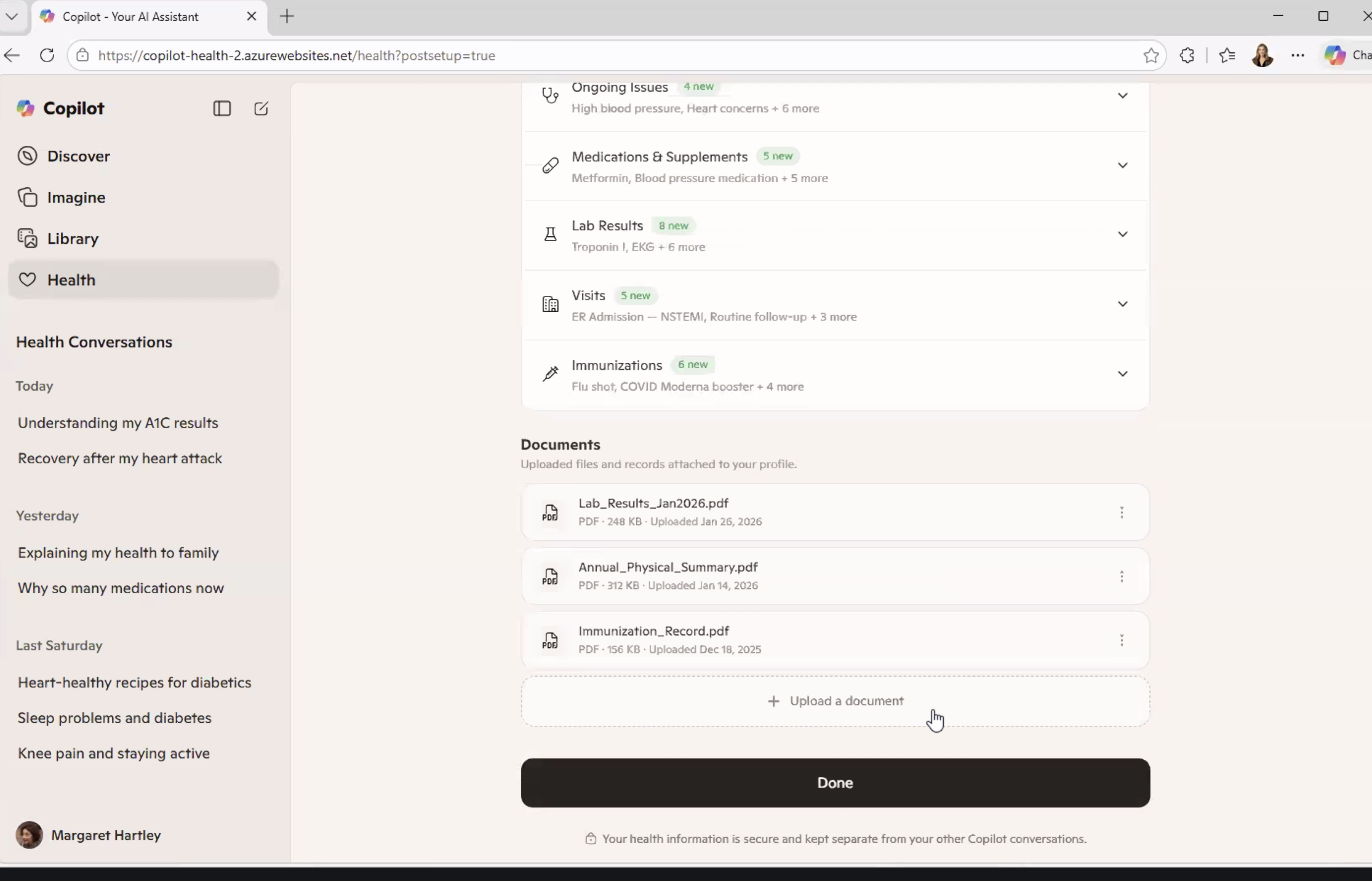
  • Uploaded documents

It’s all synthesized into a single, conversational interface.

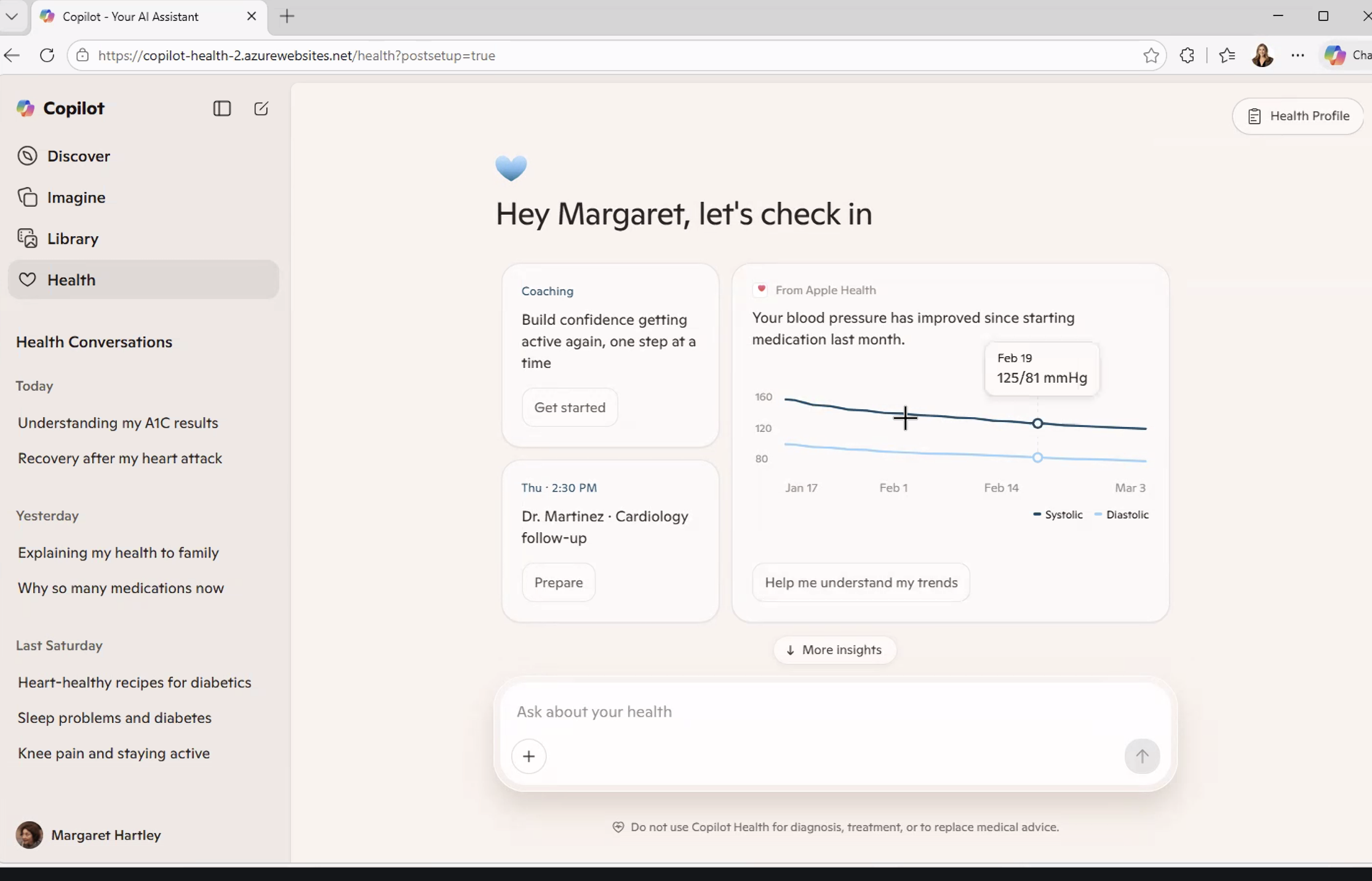
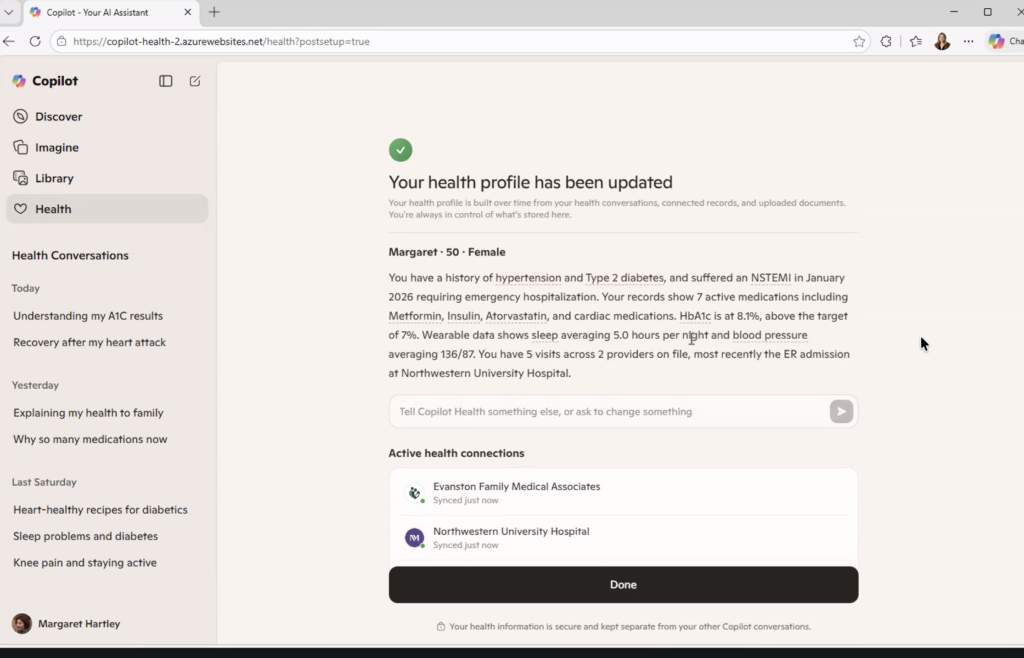
The demo persona was “Margaret.” She’s 50 years old with a history of hypertension, Type 2 diabetes, high cholesterol, and a recent heart attack (an NSTEMI requiring emergency hospitalization in January 2026). Her health profile showed 7 active medications, an HbA1c of 8.1% against a target of 7%, a resting blood pressure averaging 136/87, and sleep averaging 5 hours a night from her wearable data.
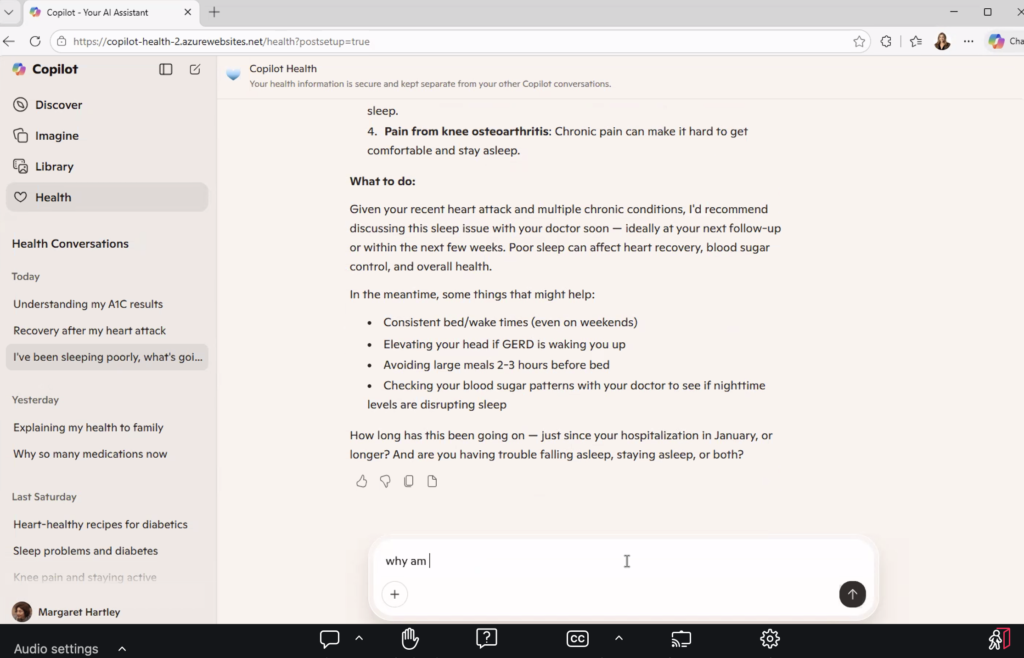
She asked why she was taking metoprolol, which is common after a serious cardiac event when discharge summaries are hard to process in real time. The system explained the medication, what it does, and invited follow-up questions about side effects.

When she entered in the Copilot that she’d woken up with severe jaw pain, Copilot flagged it as a potential cardiac symptom and recommended calling 911 immediately.

That’s not a trivial capability. For someone managing multiple chronic conditions, trying to understand why they’re on seven medications, wondering whether a symptom is serious, this tool offers something the healthcare system rarely does: an answer, in plain language, right now.
Rachel Gruner led the demo for Microsoft, and described the goal clearly: bring everything together, make it usable, help people navigate care. She named the 3 a.m. moment explicitly, being someone searching for health answers because they can’t reach a doctor. Someone who needs information and has nowhere else to turn.

She was describing a patient. But she was also unknowingly describing a caregiver.


The Number Nobody Mentioned

Here is a statistic that did not come up once during the demo, nor during the hour-long panel that followed it.

According to the Health Information National Trends Survey (federal data collected by the National Cancer Institute), the number of people logging into a patient portal on behalf of someone else more than doubled between 2020 and 2024. It went from 24% to 51%.

Half the people navigating these systems aren’t patients. They’re caregivers, like:

  • A daughter checking her mother’s lab results after a cancer scare.
  • A husband refilling his wife’s prescriptions while she recovers from surgery.
  • An adult child scheduling a follow-up for a parent who doesn’t speak English.
  • A spouse who has memorized every medication, every specialist, every prior authorization number (because if they don’t, no one will)

They’re exhausted, scared, and running someone else’s health on top of everything going on in their own life. And they are doing it inside systems that were never built to recognize them.
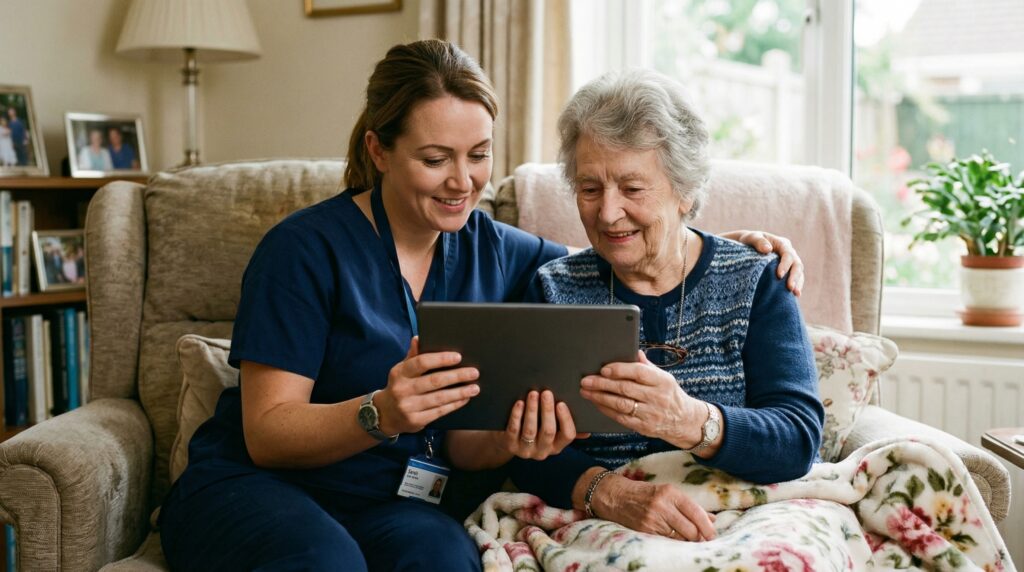
Most patient portals still don’t have a proper caregiver login. The formal proxy access process, where it exists, is often so confusing or slow that caregivers just use the patient’s credentials instead. So there’s no:

  • Audit trail
  • Role separation
  • Way for the system to know who’s logged in asking questions, making decisions, or interpreting results

Copilot Health connects to health records, wearables, and labs. It builds a profile over time based on conversations and data. It learns.

But what is it learning from? And about whom?

If half the behavioral data flowing through these systems is caregiver behavior that the system is reading as patient behavior (usage patterns, questions asked, drop-off points, topics searched at all hours of the night), then the AI being trained on that data has a foundational problem.

Patient-centered AI built on a misread of who the patient actually is isn’t patient-centered. It’s just a more confident version of the same blind spot.


What the AI Actually Learns

Maya Friedman, Director of Product Design and UX at Tidepool, made an observation about Copilot Health that she shared during a CES session in January 2026. She noted that the system synthesizes data across multiple sources to provide guidance. And in doing so, it creates a layer of coherence on top of information that was never designed to fit together.

Health records, wearables, and labs all operate on different standards, different levels of reliability, and different contexts.

Copilot doesn’t fix that fragmentation. It builds a coherent surface on top of it.

That coherence is genuinely useful for the person searching for answers at midnight. It’s also the source of risk.

A confident answer that’s built on misidentified behavior is harder to question than an incomplete answer. Think of the person on the other end of that conversation. A caregiver who has learned medical terminology not in school but out of necessity, who is tired and has 17 other things to manage, is not going to interrogate the data sources behind the insight. They’re going to act on it.

There’s a compounding problem that goes beyond accuracy. As these tools learn over time, they build profiles with personalization. They adapt to the user.

But if the system thinks the user it’s serving is Margaret, while the actual user is Margaret’s daughter navigating her mother’s post-cardiac recovery from three states away, then the personalization is wrong from the first conversation. And it compounds with every interaction.

The AI is getting better and better at serving the wrong person.

This isn’t an argument against tools like Copilot Health. It’s that the founders who build these tools should be precise about who they’re actually serving and build it accordingly. The 3 a.m. user isn’t always the patient. Sometimes she’s the person who can’t sleep because she’s worried about someone she loves and doesn’t know who else to ask.

She deserves a system that knows she’s there.


Ownership vs. Control

David Jost, Chief Technology Innovations Officer at the Epilepsy Foundation, said something during the panel that I haven’t been able to stop thinking about.

“Ownership and control are not the same thing.”

He was making a technical point about data governance — about the difference between having rights to your data and having actual agency over how it moves, who sees it, and what it’s used for.

But as a former family caregiver, I heard it as something more personal.

I owned my husband’s story. I was in every appointment. I tracked every medication change, every lab result, every specialist referral across multiple chronic conditions (diabetes, kidney failure, cancer, and limb loss). I knew his conditions better than most of the providers treating him.

But I didn’t control what happened to his data.

When we signed intake forms — and we signed a lot of them — we did it because we needed to get into the room. Steve Winawer, Head of Data, Digital, and Technology at Takeda described this dynamic plainly during the panel: “You walk into a doctor’s office. You sign the forms because what you want to do is see the doctor. You don’t really read them.”

That consent is what the entire data ecosystem is built on.

Not informed consent in the full sense of the phrase.

Transactional consent. The kind you give because the alternative is not being seen.

For caregivers, this is even more layered. You’re not just consenting on your own behalf. You’re consenting or not, because often there’s no mechanism to do so separately on behalf of someone else. Someone who may not be able to read the form themselves. Someone whose data is being collected, moved, and used in ways neither of you will ever fully trace.

Owning your health data and controlling it are two different things. Most of us have the first. Almost none of us have the second.

As AI health tools expand to connect more records, pull more data and build richer profiles, the gap between ownership and control will widen.

And caregivers, who have always been the system’s most active unpaid navigators, will feel that gap the most.


The Longer History

At the end of the panel, I asked about Henrietta Lacks.

Henrietta Lacks Source: Jstor.org

For those unfamiliar: Henrietta Lacks was a Black woman whose cancer cells were taken during a medical procedure in 1951, without her knowledge or consent. Those cells, known as HeLa cells, became one of the most important biological tools in modern medicine. They contributed to the polio vaccine, to cancer research, to countless pharmaceutical breakthroughs. The medical system built billions of dollars of value on her biology.

Her family only found out decades later.

I asked the panel: as AI systems become better at attributing value to data — tracking whose information contributed to which insight, which drug, which discovery — what can we learn from Henrietta Lacks about making sure that value flows back to the people it came from?

Heather Flannery, Founder and CEO of AI MINDSystems Foundation, gave the only answer, and it was direct.

She said that the same technologies being developed for computational governance and democratic-scale consent (making it possible to track and trace how data moves through a system) can also administer value attribution. Verifiably, continuously, and at scale.

Contributions of training data, lived experience, insight, problem-framing and caregiving itself are all valuable. None of it is currently tracked, traced, or remunerated.

The same infrastructure that fixes consent, Heather said, can fix attribution.

Henrietta Lacks didn’t consent. Caregivers consent constantly to forms they don’t read, in moments when they have no other choice, on behalf of people who are too sick or too scared to read them either.

The extraction looks different, but the pattern is the same.

The history of health data in America is, in part, a history of taking value from people who were never designed to benefit from the systems they fed. That history didn’t end in 1951. It continues every time a caregiver logs into a portal, answers a chatbot’s questions, uploads a discharge summary, and walks away having contributed data to a system that will use it to build something she will never own and cannot control.

National Minority Health Month exists to name these patterns. The question for this moment in health AI is whether we’re going to repeat them, or build something different.


What Caregivers Should Ask For

This is not an argument against AI in healthcare. The Copilot Health demo showed real capability. The panel included people genuinely committed to getting this right. The conversation about data sovereignty, computational governance, and equitable AI is happening — slowly, imperfectly, but sincerely.

This is an argument for specificity.

Girl at kitchen table with her grandpa

Patient-centered design that ignores the caregiver isn’t patient-centered. It’s incomplete. And the window for building these systems correctly is now, before:

  • the behavioral data compounds
  • the profiles deepen
  • the coherence layer becomes too established to question

So here’s what caregivers should be asking for, from the tools being built, from the organizations building them, and from the policymakers shaping the rules:

  • A login that knows who you are. Not a workaround. Not a borrowed password. A formal caregiver access model that distinguishes your behavior from the patient’s, maintains an audit trail, and allows the AI to serve you based on your actual role.
  • Proxy access that takes minutes, not phone calls. The formal process exists in some systems. It is almost universally too slow, too confusing, and too rarely completed. If half your users are caregivers, that’s not an edge case for product teams to accommodate. That’s their primary use case.
  • Consent that means something. Not a form signed under duress. A clear, plain-language explanation of what data is being collected, how it will be used, and what the caregiver retains the right to revoke. Separately from the patient’s consent, because the caregiver is a separate user with separate stakes.
  • AI trained on who’s actually in the room. If the behavioral data flowing through these systems includes caregiver behavior, the models need to know that. Not to exclude it — to interpret it correctly. The questions a caregiver asks at 3 a.m. are different from the questions a patient asks. The guidance each one needs is different too.
  • Recognition that caregiving is a data contribution. The labor of coordinating care, navigating systems, tracking medications, interpreting results, and advocating in clinical settings generates information that health AI is being built on. That contribution deserves to be visible, and eventually, as the infrastructure Heather described matures, remunerated.

If you’re a caregiver navigating any of this, my newsletter Care Without Compromise goes deeper on the practical and systemic dimensions of what it means to manage someone else’s health in a system that wasn’t built for either of you.

The tools are getting smarter. Let’s make sure they’re learning about the right person.

Sources

Health Information National Trends Survey (HINTS) 2024, National Cancer Institute.

PXI Q1 Convening: Building the Patient-Centered AI Ecosystem, National Health Council, March 26, 2026. Microsoft Copilot Health demo presented by Rachel Gruner. Panel quotes from David Jost (Epilepsy Foundation), Heather Flannery (AI MINDSystems Foundation), Steve Winawer (Takeda), Ian Miller (Digital Medicine Society); moderated by Rene Quashie (Consumer Technology Association).

Caregiving During Menopause: Balancing Self-Care and Family Responsibilities

Caregiving During Menopause: Balancing Self-Care and Family Responsibilities

Caregiving

As women enter their midlife years, they often find themselves caught in the “sandwich generation,” caring for aging parents or family members while experiencing menopause. Over 60% of women experiencing menopause are also primary caregivers for a family member. The dual burden of caregiving during menopause can feel overwhelming, but with the right strategies, it’s possible to navigate both journeys successfully.

Contents

The Challenges of Going Through Menopause While Caregiving

Menopause is a natural biological process that marks the end of a woman’s reproductive years. During this time, the body undergoes significant hormonal changes that can affect various aspects of health and well-being. For women who are also caregivers, these changes can present additional challenges.

Hormonal changes affect energy and emotional resilience

Illustration of Hormones

The fluctuation and eventual decline of estrogen and progesterone levels during menopause can have a profound impact on energy levels and emotional stability. Many women report feeling more fatigued and less able to cope with stress during this time. This can be particularly challenging for caregivers, who often need to maintain high levels of energy and emotional resilience to meet the demands of their role.

The impact of caregiving during menopause

Woman holding elderly woman's hands

Menopausal symptoms can significantly affect a woman’s ability to provide care. Some of the most common symptoms include:

These symptoms can make it harder for caregivers to perform their duties effectively and may lead to increased stress and burnout. MayoClinic reported that caregiving for 15 hours or more each week makes menopause symptoms worse.

Statistics on menopausal caregivers

The overlap between menopause and caregiving is significant. According to a study published in Mayo Clinic Proceedings,19.7% of women aged 45-60 self-identified as caregivers. This age range coincides with the typical onset of menopause, which occurs around age 51 for most women in the United States.

Health consequences of neglecting self-cares

Neglecting self-care can have serious health consequences. Research has shown that caregivers who experience high levels of stress are at increased risk for various health problems, including heart disease, weakened immune function, gaining weight, and depression. When combined with the natural health risks associated with menopause, such as increased risk of osteoporosis and heart disease, the importance of self-care becomes even more critical.

Caregiver Burnout During Menopause

Caregiver burnout is a state of physical, emotional, and mental exhaustion that can occur when caregivers don’t get the help they need or try to do more than they’re able. During menopause, the risk of burnout may be even higher due to the added physical and emotional challenges women face.

Risks with caregiver burnout

Caregiver burnout is characterized by feelings of overwhelming exhaustion, detachment from the caregiving role, and a sense of hopelessness. During menopause, hormonal changes can amplify stress responses, making women more susceptible to burnout. The combination of caregiving duties and menopausal symptoms can create a perfect storm for physical and emotional depletion.

Warning signs specific to menopausal caregivers

While burnout can manifest in various ways, menopausal caregivers may experience some unique warning signs:

  • Extreme fatigue that isn’t relieved by rest
  • Increased irritability or mood swings
  • Withdrawal from social activities and relationships
  • Physical symptoms like headaches or digestive issues
  • Difficulty managing menopausal symptoms
  • Neglecting personal health and well-being

Hormonal fluctuations amplify stress responses

During menopause, fluctuations in estrogen and progesterone levels can affect the body’s stress response system. This can lead to an exaggerated reaction to stressors, making it harder for women to cope with the demands of caregiving. Additionally, the decline in estrogen can impact the production of stress-regulating neurotransmitters, potentially leading to increased anxiety and depression.

Importance of validating experiences and seeking support

Your experiences as a menopausal caregiver are valid and that seeking support is not a sign of weakness. Share their experiences with trusted friends, family members, or support groups specifically for menopausal caregivers.

Essential Self-Care Strategies for Menopausal Caregivers

Self-care is not a luxury for menopausal caregivers—it’s a necessity. Implement effective self-care strategies to help manage both your menopause symptoms and caregiver stress.

Hormone-balancing nutrition

A balanced diet can help alleviate some menopausal symptoms and provide the energy needed for caregiving. Consider the following nutritional strategies:

  • Increase intake of phytoestrogens found in soy products, flaxseeds, and legumes
  • Consume foods rich in calcium and vitamin D to support bone health
  • Include omega-3 fatty acids from fish or supplements to support mood and cognitive function
  • Limit caffeine, alcohol, and spicy foods that may trigger hot flashes

Exercise routines for menopause symptoms and caregiver stress

Regular physical activity can help manage both menopause symptoms and caregiver stress. Aim for a combination of:

Sleep hygiene tips for menopausal caregivers

Quality sleep is essential for managing stress and hormonal changes. Try these sleep hygiene tips:

  • Maintain a consistent sleep schedule
  • Create a cool, dark sleeping environment
  • Avoid screens before bedtime
  • Practice relaxation techniques before sleep

Mindfulness and stress reduction techniques

Incorporating mindfulness practices into daily routines can help manage stress and improve emotional well-being. Consider:

Here’s some more ways to prevent burnout.

Creating Sustainable Caregiving Systems During Menopause

Developing sustainable caregiving systems is crucial for maintaining long-term health and well-being during menopause.

Communicate needs and limitations

Open communication with family members and care recipients is essential. Be honest about your capabilities and limitations, especially on days when menopause symptoms are particularly challenging. Use “I” statements to express your needs without placing blame, for example: “I need help with meal preparation today because I’m experiencing severe fatigue.”

Delegate caregiving tasks

Don’t hesitate to delegate tasks to other family members or professional caregivers. Create a list of tasks that can be shared and assign them based on individual strengths and availability. A study in The Gerontologist found that caregivers who shared responsibilities reported lower levels of stress and better mental health.

Building support networks and respite care options

Develop a strong support network that includes:


Regular respite care can provide much-needed breaks to reduce stress and help prevent burnout. .

Digital tools and resources for efficient caregiving

Leverage technology to streamline caregiving tasks:

Healthcare Considerations for Menopausal Caregivers

As a menopausal caregiver, it’s very important to make your personal health a priority to maintain your well-being and caregiving abilities.

Make and keep regular health appointments

Despite busy schedules, regular health check-ups are essential. These appointments provide opportunities to:

  • Monitor menopause symptoms and overall health
  • Discuss preventive care strategies
  • Address any emerging health concerns

Questions to discuss with healthcare providers

Prepare a list of questions for your healthcare provider, such as:

  • What treatment options are available for my specific menopause symptoms?
  • How can I manage the stress of caregiving during menopause?
  • Are there any screenings or preventive measures I should consider?

Check out this blog for more questions to ask them.

Treatment options compatible with caregiving duties

Woman using a cream for hormone replacement therapy (HRT)

Discuss treatment options that fit your lifestyle as a caregiver:

  • Hormone replacement therapy (HRT) if appropriate
  • Non-hormonal medications for specific symptoms
  • Lifestyle modifications and complementary therapies

When to seek additional support

Be aware of signs that indicate a need for additional support:

  • Persistent feelings of sadness or anxiety
  • Inability to perform caregiving duties
  • Thoughts of self-harm or harming others

Financial Planning During the Menopause and Caregiving Years

Financial planning is a crucial aspect of managing the dual challenges of menopause and caregiving.

The impacts of caregiving on finances during menopause

Caregiving can have significant financial implications, including:

An AARP report found that family caregivers spend an average of $7,242 per year on out-of-pocket costs related to caregiving.

Healthcare coverage and benefits for caregivers

Explore available healthcare coverage and benefits:

Resources for financial planning

Utilize financial planning resources tailored to menopausal caregivers:

  • Consult with a financial advisor experienced in caregiving issues
  • Attend workshops on financial planning for caregivers
  • Use online tools and calculators to assess financial needs

Work accommodations for menopausal caregivers

Discuss potential work accommodations with your employer:

  • Flexible work hours to manage caregiving responsibilities
  • Telecommuting options to balance work and care duties
  • Employee assistance programs for counseling and support

A study in the journal Work & Stress found that flexible work arrangements (FWAs) are associated with reduced work-family conflict and improved well-being for caregivers.

You may also qualify for leave under the Family and Medical Leave Act (FMLA)—check with your employer, and learn about your rights under that law.

Finding harmony between the personal journey of menopause and the demands of caregiving requires intention, support, and compassion—especially for yourself. By implementing the strategies discussed in this guide, you can better manage your menopausal symptoms while continuing to provide quality care for your loved ones.

Taking care of your own health isn’t selfish—it’s essential for sustainable caregiving. Reach out to healthcare providers, support groups, and community resources to create a network that supports both your caregiving role and your personal well-being during this significant life transition.

References

Botek, A. Caregiving and Menopause: How to Handle the Double-Whammy. AgingCare. Retrieved from https://www.agingcare.com/Articles/handle-menopause-while-caregiving-153320.htm

Braun, N. (2024). Caring for Yourself While Caring for Others. Versalie. Retrieved from https://www.versalie.com/blogs/learn/caring-for-yourself-caring-for-others

Brown, R. M. (2024). There’s an App for That: Reducing Stress in Peri- And Post-Menopausal Women. Doctor of Nursing Practice Final Manuscripts. 285. doi.org/10.22371/07.2024.020

Bryan, L. & Dweck, A. (2024). How Can Menopause Affect Sleep. Sleep Foundation. Retrieved from https://www.sleepfoundation.org/women-sleep/menopause-and-sleep

Building a Network: The Social Benefits of Caregiver Support Groups. (2024). Trualta. Retrieved from https://www.trualta.com/resources/blog/building-a-network-the-social-benefits-of-caregiver-support-groups/

Building a Support Network: Finding Help as a Caregiver. (2024). Elder-Well Adult Day Program. Retrieved from https://elderwelladultday.com/building-a-support-network-finding-help-as-a-caregiver/

Caregiver Burnout. Cleveland Clinic. Retrieved from https://womenshealth.gov/a-z-topics/caregiver-stress

Caregiver stress. (2025). Office on Women’s Health. Retrieved from https://womenshealth.gov/a-z-topics/caregiver-stress

Crickmar, R. (2025). The Importance of Self-Care for Parents and Caregivers: Prioritizing Yourself To Support Your Family. Therapeutic Partners. Retrieved from https://therapeuticpartners.com/2025/02/06/the-importance-of-self-care-for-parents-and-caregivers-prioritizing-yourself-to-support-your-family/

Fatigue and menopause: tips to boost energy. (2024). Balance-Menopause. Retrieved from https://www.balance-menopause.com/menopause-library/fatigue-and-menopause-tips-to-boost-energy/

Hayes, J. & Rose, B. (2024). Caregiving as a Women’s Health Issue. NextAvenue. Retrieved from https://www.nextavenue.org/caregiving-as-a-womens-health-issue/

How expert financial advice can help to close the menopause retirement gap. (2024). Foster Denovo. Retrieved from https://www.fosterdenovo.com/how-expert-financial-advice-can-help-to-close-the-menopause-retirement-gap/

Li, Q. (2024). Sandwich caregiving and midlife women’s health: An examination of racial disparities. Family Relations, 73(5), 3291-3308. https://doi.org/10.1111/fare.13083

Menopause and money: Why financial planning is so important. (2024). RBC Brewin Dolphin. Retrieved from https://www.brewin.co.uk/insights/menopause-and-money-why-financial-planning-is-important

Menopause and the workplace. (2023). NHS inform. Retrieved from https://www.nhsinform.scot/healthy-living/womens-health/later-years-around-50-years-and-over/menopause-and-post-menopause-health/menopause-and-the-workplace/

Miller, H. (2024). Menopause & Stress. Dutch Test. Retrieved from https://dutchtest.com/articles/menopause-stress

Miller, S. (2024). From Hot Flashes to Health Costs: The Financial Impact of Menopause on Women. BayView Financial Planning. Retrieved from https://bayviewfp.com/from-hot-flashes-to-health-costs-the-financial-impact-of-menopause-on-women/

Newson, L. (2024). Coping with perimenopause when you’re a carer. Balance-Menopause. Retrieved from https://www.balance-menopause.com/menopause-library/coping-with-the-perimenopause-when-youre-a-carer

Prioritizing care for others, women often neglect their own health. (2020). American Heart Association. Retrieved from https://www.goredforwomen.org/en/beyond-the-table/stories/women-often-neglect-their-own-health

Saadedine, M., Safwan, N., Kapoor, E., et al. (2025). Association of Informal Caregiving and Menopause Symptoms in Midlife Women: A Cross-Sectional Study. Mayo Clinic Proceedings, 100(1), 42-51. Retrieved from https://www.mayoclinicproceedings.org/article/S0025-6196(24)00353-7/fulltext

Shakeel, W. (2024). Menopause Self Care: A Comprehensive Guide. Revive Research Institute. Retrieved from https://www.reviveresearch.org/blog/menopause-self-care

Shifrin, N. V., & Michel, J. S. (2021). Flexible work arrangements and employee health: A meta-analytic review. Work & Stress, 36(1), 60–85. doi.org/10.1080/02678373.2021.1936287

Snelling, S. (2015). When Menopause and Caregiving Collide. NextAvenue. Retrieved from https://www.nextavenue.org/when-menopause-and-caregiving-collide/

Skufca, L. (2021). Caregiving Can Be Costly – Even Financially. AARP. Retrieved from https://www.aarp.org/pri/topics/ltss/family-caregiving/family-caregivers-cost-survey/

Stress and your health. (2025). Office on Women’s Health. Retrieved from https://womenshealth.gov/mental-health/good-mental-health/stress-and-your-health

Taking Care of Yourself: Tips for Caregivers. (2023). National Institute on Aging. Retrieved from https://www.nia.nih.gov/health/caregiving/taking-care-yourself-tips-caregivers

Vazquez, E. K. (2025). The Impact of Hormones on Mental Health. Medens Health. Retrieved from https://www.medenshealth.com/blog/the-impact-of-hormones-on-mental-health

Asking Family Members for Caregiving Help

Asking Family Members for Caregiving Help

Caregiving

Providing care for a family member can be a profound act of love, but it can also be physically and emotionally draining. Many caregivers want to ask their family members for help, but it can feel like a daunting task. 

Let’s discuss how to ask for and get caregiving assistance from your family, with proven techniques to facilitate open and constructive conversations with your family, for a more balanced and sustainable caregiving experience.

Contents

Addressing Your Needs Honestly

Home Instead cites that 72% of primary caregivers don’t have any outside help. 31% want more help, and 25% resent other family members who don’t help.

Recognizing and articulating your needs is the first step toward building a supportive caregiving network with your family.

Acknowledge the challenges you’re facing

Caregiving is a demanding role that can take a toll on your physical and mental health. It’s crucial to recognize the difficulties you’re experiencing. This statistic highlights the importance of admitting that you’re struggling and need help.

Identify specific areas where you require assistance

Are you struggling with managing medications, preparing meals, or providing transportation? Take some time to reflect on your daily caregiving tasks and pinpoint areas where you need the most help

By identifying specific needs, you can make more targeted requests for assistance.

Communicate your needs with empathy and vulnerability

When expressing your needs to your family, it’s essential to be open and honest about your feelings. Use “I” statements to convey your emotions and experiences. For example, “I’m feeling overwhelmed with managing Dad’s doctor appointments and could use some help coordinating them.”

Involving Your Family

Once you’ve acknowledged your needs, the next step is engaging your family members in a constructive dialogue about caregiving responsibilities.

Gather your family members for a dedicated discussion

Organize a family meeting to discuss the caregiving situation. This can be done in person or via video call if family members live far apart.Family meetings can improve communication and decision-making in caregiving situations.

Encourage open and honest communication

Create an environment where everyone feels comfortable sharing their thoughts and concerns. Ask open-ended questions to encourage dialogue, such as “What are your thoughts on our current caregiving arrangement?”

Ensure everyone’s voices are heard and their concerns addressed

Give each family member an opportunity to express their perspective. Listen actively and validate their feelings, even if you don’t agree with everything they say. This approach can help build trust and foster a collaborative atmosphere.

Delegating Caregiving Responsibilities

Now that you have everyone’s input, you can assign your family members specific tasks based on each of their strengths and availability.

Identify each family member’s strengths and availability

Consider each family member’s skills, interests, and schedule when assigning tasks. For instance, a tech-savvy sibling might be best suited to manage online bill payments and medical records, while someone with a flexible work schedule could handle doctor’s appointments.

Create a fair and balanced caregiving plan

Develop a caregiving schedule that distributes responsibilities equitably among family members. Shared caregiving responsibilities can lead to better outcomes for both the care recipient and the caregivers.

Establish clear expectations and boundaries

Be specific about what each task entails and how often it needs to be done. Set realistic expectations and be clear about any limitations or boundaries. For example, “I can handle Mom’s grocery shopping every other week, but I need someone else to cover the alternate weeks.”

Navigating Difficult Conversations

As you delegate responsibilities, be prepared to address any concerns or hesitations from family members to ensure a smooth transition into shared caregiving.

Address any resistance or hesitation from family members

It’s common for some family members to be reluctant to take on caregiving responsibilities. Approach these conversations with empathy and try to understand their perspective. Acknowledging and addressing family members’ concerns can lead to more productive caregiving discussions.

Find compromises and solutions that work for everyone

Be open to alternative suggestions and creative solutions. If a sibling can’t provide hands-on care, perhaps they can contribute financially or handle administrative tasks remotely.

Maintain patience and compassion throughout the process

Remember that adjusting to new caregiving roles can be challenging for everyone involved. Be patient with your family members as they learn and adapt to their new responsibilities.

Maintaining Ongoing Communication

You’re not done. Establishing a routine for regular check-ins will help you assess your caregiving plan and make adjustments as circumstances change.

Schedule regular check-ins to assess the caregiving plan

Set up periodic family meetings to discuss how the caregiving plan is working. This allows you to address any issues promptly and make necessary adjustments.

Address any changes or adjustments that may be needed

Be flexible and willing to modify the caregiving plan as circumstances change. The care recipient’s needs may evolve over time, and family members’ availability may shift.

Celebrate successes and express gratitude for your family’s support

Acknowledge and appreciate the efforts of your family members. Expressing gratitude can strengthen relationships and increase overall well-being.

Asking your family for caregiving assistance is an act of courage, not weakness. By approaching these conversations with empathy, honesty, and a willingness to collaborate, you can build a support network that not only benefits your loved one but also helps to sustain your own well-being. 

You don’t have to go through this alone. Embrace the support of your family, and together, you can provide the care your loved one deserves while maintaining a healthy balance in your own life.

References

Family Caregivers: How to Ask Others for Help. (2023). Home Instead. Retrieved from https://www.homeinstead.com/care-resources/caregiver-support/how-to-ask-others-for-help/

How to Ask Others for Help with Caregiving. (n.d.). Guideposts. Retrieved from https://guideposts.org/positive-living/health-and-wellness/caregiving/family-caregiving/advice-for-caregivers/how-to-ask-others-for-help-with-caregiving/

Tips on Getting Help for Caregivers. (2023). FamilyAssets. Retrieved from https://www.familyassets.com/resources/senior-care/help-for-caregivers/