Content Gap Analysis: A Step-by-Step Guide for Better SEO

Content Gap Analysis: A Step-by-Step Guide for Better SEO

Content Marketing Copywriting SEO

Are you creating content, but still feel like you’re falling behind your competition? You publish blog posts, update your site, but it seems like everyone else is getting more traffic and ranking higher on Google.

Do you know exactly what your audience is searching for, that you haven’t covered in your content? A content gap analysis is a powerful way to find those hidden opportunities as a clear roadmap to attract more visitors with your content.

Let’s go over a 4-step process to find these gaps, fill them with valuable content, and grow your audience.

Contents

What Is a Content Gap Analysis?

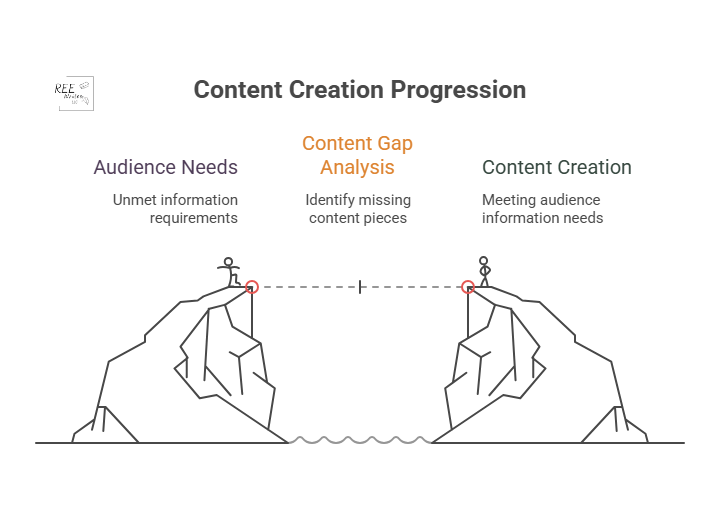
It’s a great question, and the answer is simpler than you might think. A content gap analysis is a powerful way to find opportunities for your business.

A content gap analysis finds topics and keywords important to your audience that your business doesn’t cover. It usually involves looking at the keywords your competitors rank for in search results that you don’t.

The goal is simple: identify holes in your content that your audience needs you to fill. Creating useful resources builds trust and authority with potential customers.

Think of it like a grocery store owner checking a rival’s aisles. If they see customers constantly buying a popular brand of organic granola that they don’t stock, they’re missing out on sales. That’s called a “product gap.”

You’re doing the same thing, but with information. You’re looking for information your audience wants, but they can’t find on your site.

Content strategies must be hyper-focused on customer needs to be effective. A content gap analysis is the most direct way to align your strategy with your audience’s needs.

Now that we’ve covered the basics, let’s look at how this can help your search engine optimization (SEO) and make your content work harder for you.

How Content Gap Analysis Affects Your SEO

Conducting a content gap analysis is a core part of a smart SEO and content strategy that delivers real results. It helps you stop creating content based on guesses and start making data-driven decisions that directly impact your growth. Here’s why it’s so important.
Find new keyword opportunities

Think you know all the important keywords for your industry? There’s always more to discover.

A content gap analysis uncovers valuable keywords your competitors are using to attract visitors—visitors that could be yours. These are often long-tail keywords or specific questions that show a user is further along in their buying journey.

Long-tail keywords (phrases of 3+ words) make up a significant portion of all Google searches. These less-competitive phrases often have higher conversion rates because the user’s search intent is much more specific. By finding gaps, you’ll also find these high-intent long-tail keywords.

Different types of content gaps
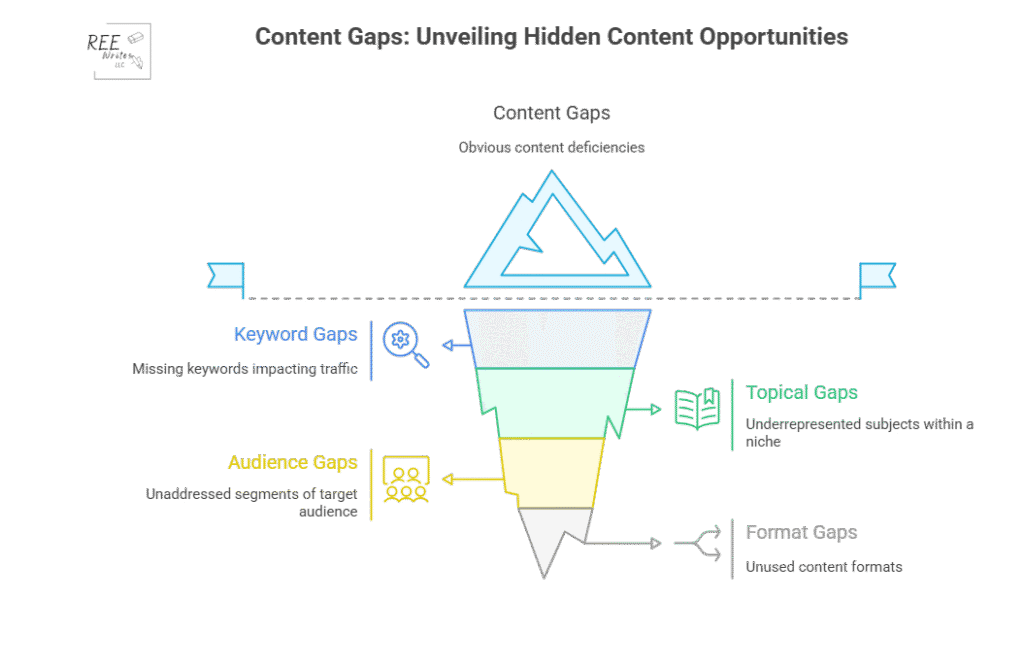
There are four types of content gaps you can address to be sure that your content strategy is thorough and promotes conversions:

  1. Keywords: Searches your competitors rank for, but you don’t.
  2. Topics: Categories and subtopics relevant to your audience that you’ve not addressed.
  3. Audiences: Segments of your target market whom you’ve neglected.
  4. Formats: Content types like videos, blogs, case studies and podcasts your audience likes, but you don’t have.

Understand your audience

What questions are your potential customers asking? What are their biggest problems? A content gap analysis helps you get a clearer picture of what your audience needs at every stage of their journey. By seeing what topics are popular on competitor sites, you get direct insight into the conversations happening in your industry. This allows you to create content that truly resonates and helps people.

Let’s say for example that you’re a B2B software company, and you see your main competitor has an entire section of their blog dedicated to “integrations with other software.” If you have no content on this topic, you could address this gap by creating a series of articles on how their product works with other popular tools, and get an increase in qualified leads from your blog within a few months.

Outperform competitors

To get ahead, you have to be better than your competitors and cover the topics they’ve missed.

You can systematically cover topics your competition already ranks for, but you can create more comprehensive, up-to-date, and helpful content to win the top spot on Google. You can also find the “gaps within the gaps”—topics that none of your competitors are adequately covering. This analysis gives you a strategic advantage.

Competitor analysis is an important piece of your marketing and content strategy. It’s the foundation for identifying opportunities to gain a competitive edge in search rankings.

Improve the customer journey

The customer journey isn’t a straight line. People move from being aware they have a problem, to considering different solutions, to making a final decision. You need content that supports them at every stage.

Source: Talkative

A content gap analysis helps you see if you’re missing content for a critical stage. For example, you might have great blog posts for the “awareness” stage, but no comparison guides for the “consideration” stage.

Ensuring a seamless customer journey with helpful information at each touchpoint can significantly increase customer satisfaction and conversion rates. Customers who receive helpful content throughout their journey are more likely to become loyal brand advocates. Filling your content gaps can help you do that.

4 Steps to Content Gap Analysis

Now that you understand why it’s so important, let’s get into the how. Here’s a four-step process to find and fill the gaps in your own content strategy.
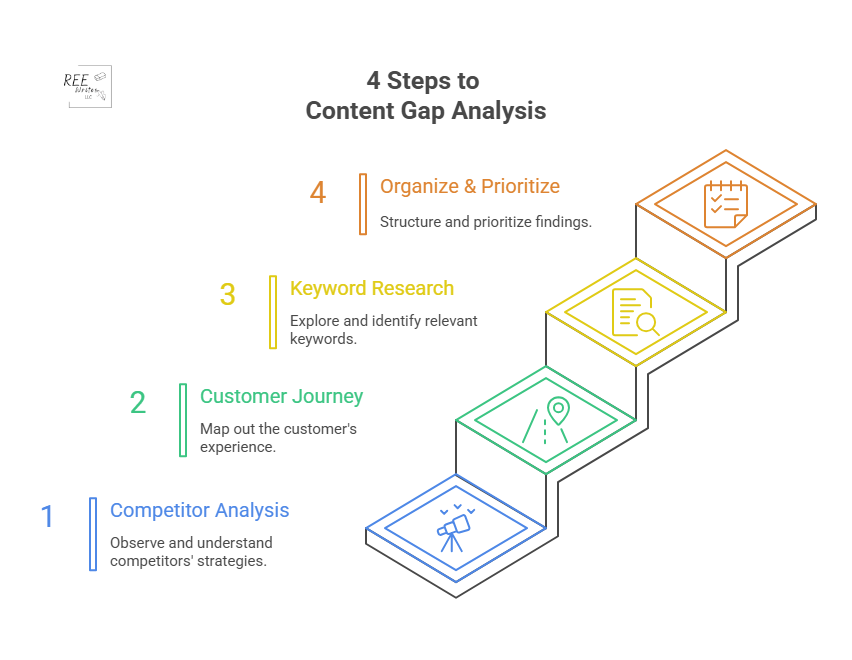
Step 1: Analyze Your Competitor’s Content

What’s already working for others in your space? Let’s find out, using SEO tools to get a data-backed look at your competitors’ content performance.

First, identify your SEO competitors. These are websites that consistently show up on the first page of Google for the keywords you want to rank for.

Next, use an SEO tool to do the heavy lifting. Tools like Ahrefs, Semrush, and Moz have specific “gap analysis” features built for this exact purpose. These competitive analysis tools are essential for your digital marketing strategy, saving you hundreds of hours of manual research.

Source: Semrush

Here’s a typical workflow using Semrush’s Keyword Gap tool:

  1. Enter the domains: Input your own website’s domain and the domains of up to four of your top SEO competitors.
  2. Run the analysis: The tool will compare the keyword profiles of all the websites.
  3. Find the gaps: Filter the results to show keywords where your competitors rank (e.g., in the top 10 results), but your site does not. Semrush has a “Missing” filter perfect for this.

This process will give you a spreadsheet full of valuable keywords and topic ideas that are already proven to attract visitors in your industry. This data-driven approach removes guesswork and gives you a clear starting point.

Step 2: Map the Customer Journey

A content gap can also exist within your own site. You might be missing content for crucial stages of the customer journey, leaving potential customers stuck.

Think about the journey in three simple stages:

  • Awareness Stage: The person knows they have a problem but doesn’t know the solution yet. They are looking for educational, top-level information.
    Examples: “Why is my skin so dry in the winter?” “How to improve team productivity.”
  • Consideration Stage: The person now understands their problem and is researching different solutions or methods to solve it. Examples: “Hyaluronic acid vs. glycerin for dry skin.” “Asana vs. Trello for project management.”
  • Decision Stage: The person has decided on a type of solution and is now comparing specific products or services to make a purchase. Examples: “CeraVe Moisturizing Cream review.” “Best price on Asana business plan.”

Now audit your existing content. To do a content audit, create a simple spreadsheet and categorize your current articles, guides, and landing pages into these three stages. You’ll quickly see where the gaps are. Do you have dozens of “awareness” blog posts but no “consideration” comparison guides? That’s a huge content gap you need to fill to guide users toward a purchase.

Step 3: Use Keyword Research to Find Questions

Sometimes the biggest opportunities lie in the specific questions people are asking. These questions are a goldmine for content ideas because they tell you exactly what’s on your audience’s mind.

Source: Swarm Digital

There are several free and easy ways to find these questions:

  • Google’s “People Also Ask” (PAA) Box: When you search for a keyword, Google often shows a box with related questions. This is a direct look into what other users are searching for. Click on a question, and more will appear.
  • AnswerThePublic: This free tool takes your keyword and generates a visualization of hundreds of questions related to it, broken down by who, what, where, when, why, and how.
  • Forums: Search for your topic on these sites like Reddit and Quora and look at the discussions. What are people confused about? What problems are they trying to solve? The language is natural, giving you raw insight into your audience’s pain points.

For example, if your main topic is “email marketing,” you might discover from the PAA box that people are asking, “How often should a small business send emails?” or “What are the best free email marketing tools?” These are perfect topics for new articles that address a very specific need.

Step 4: Organize and Prioritize Your Ideas

By now, you should have a long list of potential content ideas from your competitor analysis, customer journey mapping, and question research. The final step is to organize these ideas and decide what to work on first.

Create a master spreadsheet for your content ideas. For each idea, include these columns:

Topic IdeaTarget/Focus KeywordStage of Customer JourneyMonthly Search VolumeKeyword DifficultyBusiness Relevance
(1 to 5)
How to Choose Project Management Softwarechoose project management softwareConsideration800Medium5
Asana vs. Trelloasana vs trelloConsideration2,500High4
Best Free Email Marketing Toolsfree email marketing toolsDecision5,000High3

Use this data to prioritize. A good approach is to look for topics with a sweet spot of:

  • High business relevance
  • Decent search volume (100 to 1,000 searches per month minimum)
  • Manageable keyword difficulty (KD)

Then group related topics into topic clusters to build authority on a subject and improve your internal linking structure. This ensures you’re creating content that will not only attract traffic but attract the right leads who are likely to be interested in your products or services.

Once you’re done, you’re actually not done. Measure the success of your new or updated content by tracking keyword rankings, organic traffic, conversions, and other important metrics.

Wrap Up

A content gap analysis takes the guesswork out of your content strategy. Instead of wondering what to write next, you’ll have a clear roadmap based on real data about your audience and competitors. Do a content gap analysis regularly to fill the holes in your content, meet your audience’s needs, and steadily grow your organic traffic.

References

Ahrefs. (2023). Ahrefs Keyword Explorer Data. Ahrefs Pte. Ltd. Retrieved from [https://ahrefs.com/keywords-explorer.

AirOps (2024). Content Gap Analysis: Types, Examples & Step-by-Step Guide. Retrieved from https://www.airops.com/blog/content-gap-analysis-examples

du Plessis, C. (2022). A Scoping Review of the Effect of Content Marketing on Online Consumer Behavior. SAGE Open, 12(2). https://doi.org/10.1177/21582440221093042

Search Engine Journal. (2025). The State of SEO: A 2025 Report. Retrieved from https://www.searchenginejournal.com/state-of-seo/


7 Mistakes Solopreneurs Make with Their Content Marketing (and How to Avoid Them)

7 Mistakes Solopreneurs Make with Their Content Marketing (and How to Avoid Them)

Content Marketing Copywriting SEO

Many small businesses dive into content creation with high hopes, only to find themselves spinning their wheels without results. Their content marketing fails not for lack of effort, but because of easily avoidable mistakes.

You’re not alone in this struggle. Solopreneurs everywhere face the same content marketing pitfalls, but once you know what they are, you can sidestep them completely.

Let’s go over the 7 most common content marketing mistakes that sabotage your success, and exactly how to avoid them.

Contents

Mistake #1: Publishing Content Without Planning or Clear Business Goals

Scattered papers vs organized planning board

When you’re running a one-person business, time is your most precious (and limited) resource. Yet many solopreneurs jump straight into content creation without a strategic plan, wasting countless hours on content that doesn’t move the needle. This scattershot approach is the fastest way to burn out without getting good results in return.

Don’t post without a purpose

A golden pathway to an online storefront with signs pointing to the door

Content without clear goals becomes “pseudo content”–material that looks like marketing, but fails to serve any real business purpose. Publishing blog posts and engaging social media updates means nothing if they’re not aligned with your business goals.

Signs your content strategy lacks direction include:

  • Creating content based only on what interests you
  • Publishing sporadically without considering timing or frequency
  • Focusing on vanity metrics instead of meaningful business outcomes

The hidden cost of directionless content runs deeper than wasted time. When your content lacks strategic focus, you confuse your audience about what you actually do. Potential clients can’t see the connection between your expertise and their problems, which doesn’t motivate them to take the next step toward working with you.

Align your content with what your audience needs

Before you create content, answer these questions:

  • What specific business goal does this serve?
  • Who exactly am I trying to reach?
  • What action do I want them to take after consuming this content?

Without clear answers to these, you’re not doing content marketing–you’re just making more noise in an already-noisy online world.

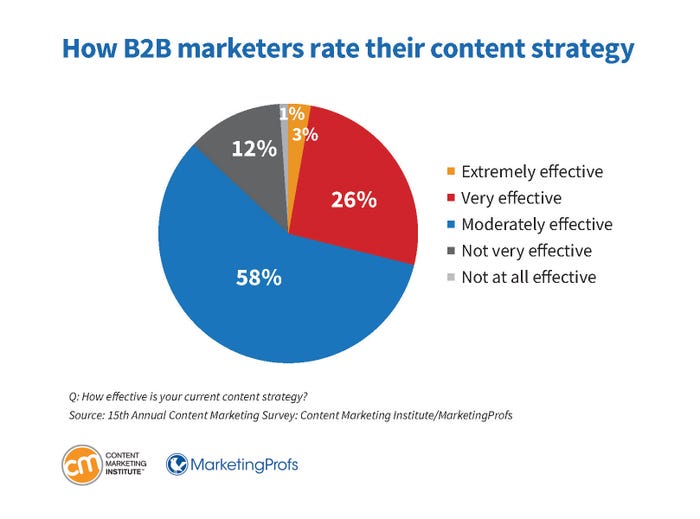
Sources: Content Marketing Institute & MarketingProfs

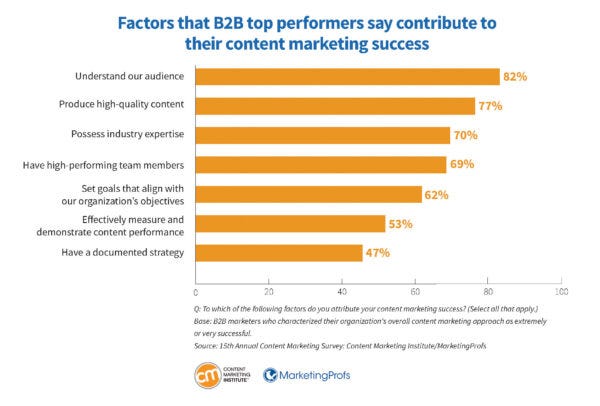
In 2025, 87% of B2B companies with documented content strategies were more successful than those without. This data is even more important for solopreneurs like you and me, who can’t afford to waste resources.

Change random content into strategic assets by aligning every piece of content with your customer’s journey. Map your content to specific stages (awareness, consideration, and decision), ensuring each piece serves a clear purpose in moving prospects closer to hiring you.

Mistake #2: Trying to Be Everywhere Instead of Choosing Strategic Platforms

The biggest trap solopreneurs fall into is platform overload.

Platform overload symptoms include:

  • Posting the same content across all channels without customization
  • Struggling to keep up with posting schedules
  • Seeing declining engagement as you add more platforms to your mix9

Each platform has its own culture, optimal posting times, and content preferences. Ignoring these nuances ensures your content gets lost in the noise.

Doing “all the things” will wear you out

You don’t need to maintain an active presence across every social media channel to succeed. That shotgun approach dilutes your message and exhausts your limited resources, leaving you burned out with mediocre results everywhere instead of excellent results somewhere.

When you spread yourself thin across multiple platforms, each one receives a fraction of your attention. The quality of your content suffers, your posting becomes inconsistent, and you never build the momentum needed to establish authority on any single platform. It’s like trying to dig a bunch of shallow holes instead of one deep well. All that effort backfires.

Prioritize quality over quantity

Research shows that focusing on 1 to 2 platforms where your audience actually spends time produces better engagement and conversions than maintaining a weak presence across 5 to 6 platforms.

For most solopreneurs, this means 1 to 2 primary platforms with occasional cross-posting to 1 to 2 secondary channels.

For consultants and coaches, this often means prioritizing LinkedIn, where 70% of CEOs maintain active profiles.

Quality beats quantity every time.

Choose the right platforms for success

The platform selection process should start with audience research, not platform popularity. Your ideal clients may not be scrolling TikTok during their lunch break–they could be reading industry publications or chatting in professional forums.

A strategic approach involves choosing platforms based on:

  • Where your ideal clients spend their professional time
  • Which formats allow you to best showcase your expertise
  • Which platforms you can realistically and consistently maintain with high-quality content

Building authority on one platform is WAY more valuable than being mediocre on many. When potential clients see that you consistently deliver value in their preferred space, they will associate you with expertise in your field.

Mistake #3: Creating Content Your Audience Doesn’t Want

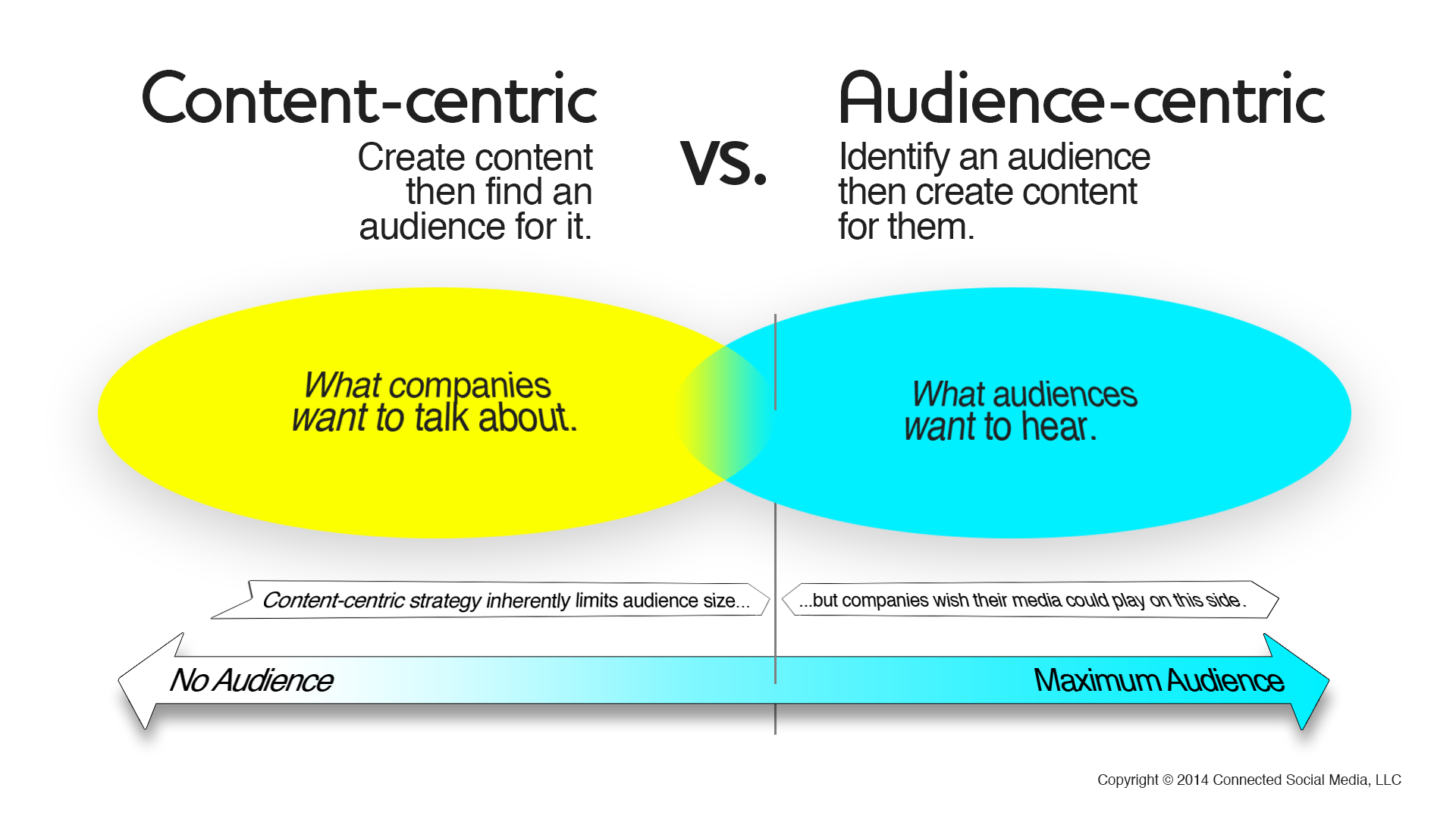
The most expensive mistake solopreneurs make is creating content based on assumptions rather than audience insights. The gap between what you think provides value and what your audience actually wants can kill your content marketing efforts before they gain traction.

You may love discussing industry trends or sharing behind-the-scenes glimpses of your work process, but if your audience is looking for practical solutions to specific problems, your content will fall flat.

Create content that serves your audience (not you)

Source: Connected Social Media

Most solopreneurs assume their personal interests align with business strategy, leading to content that fails to address real pain points or advance the customer journey. This self-serving approach may satisfy your creative urges, but it won’t generate leads or sales.

The disconnect between creator/business owner interests and audience needs is pretty common. Uberflip’s research revealed that marketers consistently overestimate their content’s effectiveness compared to how buyers actually rate it.

The answer lies in doing systematic audience research before you create content.

Research your audience’s needs and desires

Woman using magnifying glass on computer with research

You need data to evaluate which topics truly matter to your market. Here’s how to get it:

  • Survey your existing clients about their biggest challenges
  • Monitor industry forums where your target audience discusses problems
  • Analyze which of your past content pieces generated the most meaningful engagement.

Using client interviews, one consultant discovered that while she was creating content about general business strategy, her audience desperately wanted tactical advice about managing remote teams. When she shifted her content focus accordingly, her email list grew by 300% in 6 months!

To discover your audience’s preferences, use:

  • Customer surveys using platforms like Typeform
  • Social media listening to understand conversations around industry topics
  • Analytics reviews to identify which existing content drives the most conversions (not just traffic)

Validate your content ideas

Content validation becomes crucial before investing time in creation. Test content ideas through polls, direct messages, or small email segments before producing full pieces. For instance, if your LinkedIn post gets strong engagement, you may want to create a blog article or video series on that topic.

The most successful solopreneurs create content that showcases their expertise while solving immediate problems for their audience. This helps to build trust with your audience, and positions you as the obvious choice when they’re ready to hire help.

Mistake #4: Publishing on an Inconsistent Schedule

Sporadic posting destroys your momentum

Source: Small Business Coach

The stop-and-start content cycle is a momentum killer that undermines everything you’re trying to build. Posting 5 times in one week, and then disappearing for a month sends a message that you’re unreliable.

It’s exactly the opposite of what potential clients want to see from someone they may hire.

Inconsistent publishing habits hurt you in other ways too:

  • Search engines favor websites with regular content updates, meaning sporadic posting limits your organic visibility.
  • Your audience can easily forget about you during those gaps, requiring you to rebuild awareness every time you return to publishing.

Sporadic content creation could be a sign of perfectionism or a lack of systems in your business. Waiting for the “perfect” post or video idea means missing dozens of opportunities to stay connected with your audience. Meanwhile, competitors with consistent but imperfect content gain market share.

Set up a content creation schedule

Content calendars

To help you create and maintain content consistently, set up a content calendar with a realistic publishing schedule to batch your content creation.

Instead of creating content day-by-day, dedicate specific time blocks to producing multiple pieces at once. This approach maintains creative flow while building a content buffer for busy periods.

Batch your content

A practical batching system may involve spending 4 hours every Sunday creating the following week’s content: writing 2 blog posts, filming 3 short videos, and designing social media graphics.

This front-loaded approach prevents the daily scramble to create something new while maintaining consistent audience touchpoints.

Repurpose your content

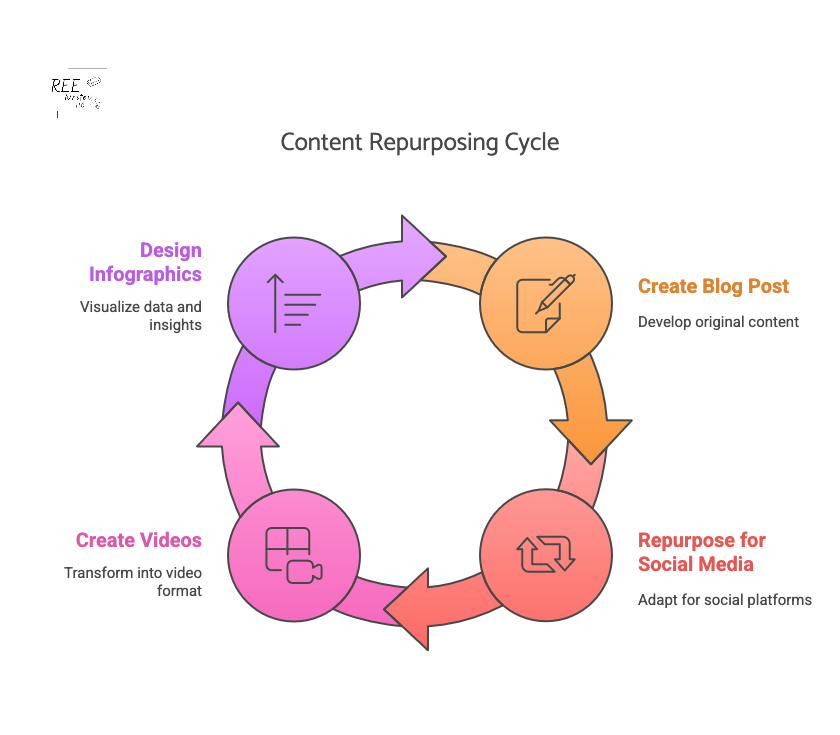
Smart solopreneurs also repurpose content to maintain consistency without constant creation. One well-researched blog post can become a video, multiple social media posts, a newsletter segment, and a podcast episode. This maintains your publishing frequency and maximizes the value of each piece of original content you’ve made.

The key is setting expectations you can realistically meet long-term. Publishing twice weekly consistently is better than publishing daily for 3 weeks, and then disappearing for 2 months. Your audience would rather know they’ll hear from you every Tuesday and Friday than wonder when you’ll show up next.

Mistake #5: Not Doing SEO or Keyword Research Before Content Creation

Many solopreneurs treat SEO as either too technical to attempt or unnecessary for their small-scale operations. But this mindset costs them countless opportunities to be discovered by ideal clients actively searching for their expertise.

Ignoring SEO limits your reach

Toolbox with different SEO monitoring icons

You don’t need to be an SEO expert, but ignoring basic SEO principles will severely limit your content’s reach. A successful content strategy must include keyword research.

The most common SEO mistakes are:

  • Skipping keyword research entirely
  • Stuffing keywords unnaturally into content
  • Neglecting on-page optimization elements like meta descriptions and header tags.

These oversights mean your carefully crafted content remains invisible to people specifically looking for solutions you provide.

Do keyword research using local and on-page SEO

Keyword research doesn’t require expensive tools or technical expertise. The goal is to find and use specific, relevant phrases your ideal clients actually use in your content.

Local SEO presents opportunities for businesses who serve specific geographic areas or industries. For example, optimizing for phrases like “marketing consultant for nonprofits” or “executive coach in Austin” can dramatically improve your visibility for qualified prospects.

These longer, more specific search terms often have less competition and higher intent.

On-page SEO is fairly easy, and makes a huge difference in search performance:

  • Include your target keyword in the title, first paragraph, and one or two header tags throughout your content.
  • Write compelling meta descriptions that encourage clicks, and ensure your website loads quickly on mobile devices.

Keyword research resources

Magnifying glass doing keyword research

Free SEO tools provide actionable insights without breaking your budget:

  • Google’s Keyword Planner and Ubersuggest provide sufficient data for most solopreneurs to identify terms their target audience uses when searching for help.
  • Google Search Console reveals which terms people use to find your content.
  • Google Analytics shows which organic traffic converts best.
  • Bing Webmaster Tools offers additional keyword research and site analysis features that many solopreneurs overlook.

Content that answers specific questions performs well in search results. Structure blog posts around problems your audience frequently asks about, using natural language that matches how people search. This approach attracts organic traffic while demonstrating your expertise to potential clients.

The effect of consistent SEO basics compounds over time. Content published today may rank poorly initially, but is likely to improve steadily as search engines recognize your topical authority if you do your SEO correctly.

This long-term visibility provides sustainable lead generation that doesn’t require ongoing advertising spend.

Mistake #6: Producing Too Much Pushy Content

Source: Mental Floss

Serve more than you sell

The hard sell approach backfires in content marketing. If every piece of content you publish includes a pitch, you’re training your audience to ignore your messages, or unsubscribe entirely. This promotional overload destroys the trust and authority that effective content marketing builds.

Social media users don’t log in to see ads. They want connection, entertainment, and valuable information. When your content feels like a constant sales pitch, people tune out because you’re not meeting their needs. The result is declining engagement and missed opportunities to build meaningful relationships with potential clients.

Balance value and promotional content

The 80/20 rule provides the ideal balance between value and promotion. Educational content builds stronger business relationships than promotional material.

When you consistently help people solve problems through your content, they begin to trust your expertise and see you as a valuable resource. This trust becomes the foundation for future business relationships when they need professional help.

One method you could use is to dedicate 80% of your content to educating, entertaining, or solving problems for your audience, with only 20% focused on promotion. This ratio ensures your audience receives substantial value while still learning about your services.

A study by Conductor found that consumers are 131% more likely to buy from a brand immediately after consuming educational content, and 83.6% chose the educational brand when presented with four options. This shows the power of leading with value rather than sales messages.

Showcase your expertise without being salesy

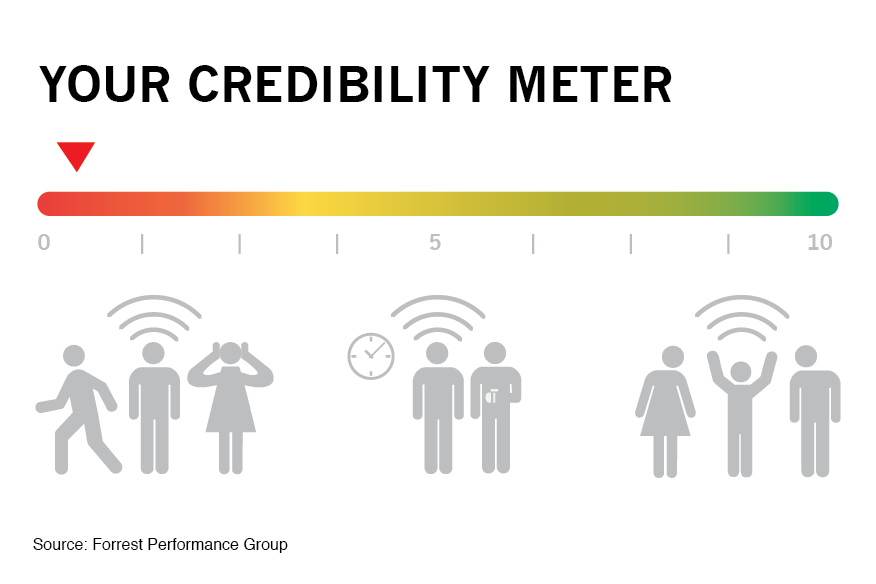
The most effective solopreneurs show their expertise with helpful and educational content, not self-promotional messages.

Source: Forrest Performance Group

Content types that build trust include:

Be sure to:

  • Share your methodologies with clients
  • Explain complex concepts in simple terms
  • Give actionable advice that people can implement immediately

This approach positions you as the obvious choice when they need professional guidance.

People need multiple touchpoints before making buying decisions. Content that serves them creates those positive touchpoints, building the relationship equity that eventually converts into clients. Every helpful blog or video becomes a deposit in your trust account with potential customers.

Mistake #7: Obsessing Over Metrics That Don’t Drive Business Results

Source: Express Writers

Measure your business impact, not vanity metrics

Likes, shares, and follower counts may provide an ego boost and make you feel good, but they don’t pay your bills or indicate whether your content marketing is working.

Vanity metrics are easy to track, but create a false sense of success. You may celebrate a blog post that received thousands of views while ignoring that it generated zero email subscribers or consultation requests. This focus on surface-level metrics prevents you from optimizing for outcomes that actually matter.

Focus on metrics that affect your bottom line and ROI

Analytics dashboard trending upward

Meaningful metrics directly connect to business objectives. The most important content marketing metrics for solopreneurs include:

  • email subscriber growth rate
  • consultation or discovery call bookings
  • qualified lead generation
  • revenue attributed to content marketing efforts

These indicators reveal whether your content is moving prospects through your business funnel.

Instead of tracking total followers, measure how many followers convert into email subscribers, consultation requests or inquiries. Rather than celebrating blog traffic, analyze which posts generate the most qualified leads and then repeat those topics and formats.

Track conversions and ROI

Set up goals in Google Analytics to monitor when website visitors complete actions like downloading resources, booking calls, or requesting proposals. This data shows which content pieces contribute to your bottom line versus those that merely entertain.

Your prospects will likely consume multiple pieces of content before hiring you, so track the entire customer journey—not single touchpoints.

To calculate the ROI of content marketing, compare the revenue generated from content-driven leads against your total content creation and distribution costs. If you spend $500 monthly on content creation and it generates $3,000 in new business, your 600% ROI justifies the investment and suggests scaling your efforts.

When to pivot your content strategy

Sources: Content Marketing Institute & MarketingProfs

The most successful solopreneurs regularly audit their content performance to identify patterns in what drives business results. They double down on formats, topics, and distribution channels that generate clients while eliminating or reducing efforts that only produce vanity metrics.

When you shift from vanity metrics to business impact measurements, your entire content strategy becomes more focused and effective. Every piece of content gets evaluated based on its contribution to your actual business goals rather than its ability to generate social media engagement.

Wrap Up

Be sure your content is strategic, consistent, and focused on serving your audience. Avoid these common pitfalls, and you’ll be ahead of the solopreneurs who give up too soon. Small improvements compound over time.

Ready to turn your content around? Pick a mistake from this list and commit to fixing it this week. Your future customers are waiting for the value you provide.

References

7 SEO Mistakes Local Businesses Are Making in 2024. (2024). Explore Digital. Retrieved from https://www.exploredigital.com/blog/7-seo-mistakes-local-businesses-are-making/

Cisco, P. (2015). Educational Content Wins Over Promotional Every Time. Marketing Essentials. Retrieved from https://mktgessentials.com/blog/educational-content-wins-over-promotional-every-time/

Edouard, N. (2022). Educational Content Makes Consumers 131% More Likely to Buy. Conductor. Retrieved from https://www.conductor.com/academy/winning-customers-educational-content/

Foo, S. (2020). 21 Content Marketing Metrics to Track for Maximum ROI. SpeechSilver. Retrieved from https://speechsilver.com/content-marketing-metrics/

Isaacs, L. (2024). Stop counting likes, start measuring results: Vanity metrics vs. actionable metrics. Tallwave. Retrieved from https://tallwave.com/blog/actionable-metrics-vs-vanity-metrics/

Murton Beets, L. (2024). 57+ Content Marketing Statistics to Help You Succeed in 2025. Content Marketing institute. Retrieved from https://contentmarketinginstitute.com/content-marketing-strategy/content-marketing-statistics

Qureshi, A. (2024). Mastering Audience Identification for Small Businesses. Small Business Association of Michigan (SBAM). Retrieved from https://www.sbam.org/mastering-audience-identification-for-small-businesses/

Pineda, D. (2022). 3 Mistakes Solopreneurs Make When Trying to Position Themselves. Medium. Retrieved from https://medium.com/better-marketing/3-mistakes-solopreneurs-make-when-trying-to-position-themselves-8aade1463769

Reynolds, J. (2025). CEOs on Social Media: A Guide to Doing It Right. The Helm. Retrieved from https://csuitecontent.com/ceos-and-social-media-a-guide-to-doing-it-right/

Unlocking B2B Buyer Engagement: The Experience Disconnect Report. (2021). Uberflip. Retrieved from https://hub.uberflip.com/ebook/unlocking-b2b-buyer-engagement-the-experience-disconnect-report

What is Educational Content Marketing? (n.d.). The New York Times Licensing. Retrieved from https://nytlicensing.com/latest/marketing/why-educational-content-strategy-so-valuable/