

Why Healthtech Deals Die in the Post-Demo “Dead Zone”
Your healthtech startup just nailed the product demo. The prospect loved your solution. They asked great questions. Everyone smiled and nodded. And then… silence.
Your prospect isn’t saying no, but they’re not saying yes either. They’ve gone dark. And while you wait, your pipeline stalls, your forecast becomes fiction, and your investors start asking uncomfortable questions.
According to Revenue Hero, healthcare software demos tend to have weaker lead quality or engagement post-qualification. (Example: 52.11% are qualified targets, but only 61.26% of those targets actually booked meetings.)
If that’s typical for your startup, then you’re stuck in what sales leaders call the “dead zone.” It’s that frustrating gap between an enthusiastic demo and an actual decision.
This isn’t a follow-up problem; it’s a deal architecture problem. Let’s see why it happens, and how to fix it.
Contents
- What Creates the Dead Zone in Healthtech Sales
- Why Your Champion Goes Silent After the Demo
- Mistakes That Send Deals to the Dead Zone
- How to Keep Deals Moving Through the Decision Phase
- The Five Warning Signs Your Deal Is Entering the Dead Zone
- What to Do When a Deal Goes Dark
- Build a Sales Process That Prevents the Dead Zone
- The Dead Zone Doesn't Have to Win
- References
What Creates the Dead Zone in Healthtech Sales
The dead zone doesn’t happen by accident. It’s built into how healthcare organizations buy technology. Understanding these forces helps you design a process that works with them, not against them.
The complexity of healthcare buying committees
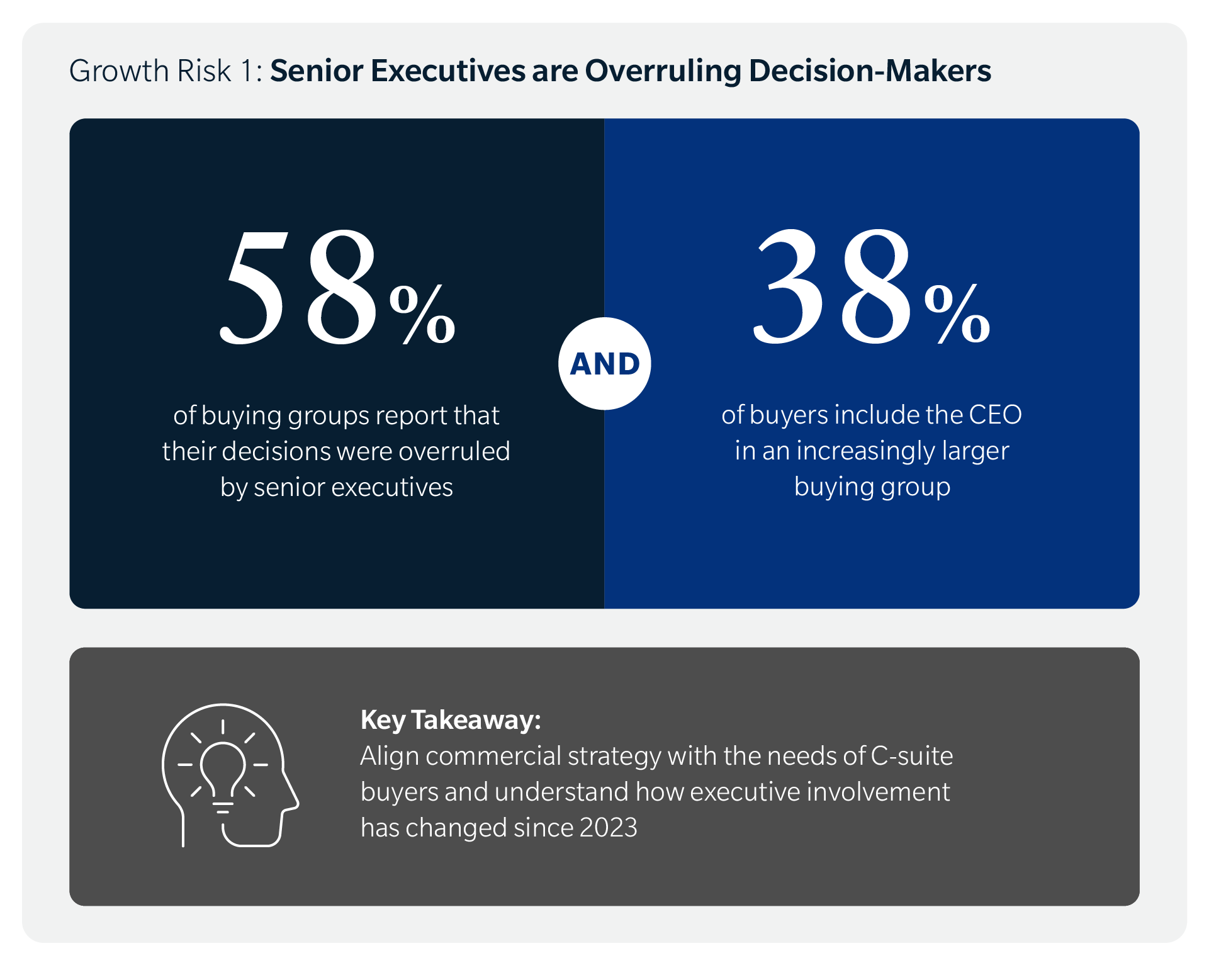
Healthtech buying decisions typically involve 10-12 people across various departments.
Your champion can’t move forward alone, even if they love your product. Here’s who typically needs to sign off:
- Clinical staff validate workflow impact and patient safety concerns
- IT teams assess technical integration and infrastructure requirements
- Compliance officers review HIPAA and regulatory implications
- Finance departments demand ROI justification and budget alignment
- C-suite executives evaluate strategic fit and organizational priorities
Decision-making authority is unclear or distributed across multiple departments, which means your single point of contact has less power than you think.
Procurement cycles that stretch for months

Healthcare organizations operate on budget cycles that don’t match your timeline. As it stands, large purchase approvals require alignment from at least 5 key stakeholders, and 86% of B2B purchases stall during the buying process. The typical B2B buying cycle spans 11.5 months.
The challenges you’ll face during this timeline:
- The average healthtech sales cycle runs 9-18 months
- Most delays occur post-demo rather than pre-demo
- Budget freezes and reallocation priorities create unexpected stops
- Capital requests often have to wait until the next quarterly meeting or annual board meeting
Even if you’re ready to close, your prospect won’t see their available budget until Q3.
Risk aversion in healthcare organizations
Healthcare buyers face career risk when new technology fails. HIPAA compliance, patient safety, and data security create legitimate concerns that go beyond typical B2B software fears.
73% of healthcare IT leaders warn about security challenges, and say “implementation risk” is the main reason for delaying technology purchases.
Prospects need proof beyond your demo:
- Case studies from similar healthcare organizations
- Reference calls with peers in comparable settings
- Security audits and compliance documentation
- Implementation plans that minimize disruption
The status quo feels safer than change, even when change would help.
Why Your Champion Goes Silent After the Demo
You didn’t lose the deal because of your product. You lost it because your champion hit an internal wall they couldn’t climb alone.
They lack internal buy-in from key stakeholders

Maybe your champion didn’t build a consensus before bringing you in. They saw your solution, got excited, and scheduled a demo without socializing the idea internally first. Other departments see the demo as “their project,” not a company priority.
This happens when:
- Clinical staff, IT teams, or compliance officers weren’t in the room during your presentation
- Your champion is now selling internally without your help or materials
- They’re trying to recreate your demo in conference rooms and Slack channels
- They’re failing because they don’t have your expertise or your sales enablement resources
It could be that your champion is fighting battles you don’t even know about.
They can’t build a business case

Rejected healthtech proposals fail due to “insufficient financial justification” rather than product concerns. So it’s also possible your ROI explanation doesn’t translate into their internal budget language.
Your champion needs specific numbers, like:
- Cost savings expressed in their organization’s actual spend
- Efficiency gains measured by hours saved or capacity increased
- Revenue impact tied to reimbursement or patient volume
- Risk reduction quantified in dollars, not just qualitative benefits
Your champion doesn’t know how to quantify the problem you solve in the terms their CFO cares about.
Most healthcare leaders consider ROI as the primary factor in their purchasing decisions. Finance teams shoot down proposals that lack concrete financial justification, and generic industry benchmarks won’t cut it.
They’re overwhelmed by next steps

If you didn’t create a mutual action plan after the demo, then your champion doesn’t know what to do next, or who needs to do it. Their path from demo to contract feels unclear and complicated.
The questions swirling in their head:
- Do they need security documentation first?
- Should they schedule an IT review?
- Who builds the business case?
- What approvals are required and in what order?
Then, other priorities compete for their attention, and your deal slides down the list.
Mistakes That Send Deals to the Dead Zone
Most healthtech sales teams create their own dead zone problems. See if any of these mistakes seem familiar.
Not mapping the decision process before the demo
Most salespeople demo before understanding the approval process. You don’t know who makes the final call or controls the budget. Critical stakeholders aren’t identified until after you’ve presented, which means you built your pitch for the wrong audience.
Analysis of B2B healthtech deals shows that sales teams who mapped the complete buying committee during discovery closed deals faster and more efficiently than those who didn’t (https://www.joinpavilion.com/research). Your discovery process skips the “how does your organization buy” question, so you walk into the demo blind.
Treating demos as closing events instead of middle steps
This is when the demo becomes your peak moment instead of a milestone. You celebrate interest without securing commitment to next actions.
Your prospect leaves with information but no obligations. There’s no scheduled follow-up, no agreed-upon timeline, no documented next steps.
Four things you’re missing are:
- Commitment to specific next actions with dates
- Agreement on who needs to be involved going forward
- Documentation of the decision process and timeline
- Accountability for both your tasks and theirs
You haven’t earned the right to ask for specific commitments yet, so you don’t. Then you wonder why they ghosted you.
Failing to create urgency around the problem
When your demo focuses on features instead of the cost of inaction, prospects feel no sense of urgency.
Prospects don’t feel pressure to change their current situation because you haven’t quantified what staying with the status quo costs them in dollars, patient outcomes, staff burnout, or a competitive disadvantage.
There’s no compelling event driving a decision timeline. When everything is important, nothing is urgent.
How to Keep Deals Moving Through the Decision Phase
You can’t eliminate the dead zone entirely, but you can shrink it. Here’s your playbook.
Build a mutual action plan before you demo
Document every step from demo to signature with specific dates. Then get your prospect to commit to milestones in writing, even if it’s just a shared Google Doc.
Your mutual action plan should include:
- Specific dates for each milestone, not vague timeframes
- Names who will own every action item on both sides
- Dependencies that could block progress
- Decision criteria that need to be met at each stage
- Stakeholders who need to be involved at each step
Review and update the plan after every conversation. B2B deals with documented mutual action plans close faster and at higher win rates than deals without them.
Involve all stakeholders early in the process
Map the buying committee during discovery, not after the demo. Ask questions like “Who else needs to be involved in this decision?” and “What does your typical approval process look like?”
To engage stakeholders effectively, you should:
- Identify everyone who has input or veto power.
- Understand their concerns and what success looks like for each person.
- Schedule separate sessions for different stakeholder groups.
- Tailor your messaging to what each group cares about.
- Create sales enablement materials your champion can share internally.
Make the business case impossible to ignore
Translate your value into their specific metrics and KPIs. Build ROI models with their actual data, not generic industry averages. If they’re losing $200K annually to manual workflows, show them that number with their own figures.
Your business case should include:
- Current state costs using their actual numbers
- Future state benefits tied to their strategic goals
- The cost of delay expressed in quarterly or monthly terms
- The payback period and total ROI over 3-5 years
- Risk mitigation value they can’t get from their current approach
Show the cost of delay in concrete terms they can present to leadership: “Every quarter you wait costs $50K in lost efficiency.” That’ll get their attention!
Schedule the next meeting before you leave the current one
Never end a conversation without making the next appointment.
Don’t say “I’ll follow up next week.” Say “Let’s get 30 minutes on the calendar for Thursday at 2 pm to review the security documentation with your IT director.”
To make every next step count:
- Be specific about the date, time, and attendees
- State the purpose and agenda for the meeting
- Include the right stakeholders from the start
- Confirm attendance from all required participants
- Send the invite before you end the call or leave the room
Use calendar invites to maintain their commitment.
The Five Warning Signs Your Deal Is Entering the Dead Zone
If you catch these signals early, you can still save the deal.
Your champion stops responding within 48 hours
Response times stretch from hours to days to weeks. Messages shift from specific (“Can you send the HIPAA compliance documentation?”) to vague (“Let me check with my team”). Your champion cancels meetings or suggests “checking back later” without offering alternative dates.
You’re chasing instead of collaborating.
New stakeholders appear who weren’t in your process
Someone from IT, legal, or procurement suddenly has questions. These stakeholders don’t have context from earlier conversations, so they’re starting from zero.
Watch for these red flags:
- They raise objections you thought you’d already addressed
- Your champion can’t or won’t facilitate introductions to these people
- You’re answering basic questions that should’ve been covered weeks ago
- Each new stakeholder brings a completely different set of concerns
This means your champion isn’t in control of the internal process.
The timeline becomes unclear
What this looks like:
- Dates you agreed to slip without explanation.
- Your prospect stops committing to specific next steps, replacing “We’ll have a decision by March 15” with “We’re still working through some things.”
- Budget approval timelines shift or become uncertain.
- Urgency disappears from the conversation.
When timelines evaporate, so do deals. Time kills deals.
Requests for information become repetitive or circular
Answering the same questions multiple times for different people is a waste of time and energy. When different stakeholders ask for information you’ve already provided, or your champion isn’t distributing materials internally, it quickly gets chaotic:
- Your prospect can’t consolidate feedback from their internal team.
- Everyone’s operating on their own without any team coordination.
- The goalposts keep moving with new requirements.
- No one seems to remember what was already agreed upon.
This signals a breakdown in your champion’s internal process.
Your champion asks you to “be patient” or “give them time”
Generic stall language replaces specific action commitments.
Your champion can’t articulate what’s happening internally or who’s holding up the process. They avoid discussing the actual decision-making process when you ask direct questions. You sense they’re hoping you’ll go away.
This isn’t patience—it’s avoidance.
What to Do When a Deal Goes Dark
Don’t give up—try these interventions first.
Use a breakup email to force a response
Write a professional note acknowledging the silence: “I haven’t heard back after my last three emails. I’m guessing this isn’t a priority right now.”
Give your prospect permission to say no: “If you’ve decided to pause or go another direction, that’s completely fine. Just let me know.”
Your breakup email should:
- Acknowledge the silence without being passive-aggressive.
- Give permission to say no to make responding easy.
- Create urgency by suggesting you’re moving on.
- Include a simple yes/no question they can answer quickly.
This generates responses in dark deals. An enterprise account manager at HubSpot says her sales team sees a 33% response rate to their breakup emails.
Go around to other stakeholders
Reach out to people who were in earlier meetings, and provide value:
- Share a relevant case study, industry report, or article that addresses a concern they raised.
- Ask if there’s anything blocking progress from their perspective: “I wanted to check in—is there anything on our end that would help move this forward?”
Position yourself as a resource, not a pest.
Offer a smaller commitment to restart momentum
Suggest a pilot program or limited trial that reduces risk. Propose a workshop or assessment instead of a full implementation: “What if we started with a 30-day pilot in one department?”
Ways to reduce the ask:
- Pilot programs in a single department or location
- Proof of concept projects with limited scope
- Assessment or audit services to quantify the problem
- Executive workshop to build internal alignment
Build a Sales Process That Prevents the Dead Zone
The best way to handle the dead zone is to not enter it in the first place.
Run a sales audit to find where deals stall
Review your last 20 lost opportunities to identify patterns. Track which stage most deals go dark (Hint: it’s probably post-demo). Calculate your conversion rate from demo to next step, from next step to proposal, and from proposal to close.
Your sales audit should examine:
- Conversion rates between each stage of your pipeline
- Average time spent in each stage before progression or loss
- Common objections that appear in lost deal notes
- Stakeholder gaps where key decision-makers weren’t engaged
- Process breakdowns where your team didn’t follow best practices
Interview former prospects who ghosted you to understand why. Ask questions like “What happened internally after our demo?” and “What would have made it easier to move forward?”
Document the gaps between your process and their buying process.
This is exactly what I cover in The 5-Day Healthtech Sales Audit: Find the Leaks in Your Pipeline (So Deals Stop Going Dark), a systematic approach to diagnosing where your deals actually break down:
- Day 1: Conversion rate analysis by stage
- Day 2: Average time in each stage to spot bottlenecks
- Day 3: Review lost deal notes for patterns
- Day 4: Interview your team about common objections and stalls
- Day 5: Prioritized list of fixes based on impact and effort
Create a post-demo playbook for your team
Script the conversation that happens at the end of every demo. Your reps should never let a prospect leave without completing three tasks: scheduling the next meeting, documenting the mutual action plan, and identifying any stakeholders who need to be involved.
Your playbook should include:
- Scripts for transitioning from demo to next steps
- Templates for mutual action plans and business cases
- Stakeholder-specific materials for champions to use internally
- Objection handling guides for common post-demo concerns
- Role-playing exercises to practice the post-demo conversation
Implement a deal review cadence for stuck opportunities
Meet weekly to discuss deals that haven’t progressed in 10+ days. Bring fresh perspectives to stalled conversations—sometimes another team member sees an angle you missed.
Your deal review process should:
- Identify stuck deals based on time since last progression
- Diagnose the blocker using the warning signs framework
- Develop intervention strategies specific to each situation
- Assign ownership for executing the intervention
- Follow up within 48 hours to measure results
The Dead Zone Doesn’t Have to Win
The dead zone kills more healthtech deals than pricing, competition, or product gaps. You can’t control healthcare buying cycles, but you can control your process”
- Start by running a sales audit to find where your deals actually stall.
- Map the decision process before you demo, not after.
- Build mutual action plans that turn prospects into partners.
- Create urgency around the problem, not just excitement about your solution.
Your demo isn’t the finish line; it’s like getting to mile marker 5 in a marathon. The companies that win in healthtech sales know this, and design their process to bridge the gap between demo and decision.
They make it easy for champions to sell internally, and they never let a deal go dark without a fight.
Your move.
References
Charanyan. (2025). The State of Demo Conversion Rates. Revenue Hero. Retrieved from https://www.revenuehero.io/blog/the-state-of-demo-conversion-rates-in-2025/
Growth Risks 2024: B2B Buying Behaviors are Evolving. (2024). SBI Growth Advisory. Retrieved from https://sbigrowth.com/insights/growth-risks-2024-b2b-buying-behaviors-are-evolving/
Key Factors Behind IT Implementation Failures in Mid-Sized Healthcare Settings. (2025). CapMinds. Retrieved from https://www.capminds.com/blog/key-factors-behind-it-implementation-failures-in-mid-sized-healthcare-settings/
Ntsele, G. (2025). Why 73% of healthcare IT leaders fear rising security challenges. Paubox. Retrieved from https://www.paubox.com/blog/why-73-of-healthcare-it-leaders-fear-rising-security-challenges/
Rius, A. (2025). B2B Buying Behavior in 2025: 40 Stats and Five Hard Truths That Sales Can’t Ignore. CorporateVisions. Retrieved from https://corporatevisions.com/blog/b2b-buying-behavior-statistics-trends/
Sela, R. (2024). Buying Committee 101: Understanding the Key Players in B2B Sales. Ron Sela. Retrieved from https://www.ronsela.com/buying-committee/
Taffer, M. (2024). Mutual Action Plans: How-to Guide for Closing More Deals. Qwilr. Retrieved from https://qwilr.com/blog/mutual-action-plan/
Ye, L. (n.d.). The Power of Breakup Emails: 7 Templates To Close the Loop. HubSpot. Retrieved from