Best Telehealth Apps for Urgent Care: Quick Medical Help at Your Fingertips

Best Telehealth Apps for Urgent Care: Quick Medical Help at Your Fingertips

Health Tech Med Tech

Telehealth apps offer urgent care services right from the comfort of your home. In a recent Rock Health survey with 8,000 respondents, 76% said they used telehealth services in 2023 – a huge increase since the COVID-19 pandemic. 

Many digital health companies have taken advantage of this surge in popularity, each vying to provide the best experience. But which telehealth apps are best for urgent care? 

In this comprehensive guide, we’ll explore the best telehealth apps for urgent care, helping you understand what to look for in a telehealth app when you need medical attention fast.

Contents

What Makes a Great Telehealth App for Urgent Care?

Man holding a phone using a health app

When choosing a telehealth app for urgent care, be sure it has these must-have features (Shah, n.d.):

  • Easy Patient Registration: The app should allow quick and straightforward registration with minimal information required.

  • Patient Dashboard: A dashboard that provides a comprehensive view of medical history, current conditions, and treatment plans is crucial.

  • Doctor Catalog: The app should offer detailed profiles of healthcare providers, including their qualifications and specialties.

  • Appointment Management: Features like calendar integration and reminders help manage appointments efficiently.

  • E-Prescription: The ability to receive prescriptions electronically is a must-have. It helps doctors create and deliver prescriptions with fewer errors (Haleem et al., 2021).

  • Payment Gateway: Secure and straightforward payment options enhance user experience.

User-friendly interface

A user-friendly interface is vital for patients and healthcare providers. It should be easy to navigate, with clear instructions and intuitive design. This ensures that users can quickly find what they need, reducing frustration and improving overall satisfaction.

Board-certified healthcare providers

If the app connects you with board-certified healthcare providers, you’re almost guaranteed to get quality care.

Integration with insurance plans and pricing transparency

Check if the app works with with your insurance plan and shows the up front costs. This can help you avoid unexpected costs, and ensure you can use your insurance benefits effectively.

Privacy and security measures

Privacy and security are paramount when dealing with health information. Look for apps that comply with regulations like HIPAA and offer secure data handling practices.

Now that we’ve covered the essential components of a great telehealth app for urgent care, let’s take a closer look at some of the top-rated options.

Top-Rated Telehealth Apps for Urgent Care

1. Doctor on Demand
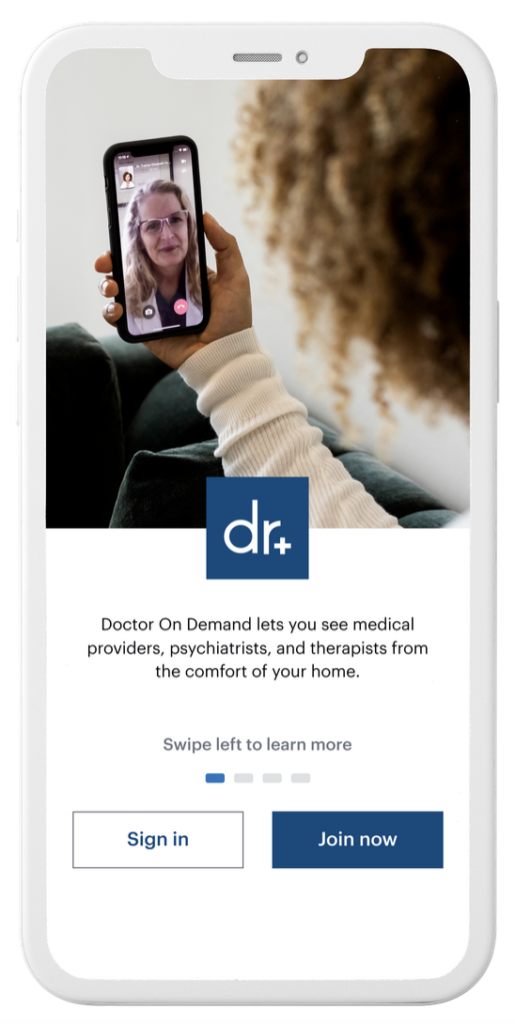
Patient using Doctor on Demand app
Source: Doctor on Demand

Doctor on Demand offers a wide range of services, including urgent care, mental health, and preventive care. It’s available on iOS, Android, and web platforms.

Key Features:

  • 24/7 access to board-certified doctors
  • Mental health services
  • Prescription refills
  • Integration with major insurance plans

ProsCons
24/7 availabilityHigher cost without insurance
Accepts MedicareLimited specialty care
User-friendly interface

Use Cases:

  • Treating common conditions like urinary tract infections (UTIs), viruses, and sinus infections
  • Managing mental health issues

To learn more, visit:

2. MDLive

Doctor onscreen with patient - MDLive app
Source: MDLive

MDLive provides urgent care, primary care, and mental health services. It’s known for its comprehensive mental health offerings and user-friendly platform.

Key Features:

  • 24/7 urgent care
  • Mental health services
  • Prescription services
  • Insurance integration

ProsCons
Wide range of servicesHigher cost for uninsured
Insurance acceptedLimited availability in some regions
Easy to use

Use Cases:

  • Urgent care for common ailments
  • Ongoing mental health support

To learn more, visit:

3. PlushCare
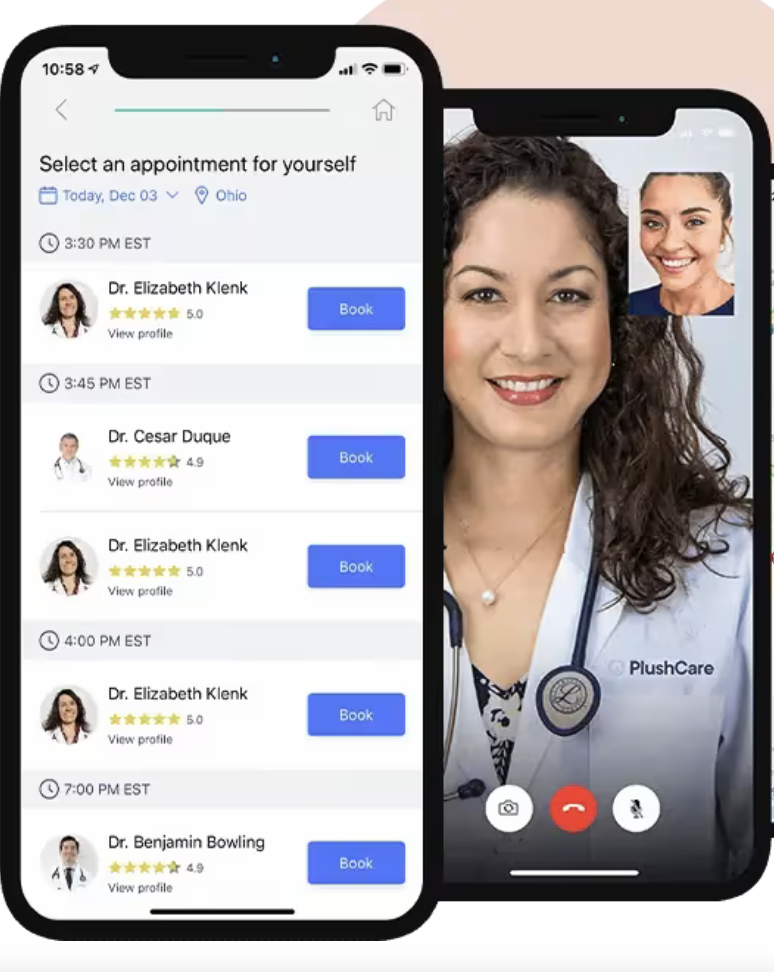
Doctor onscreen -  PlushCare app
Source: PlushCare

PlushCare offers primary, urgent, and mental health care. It stands out for its disaster relief programs and specific health services.

Key Features:

  • Primary and urgent care
  • Mental health services
  • Disaster relief programs
  • Subscription-based model

ProsCons
Comprehensive careSubscription required
Disaster relief servicesHigher initial visit cost
Insurance integration

Use Cases:

  • Regular primary care visits
  • Urgent care needs
  • Mental health consultations

To learn more, visit:

4. Sesame Care

Doctor onscreen - Sesame Care app
Source: Sesame Care

Sesame Care is known for its affordability and transparency. It offers a variety of services, including urgent care, primary care, and mental health.

Key Features:

  • Affordable pricing
  • Transparent doctor profiles
  • Wide range of services
  • Membership options

ProsCons
AffordableLimited insurance integration
Transparent pricing
Membership benefits

Use Cases:

  • Affordable urgent care visits
  • Primary care consultations

To learn more, visit:

5. Teladoc

Teladoc statistic: Over 50% of chronic care services live in underserved areas

Source: Sesame Care on Linkedin

Founded in 2002, Teladoc is a pioneer in telehealth. Their app and online portal provide a wide range of healthcare services, including urgent care, mental health support, and chronic condition management. 

Key Features:

  • No-pay service for eligible patients
  • Prescription services
  • Simple consultation process

ProsCons
24/7 availabilityHigher cost without insurance
Wide range of servicesLimited availability in some regions
User-friendly interface

Use Cases:

  • Treating common conditions like the flu, allergies, and sinus infections
  • Ongoing mental health support with the same specialist
  • Dermatology consultations for skin issues

To learn more, visit:

How to Choose the Right Telehealth App for Your Needs

Before you picking a telehealth app for urgent care, consider the following factors.

Decide on your specific urgent care requirements

Consider what you need from a telehealth app. Are you looking for general urgent care, mental health support, or primary care services? 

Identifying your needs will help narrow down your options. It’s also worth checking whether you’d be better served with in-person urgent care.

Compare app features and services

Compare the features and services of different apps. Look for those that offer the specific services you need, such as 24/7 access, mental health support, or prescription refills.

Consider cost and insurance coverage

Check if the app integrates with your insurance plan and understand the costs involved. Some apps offer subscription models that can save money in the long run.

Review provider qualifications and availability

Ensure the app connects you with board-certified providers. Also, check the availability of providers to ensure you can get an appointment when you need it.

Read user reviews and testimonials

User reviews and testimonials can provide valuable insights into the app’s performance and user experience. Look for apps with high ratings and positive feedback.

Once you’ve chosen the appropriate telehealth app, get familiar with it so you’re ready when you or your family have urgent care needs. 

Conclusion

Telehealth apps give us greater access to urgent care, providing quick, convenient, and high-quality medical attention when we need it most. Whether you’re dealing with a sudden illness, need a quick consultation, or require ongoing care, these top telehealth apps for urgent care are ready to connect you with qualified professionals.

When you choose the right app for your needs, expert healthcare is always just a few taps away. Don’t wait until an emergency strikes – explore these apps today and be prepared for whatever health concerns tomorrow may bring.

References

Haleem, A., Javaid, M., Singh, R. P., & Suman, R. (2021). Telemedicine for healthcare: Capabilities, features, barriers, and applications. Sensors International; 2, 100117. doi.org/10.1016/j.sintl.2021.100117

Knowles, M., Krasniansky, A., Nagappan, A., Zweig, M. & Kaganoff, S. (2024). The new era of consumer engagement: Insights from Rock Health’s ninth annual Consumer Adoption Survey. Rock Health. Retrieved from https://rockhealth.com/insights/the-new-era-of-consumer-engagement-insights-from-rock-healths-ninth-annual-consumer-adoption-survey/

Samee, A. S. (n.d.) 16 Must-Have Telemedicine App Features for a Better Experience. Folio3. Retrieved from https://digitalhealth.folio3.com/blog/telemedicine-app-features/

Shah, R. (n.d.). Must-Have Healthcare Software Features in Your Telemedicine App.” OSP Labs. Retrieved from https://www.osplabs.com/insights/10-must-have-features-in-your-telemedicine-app/

Telehealth vs. In-Person Visits: Pros and Cons

Telehealth vs. In-Person Visits: Pros and Cons

Health Tech

Telehealth is a viable alternative to traditional in-person care, sparking an ongoing debate about each of their relative merits. This may leave people wondering about the differences between telehealth vs. in-person visits.

In this article, we’ll explore the pros and cons of telehealth and in-person care so you make informed decisions about your healthcare needs, and determine which option is right for you.

Contents


What is Telehealth?

Telehealth, also known as telemedicine, involves the use of digital tools to provide healthcare services remotely. A few examples:

  • Sending and receiving direct messages from your healthcare provider via a patient portal.

  • Email or text reminders about prescriptions.

  • Remote monitoring of your blood sugar, heart rate, sleep patterns, etc.

More background on what telehealth is and its benefits.

Telehealth can be synchronous, where the patient and provider interact in real-time, or asynchronous, where information is shared and reviewed at different times. Types of telehealth services include:

  • Synchronous Telehealth: Real-time interactions via video calls or phone calls.

  • Asynchronous Telehealth: Store-and-forward technology where data, images, or messages are sent and reviewed later.

  • Remote Patient Monitoring (RPM): Continuous monitoring of patients‘ health data using devices that send information to healthcare providers.

Advantages of Telehealth

Telehealth offers several advantages, especially in today’s fast-paced world. An AMA study found that medical practitioners who use telehealth the most were radiologists (39.5%), psychiatrists (27.8%), and cardiologists (24.1%). 

Convenience and accessibility

One of the most attractive things about telehealth is its convenience:

  • No Travel Required: You can have a consultation from the comfort of your home, office, or even while on vacation.

  • Flexible Scheduling: Appointments can be scheduled outside of traditional office hours, making it easier for those with busy schedules.

Cost-effectiveness

With insurance

Telehealth can be less expensive than in-person visits due to lower overhead costs for providers and no travel expenses for patients. 

Many insurance plans cover telehealth services, making it a more affordable option. 

If you are planning a telehealth appointment, ask your health plan if telehealth is covered and the copay or coinsurance amount. Your telehealth appointment may be through your in-network provider or a telehealth company your insurer contracts with.

Without insurance

If you don’t have health insurance, you can contact a telehealth company like AmWell, Teladoc, Doctor On Demand, or MD Live for a medical consultation and get a quote.

More access to specialists

  • Specialist Referrals: Telehealth makes it easier to get specialist consultations, especially for those living in rural or underserved areas (Gajarawala & Pelkowski, 2021).

  • Integrated Care: Health providers can seamlessly integrate telehealth into their healthcare systems, improving overall care coordination.

Mental health services

Telehealth has made mental health services more accessible, giving people access to counseling and therapy without the stigma of visiting a clinic (Harris, 2022).

Limitations of Telehealth

Lock octagon illustration

Despite its many benefits, telehealth also has its drawbacks. Here are some of the biggest limitations.

Technology barriers and connectivity issues

Lack of physical exams

  • Inability to Perform Comprehensive Exams: Some conditions require a physical examination that a health provider can’t do as well via telehealth (Saljoughian, 2021).

  • Potential for Misdiagnosis: Without the ability to perform a hands-on examination, there is a higher risk of misdiagnosis (Gajarawala & Pelkowski, 2021). For example, The Doctors Company said that nearly 70% of their telehealth-related claims have alleged diagnostic errors.

Privacy and security concerns

  • Data Security: While most telehealth platforms are encrypted, there is always a risk of data breaches or hacking (HHS, 2023).

  • Confidentiality: Ensuring privacy during a telehealth session can be challenging, especially if the patient is in a shared or public space (Houser et al., 2023).

When to Choose Telehealth

Elderly woman on Zoom with health provider

Telehealth is not suitable for every situation, but it excels in several areas.

Routine check-ups and consultations

  • Primary Care: Regular check-ups and follow-up appointments can be easily managed through telehealth.

  • Preventive Care: Screenings and preventive measures can often be discussed and managed remotely.

Mental health services

Telehealth provides a convenient and private way to receive mental health support like counseling and therapy.

Chronic disease management

People with chronic conditions like diabetes or hypertension can manage them through regular telehealth consultations and RPM (Harris, 2022).

Minor acute conditions

Health providers can diagnose and treat conditions like colds, minor infections, and rashes via telehealth.

What is In-Person Care?

In-person care is the traditional model of healthcare where patients visit a clinic, hospital, or specialty center to receive medical attention. This type of care is essential for many medical conditions and treatments. In-person healthcare settings include:

  • Clinics: Primary care and specialized clinics offer a wide range of services.

  • Hospitals: For emergency care, surgeries, and complex treatments.

  • Specialty Centers: Focused on specific areas like cardiology, oncology, or orthopedics.

Advantages of In-Person Care

Doctor shows patient Rx

In-person care remains crucial for many reasons. In the same AMA study medical practitioners who use telehealth the least (in favor of in-person care) were obstetrician-gynecologists (9.3%), gastroenterologists (7.9%), and allergists/immunologists (6.1%). 

In-person care offers several unique benefits that are worth considering, as follows.

Comprehensive physical exams

  • Hands-On Assessment: Allows for thorough physical examinations, which are essential for accurate diagnosis and treatment (Saljoughian, 2021).

  • Immediate Diagnostic Tests: Access to lab tests, imaging, and other diagnostic procedures during the visit.

Face-to-face interaction and rapport 

  • Personal Connection: Face-to-face interactions help build trust and rapport between patients and healthcare providers.

  • Non-Verbal Cues: Providers can pick up on non-verbal cues that are easy to miss in virtual consultations.

Complex treatments and surgeries

  • Surgical Procedures: In-person care is necessary for any surgical intervention or complex medical procedures.

  • Emergency Care: Immediate, hands-on care is essential in emergencies.

Drawbacks of In-Person Care

While in-person care has its strengths, it also comes with several disadvantages.

People in waiting room wearing face masks

Longer wait times and scheduling difficulties

  • Appointment Delays: Patients often face long wait times for appointments and in waiting rooms.

  • Scheduling Conflicts: Finding a convenient time for both the patient and provider can be challenging.

Travel requirements and associated costs

Traveling to and from healthcare facilities can be time-consuming and costly, especially for those in rural areas (Harris, 2022).

Exposure to other patients and potential infections

Visiting a healthcare facility increases the risk of exposure to other illnesses, including infectious diseases (Saljoughian, 2021).

Time away from work or family obligations

In-person visits often require taking time off work or away from family responsibilities, resulting in lost productivity.

When to Opt for In-Person Care

Empty white hospital hallway

In-person care is indispensable in some situations, as follows.

Emergencies

Conditions like heart attacks, strokes, and severe injuries require immediate, hands-on medical attention.

Chronic or complex medical conditions

Conditions that require specialized treatment plans and hands-on management benefit from in-person care.

Diagnostic procedures and lab tests

You must complete certain tests and procedures, like blood work and imaging, in a healthcare facility for the most accurate diagnosis.

Hands-on treatments and therapies

Rehabilitation and physical therapy usually require direct interaction with healthcare providers.

Telehealth and in-person care each have their merits. Now, let’s explore how these two approaches can be combined.

Integrating Telehealth and In-Person Care

The future of healthcare likely lies in a hybrid model that combines the strengths of both telehealth and in-person care.

Woman getting a shot in her arm

Hybrid models of care

A blended approach that combines telehealth for routine check-ups and follow-ups with in-person visits can better address more complex needs.

Coordinating care between virtual and physical settings

Ensuring that patient information and care plans are consistent across both telehealth and in-person settings.

Using telehealth for follow-ups after in-person visits

Follow-up appointments can often be conducted via telehealth, saving time and resources.

To sum up the differences in a handy-dandy chart, look at this one from Mira.

Comparison chart - In person vs virtual care chart
Source: Mira (talktomira.com)

Virtual and in-person visits each have unique advantages and limitations. Telehealth offers convenience, cost savings, and improved access to care, especially for routine consultations and mental health services. However, it falls short in situations that require hands-on examinations and immediate medical interventions. 

In-person care remains essential for physical exams, complex treatments, and emergencies, but comes with the drawbacks of longer wait times, travel, and potential exposure to infections.

The best choice between telehealth and in-person care isn’t always black and white. It often depends on your specific health needs, preferences, and circumstances. When you understand the pros and cons of each approach, you can make more informed decisions about your healthcare.  

As technology continues to advance, the integration of telehealth and in-person care will likely become more innovative, sophisticated, and widespread. Remember, the goal is to find the right balance that ensures you receive the best possible care, whether it’s through a screen or in a doctor’s office.

References

Bean, K. (2023). In-Person Vs. Virtual Care: What’s The Difference & Which Is Best. Mira. Retrieved from https://www.talktomira.com/post/telehealth-vs-in-person-care-pros-and-cons

Feldman, D. L. (n.d.). Top Seven Tips for Telehealth. The Doctors Company. Retrieved from https://www.thedoctors.com/articles/top-seven-tips-for-telehealth/

Gajarawala, S. N., & Pelkowski, J. N. (2021). Telehealth Benefits and Barriers. The Journal for Nurse Practitioners, 17(2), 218-221. doi.org/10.1016/j.nurpra.2020.09.013

Harris, A. (2022). Differences between telehealth vs. in-person care. Everlywell. Retrieved from  https://www.everlywell.com/blog/virtual-care/telehealth-vs-in-person-care/

Henderson, E. (2020). Telemedicine or in-person visit? Pros and cons. News Medical. Retrieved from https://www.news-medical.net/news/20201027/Telemedicine-or-in-person-visit-Pros-and-cons.aspx

Houser, S. H., Flite, C. A., & Foster, S. L. (2023). Privacy and Security Risk Factors Related to Telehealth Services – A Systematic Review. Perspectives in Health Information Management; 20(1). 

Robeznieks, A. (2019). Which medical specialties use telemedicine the most? American Medical Association (AMA). Retrieved from https://www.ama-assn.org/practice-management/digital/which-medical-specialties-use-telemedicine-most

Saljoughian, M. (2021). The Benefits and Limitations of Telehealth. U.S. Pharmacist. Retrieved from https://www.uspharmacist.com/article/the-benefits-and-limitations-of-telehealth

Telehealth Privacy and Security Tips for Patients. (2023). U.S. Department of Health and Human Services (HHS). Retrieved from  https://www.hhs.gov/hipaa/for-professionals/privacy/guidance/telehealth-privacy-security/index.html

Understanding Your Telehealth Insurance Options

Understanding Your Telehealth Insurance Options

Health Tech

The convenience of healthcare access from your home makes telehealth more popular than ever. According to McKinsey, telehealth usage has stabilized at levels 38 times higher than before the pandemic. This surge in virtual care has prompted many insurance providers to expand their telehealth coverage, but you may not know how their telehealth insurance options work. 

Whether you’re looking for convenient access to medical professionals or seeking cost-effective healthcare solutions, you need to understand the telehealth insurance options available to you.

First, let’s explore what telehealth is and why coverage matters.

Contents

What is Telehealth and Why is Insurance Coverage Important?

Telehealth has become a buzzword in recent years, especially with the rise of digital health platforms and the COVID-19 pandemic. 

Telehealth, fairly synonymous with telemedicine, refers to the use of tech to provide healthcare services remotely. This can include video consultations, secure messaging, remote monitoring, texting, audio-only calls, and even virtual prescription refills. 

Benefits of telehealth services

In November 2021, 55% of respondents said they were more satisfied with telehealth or virtual care visits than with in-person appointments. 35% use other digital services, such as ordering prescriptions online and home delivery.

Telehealth benefits patients and healthcare providers in many ways (Hasselfeld, n.d.):

  • Convenience: Patients can consult with their healthcare providers from the comfort of their homes, which eliminates the need for travel and reduces wait times.

  • Access to Care: Telehealth is particularly beneficial for people in rural areas or those with mobility issues, providing access to specialists and primary care providers who may not be available in the local area.

  • Cost-Effective: By reducing the need for physical visits, telehealth can lower healthcare costs for both patients and providers.

  • Preventive Care: Regular virtual check-ups can help in the early detection and management of chronic conditions, improving overall health outcomes.

Importance of insurance coverage for telehealth

Insurance coverage for telehealth services is crucial for several reasons:

  • Reduced Out-of-Pocket Costs: Without insurance, telehealth costs can add up quickly. Insurance coverage helps mitigate these expenses.

  • Access to a Broader Network: Insurance plans often have agreements with a network of providers, making it easier for patients to find in-network telehealth services.

  • Comprehensive Care: Insurance can cover a wide range of telehealth services, from primary care to specialist consultations, ensuring that patients receive comprehensive care.

Now that we understand the basics of telehealth, let’s look at the different types of insurance plans that offer coverage for these services.

Types of Insurance Plans with Telehealth Coverage

When it comes to telehealth, not all insurance plans are created equal. 

One study found that insurers paid less for third-party telehealth visits than in-person care. Before COVID-19, only six U.S. states required equal payment for telehealth and in-person visits. By late 2021, more states adopted these laws, reducing potential cost savings for insurers as telehealth payments increased (Cuellar et al., 2022).

Here’s a breakdown of the different types of insurance plans that cover telehealth services.

Traditional health insurance 

Most traditional/private health insurance plans now include telehealth benefits. These plans cover a variety of services such as video consultations, e-prescriptions, and remote monitoring (HRSA, 2023).

Standalone telehealth insurance

Some companies offer standalone telehealth insurance plans. These are subscription-based services that provide unlimited access to telehealth consultations for a monthly fee.

However, there may be limitations like the specific types of care covered, requiring initial in-person visits, or capping the number of telehealth visits. Recently, many private insurers have started providing telehealth services through third-party platforms like Teladoc or AmWell (Healthcare Service Corporation, 2020).

Medicare and Medicaid

Medicare Part B covers certain telehealth services, including virtual visits with doctors and specialists (Medicare.gov, n.d.). Medicaid coverage for telehealth varies by state, but many states have expanded their telehealth benefits in recent years (Schwamm et al., 2017).

Employer-sponsored plans

People sitting in an auditorium for a presentation

Many employers offer health insurance plans that include telehealth services. These plans often come with additional benefits like mental health services and secure messaging with healthcare providers.

With various telehealth insurance options available, it’s important to know what features to consider when evaluating plans.

What to Look for in Telehealth Insurance Plans

Choosing the right telehealth insurance plan can be overwhelming. Here are some key features to consider.

Scope of covered services

Ensure the plan covers a wide range of services, including:

  • Primary Care: Regular check-ups and preventive care. Many plans cover virtual visits for routine health assessments.

  • Mental Health: Access to telepsychiatry and counseling services. Mental health services via telehealth can be as effective as in-person visits.

  • Specialist Consultations: Ensure the plan includes virtual visits with specialists like cardiologists, and dermatologists. This can save time and reduce the need for physical referrals.

Network of available providers

A robust network of in-network providers ensures that you have access to a variety of healthcare professionals without incurring additional costs. Check if the plan includes:

  • Local Providers: Access to local healthcare providers who offer telehealth services.

  • Specialists: A wide range of specialists are available for virtual consultations.

  • National Networks: Some plans offer access to national networks of providers, which can be beneficial if you travel frequently.

Cost-sharing 

Bottle of pills spilled on currency

Healthcare marketplaces offer affordable individual health insurance plans. These plans must meet standards for cost-sharing, which are the out-of-pocket expenses people pay for medical services

Cost-sharing typically includes deductibles, copayments, and coinsurance, though not all plans use all three types (Rakshit et al., 2023):

  • Copayments: The fixed amount you pay for each visit. The fixed amount you pay for each telehealth visit. Some plans may offer lower copayments for virtual visits compared to in-person visits.

  • Deductibles: The amount you need to pay out-of-pocket before the insurance starts covering services. You may want to pair a high-deductible plan with Health Savings Accounts (HSAs) to help manage costs.

  • Coinsurance: The percentage of costs you share with the insurance company after you’ve paid your deductible. For example, a plan might cover 80% of the cost, leaving you to pay the remaining 20%.

Technology platforms and user experience

The technology with a telehealth platform should be easy to use. Look for features like:

  • User-Friendly Interface: An intuitive and easy-to-use platform.

  • 24/7 Availability: Access to healthcare services at any time.

  • Short Wait Times: Minimal waiting period for consultations.

Quality of care

Nursing colleagues in hall wearing blue

While convenience is a significant factor, the quality of care should not be compromised. Look for plans that ensure (Wolters Kluwer, 2023):

  • Clinical Effectiveness: The platform should support high-quality care across different specialties like chronic conditions and mental health issues.

  • Access to Resources: Plans that provide easy access to educational resources can empower patients to take control of their health.

Several insurance companies offer telehealth coverage, each with its own features and benefits. Here’s a comparison of some popular providers in the following table with info from the Center for Connected Health Policy (2021).

ProviderProsConsUnique FeaturesCustomer Satisfaction
AetnaComprehensive coverage & wide networkHigher premiumsIntegration with CVS HealthHigh
Blue Cross Blue ShieldBroad coverage & various plan optionsVaries by stateSpecialized telehealth programsHigh
Kaiser PermanenteIntegrated care model & user-friendly appLimited to certain regionsSeamless care coordinationVery High
UnitedHealthcareExtensive provider network & 24/7 availabilityComplex cost-sharingVirtual health assistantsModerate

Studies show patients prefer video telehealth over audio-only, reporting higher satisfaction and better outcomes. Video telehealth users are less likely to need emergency or in-person care (Lee et al., 2023). 

Armed with knowledge about different plans and their key features, let’s learn how to pick the best telehealth insurance plan for your needs.

How to Choose the Right Telehealth Insurance Plan for You

Doctor and patient virtual meeting both male

Selecting the right telehealth insurance plan requires careful consideration of your healthcare needs and preferences. Here are some steps to guide you.

Assess your healthcare needs

Identify your healthcare needs and preferences. Consider the following questions:

  • Do you need frequent specialist consultations?

  • Are mental health services important to you?

  • Do you have any chronic conditions that need regular monitoring?

Evaluate costs

Consider your budget and review the costs associated with each plan, including premiums, copayments, and deductibles.

  • Premiums: The monthly cost of the insurance plan.

  • Out-of-Pocket Costs: Copayments, deductibles, and coinsurance. For example, Medicare Part B covers certain telehealth services after you’ve paid the deductible, with a 20% coinsurance.

  • Additional Fees: Any additional fees for using telehealth services, such as subscription fees for standalone telehealth plans.

Check provider networks

Ensure the plan has a network of providers that includes your preferred doctors and specialists. This can help you avoid out-of-network charges and ensure continuity of care.

Review policy terms

Med insurance policy paper

Read the policy terms and conditions carefully. Look for any exclusions or limitations on telehealth services (Upvio, n.d.). For example, some plans may limit the number of telehealth visits they cover per year.

Consider integration with an existing plan

If you already have a health insurance plan, check if the telehealth plan works seamlessly with your existing coverage to provide a more comprehensive healthcare solution.

Tips to Maximize Your Telehealth Insurance Benefits

Once you have chosen a telehealth insurance plan, here are some tips to get the most out of it.

Medicare card and Rx closeup

Understand your coverage limits

Know the limits and restrictions of your coverage. This includes the number of visits covered and any specific conditions that apply (Upvio, n.d.). For example, some Medicare Advantage Plans offer more telehealth benefits than Original Medicare. 

Prepare for virtual appointments

Prepare for your virtual visit. Get your medical history and questions ready. Ensure you have a stable internet connection and a quiet, private space for the consultation.

Keep records

Maintain records of your telehealth visits and expenses to help you track your healthcare costs and manage your budget. Keeping detailed records can also be useful for any follow-up care or claims disputes.

Communicate effectively

Effective communication with your healthcare provider is key. Be clear about your symptoms and concerns. Beyond calling, you can use secure messaging within your patient portal to ask follow-up questions or clarify any doubts.

Stay informed

Keep track of any updates to your policy. Insurance plans can change, and staying informed ensures you continue to receive the best care. Check for updates from your insurance provider regularly, and review any new benefits or changes in coverage.

Use available resources

Take advantage of any educational resources provided by your telehealth platform. These resources can help you better understand your health conditions and treatment options, and empower you to make informed decisions about your care.

Telehealth insurance options have expanded significantly, providing us with more flexibility, convenience, and access to virtual care. However, navigating telehealth insurance options can be complex. By understanding the various plans available and considering your unique healthcare needs, you can select a telehealth insurance option that provides comprehensive coverage and peace of mind. 

Remember to review your policy on a regular basis and stay informed about new developments in telehealth insurance. Over time, insurance coverage will likely adapt their virtual care options to meet our changing healthcare needs. Take the time to explore your options and make an informed decision to ensure you’re getting the most out of your telehealth insurance coverage.

References

An Analysis of Private Payer Telehealth Coverage. (2021). Center for Connected Health Policy. Retrieved from https://www.cchpca.org/2021/04/Private-Payer-Telehealth-Coverage-Reportfinal.pdf

Bestsennyy, O., Gilbert, G., Harris, A. & Rost, J. (2021). McKinsey & Company. Retrieved from https://www.mckinsey.com/industries/healthcare/our-insights/telehealth-a-quarter-trillion-dollar-post-covid-19-reality

Centers for Medicare & Medicaid Services. (n.d.). Telehealth. Medicare.gov. Retrieved from  https://www.medicare.gov/coverage/telehealth

Cordina, J., Levin, E., Stein, G.  (2022). Consumer Health Insights: How respondents are adapting to the “new normal.” McKinsey & Company. Retrieved from https://www.mckinsey.com/industries/healthcare/our-insights/covid-19-consumer-healthcare-insights-what-2021-may-hold

Cost-Sharing Charges. (2023). Center on Budget and Policy Priorities. Retrieved from https://www.healthreformbeyondthebasics.org/cost-sharing-charges-in-marketplace-health-insurance-plans-answers-to-frequently-asked-questions/

Cuellar, A., Pomeroy, J. M. L., Burla, S., Jena, A. B. (2022). Outpatient Care Among Users and Nonusers of Direct-to-Patient Telehealth: Observational Study. Journal of Medical Internet Research;24(6):e37574. doi:10.2196/37574 

Five key features telehealth patients want: Insights for healthcare developers. (2023). Wolters Kluwer. Retrieved from https://www.wolterskluwer.com/en/expert-insights/5-key-features-telehealth-patients-want-healthcare-developers-insights

Hasselfeld, B. W. (n.d.). Benefits of Telemedicine. Johns Hopkins Medicine. Retrieved from https://www.hopkinsmedicine.org/health/treatment-tests-and-therapies/benefits-of-telemedicine

How to Check Telehealth Insurance Coverage. (n.d.). Upvio. Retrieved from https://upvio.com/blog/telehealth/how-to-check-telehealth-insurance-coverage

Lee, E. C., Grigorescu, V. Enogieru, I., Smith, S. R. Samson, L. W., Conmy, A. B., & De Lew, N. (2023). Updated National Survey Trends in Telehealth Utilization and Modality (2021-2022). Assistant Secretary for Planning and Evaluation (ASPE). Retrieved from  https://aspe.hhs.gov/sites/default/files/documents/7d6b4989431f4c70144f209622975116/household-pulse-survey-telehealth-covid-ib.pdf

Private insurance coverage for telehealth. (2023). Health Resources & Services Administration (HRSA). Retrieved from https://telehealth.hhs.gov/providers/billing-and-reimbursement/private-insurance-coverage-for-telehealth 

Rakshit, S., Rae, M., Claxton, G., Amin, K., & Cox, C. (2023). Private Insurer Payments for Telehealth and In-Person Claims During the Pandemic. Kaiser Family Foundation. Retrieved from  https://www.kff.org/mental-health/issue-brief/early-in-the-pandemic-private-insurers-paid-similarly-for-common-telehealth-and-in-person-claims/

Schwamm L.H., Chumbler N., Brown E., et al. (2017). Recommendations for the implementation of telehealth in cardiovascular and stroke care: a policy statement from the American Heart Association. Circulation;135(7):e24–e44. doi: 10.1161/CIR.0000000000000475

Stay Informed on COVID-19. (2020). Health Care Service Corporation. Retrieved from  https://www.hcsc.com/newsroom/category/company-news/covid-19-information/

How to Prepare for Your Virtual Doctor Visit: A Complete Guide

How to Prepare for Your Virtual Doctor Visit: A Complete Guide

Health Tech

A virtual doctor visit is a convenient and effective way to receive medical care, making healthcare more accessible and efficient for everyone. From 2019 to 2024, the rate of online doctor visits worldwide more than doubled to over 116 million. 

Whether you’re a first-timer or you want to improve your virtual doctor visit experience, proper preparation is key. This guide will walk you through the steps to ensure your online appointment is as effective as – or even better than – an in-person visit.

Let’s start with some background about virtual doctor visits and their benefits.

Contents

Virtual Doctor Visit Overview

Woman in gold talking to doctor on laptop

What is a virtual doctor visit?

A virtual doctor visit, also known as telehealth or telemedicine, is a way to consult with your healthcare provider using technology like video calls, phone calls, or text messaging. 

Instead of going to a doctor’s office, you can talk to your doctor from the comfort of your home using your smartphone, tablet, or computer. 

This method is more popular since the COVID-19 pandemic, as it offers a convenient and safe way to receive medical care (Zulman & Verghese, 2021 & National Institute on Aging, n.d.). The Census Bureau’s Household Pulse Survey (with data from April 2021 through August 2022) found that (Lee, E. C. et al., 2023):

  • Telehealth use was lowest among people who are uninsured (9.4%), aged 18 to 24 (17.6%), and residents of the Midwest (18.7%).

  • Telehealth use was highest among those with Medicaid (28.3%) and Medicare (26.8%), those who are Black (26.1%), and those earning less than $25,000 (26.4%).

Benefits of telehealth appointments

Woman talking to doctor on her phone closeup

Telehealth appointments come with several advantages:

  • Convenience: You don’t have to travel to the doctor’s office or sit in a waiting room. You can have your appointment from anywhere, whether it’s in your home, office, or even your car during a lunch break (Hasselfeld, n.d. & bravo, 2022).

  • Saves Time: A virtual visit can save you more than an hour compared to an in-person visit (UnitedHealthcare, 2023). This is great for people with busy schedules or live far away from their doctors (bravo, 2022).

  • Cost-Effective: Virtual visits often cost less than in-person visits, especially when compared to urgent care or emergency room visits (Zulman & Verghese, 2021 & bravo, 2022).

  • Accessibility: Telehealth increases access to healthcare for people in rural areas or those with mobility issues. It also allows you to consult with specialists who may not be available in your local area (bravo, 2022 & HRSA, 2024).

  • Safety: Virtual visits help prevent the spread of infectious diseases by reducing the need for in-person interactions (Hasselfeld, n.d. & HRSA, 2024).

Common misconceptions about virtual consultations

Black woman talking to someone on laptop in sideview

Despite its benefits, there are several myths about virtual consultations:

  • “Telehealth is only for tech-savvy people.” Many people believe that you need to be tech-savvy to use telehealth services. However, most platforms are easy to use and designed to be accessible to everyone, including older adults (Solutionreach, n.d.).

  • “Virtual visits aren’t secure.” Security is a common concern, but reputable telehealth platforms are HIPAA-compliant and use advanced security measures to protect your privacy (Solutionreach, n.d.).

  • “Telehealth is a temporary solution.” While telehealth surged during the COVID-19 pandemic, it is here to stay. Many healthcare providers continue to offer virtual visits as a permanent option (Lee, C. 2023).

  • “I won’t get to choose my doctor.” Online health platforms let you review detailed profiles of multiple certified doctors. This allows you to choose a provider that fits your needs best, giving you more control over your healthcare (WeHealth, n.d.).

  • “It’s not covered on my insurance.” (WeHealth, n.d.). Many insurance plans now cover telehealth as it becomes more common. Healthcare providers are adapting to make virtual care accessible, recognizing its growing importance in delivering patient care.

When to choose a virtual doctor visit vs. in person

Taking blood pressure

Virtual doctor visits have a lot of conveniences. But there are certain times when it’s better to see the doctor in person, for (Henderson, 2023):

  • First-Time Visits: If it’s your first time seeing this doctor, you should see them. Face-to-face meetings help patients build trust and doctors assess both physical and emotional aspects.

  • Physical Exams: If you’ve noticed new or worsening symptoms, the doctor will need to see you in person to examine the affected areas of your body.

  • Serious Health Conditions: Unless they tell you otherwise, it’s better to go to your doctor’s office for your health appointments. 

After you establish a relationship with this doctor, telehealth can be useful for follow-ups.

Now that you understand the basics, let’s set up your tech for a smooth virtual visit experience.

Technical Preparations

Ensure a stable internet connection

A stable internet connection is crucial for a successful virtual doctor visit. Here are some tips:

  • Check Your Internet Speed: Use a speed test to ensure your internet connection is fast enough for video calls. 

    Note that if you live in a rural area or anywhere your internet service is often unstable, you can also (HRSA, 2024):
  • Use a Wired Connection: If possible, use an Ethernet cable instead of Wi-Fi for a more stable connection.

  • Close Unnecessary Items: Close any apps or browser tabs that might be using internet bandwidth.

Test your device’s camera and microphone

Female doctor waving to female patient on Zoom

Before your appointment, test your device’s camera and microphone to make sure they are working:

  • Check Settings: Go to your device’s settings to ensure the camera and microphone are enabled.

  • Use Headphones: Using headphones with a built-in microphone can improve sound quality and reduce background noise.

  • Do a Test Call: Make a test call with a friend or family member to check the audio and video quality.

Get familiar with the required software or app

Your healthcare provider will use a specific telehealth platform or app for the virtual visit that you may not be familiar with. To save yourself some frustration do these tasks well in advance of your virtual visit:

  • Download in Advance: Download the required software or app well before your appointment.

  • Create an Account: If necessary, create an account and log in to familiarize yourself with the platform.

  • Explore Features: Take some time to explore the features, such as how to join a call, mute/unmute yourself, and turn the camera on/off.

With your tech ready, it’s time to collect important medical information for your appointment.

Gather Your Medical Information

Flatlay of small medical items

Update your medical history

The doctor may ask you about your medical history, or ask you to fill out a form to collect it. Be sure to include:

  • List Past Conditions: Note all your past medical conditions, surgeries, and hospital stays.

  • Your Family History: Include any relevant family medical history, such as chronic illnesses or genetic conditions.

List current medications and dosages

Pills and capsules (pink white and tan)

Make a list of all the medications you’re taking, including:

  • Prescription Medications: Write the name, dosage, and frequency for each prescription.

  • Over-the-Counter Medications: Don’t forget to list any over-the-counter (OTC) medications, supplements, or vitamins you’re taking, and any you’re thinking about starting.

  • Recent Changes: Note any recent changes in your medications or dosages.

Note any recent changes in your health

Keep track of any new symptoms or changes in your health:

  • New Symptoms: Note any new or worsening symptoms, such as pain, fatigue, or changes in appetite.

  • Measurements: If applicable, record any recent measurements like blood pressure, weight, or blood sugar levels.

Prepare questions for your doctor

Make a list of questions and have it ready to help you get the most out of your appointment, such as:

  • Symptoms: Ask about any symptoms or concerns you have.

  • Treatment Options: Inquire about treatment options, side effects, and alternatives.

  • Follow-Up: Ask about the next steps and any follow-up appointments or tests.

Next, we’ll create the right environment for a successful virtual visit. 

Setting Up Your Space

Redhead with airpods and green wall

For the best virtual visit experience, make sure your environment is prime and ready to go.

Choose a private area for your appointment

Select the right environment for your virtual visit is essential to minimize interruptions and maintain privacy:

  • Choosing the Right Space: Select a quiet and private room where you can close the door and you won’t be disturbed.

  • Inform Household Members: Let others in your household know about your appointment to avoid disturbances.
  • Minimize Background Noise: Close windows and doors, and turn off any noisy appliances.

  • Ensure Good Lighting:
    • Natural Light: Natural light is best so the doctor can see you clearly. Position yourself facing a window if possible.

    • Artificial Light: If not, use a lamp if natural light is not available. Avoid backlighting (light shining from behind you), which can make it hard for your doctor to see you.

Keep water, pen and paper nearby 

Taking notes during your appointment can help you remember important information. And having water nearby can be helpful in case you get warm or have to cough during the call:

  • Stay Hydrated: Drinking water can help keep your throat clear and prevent coughing.

  • Comfort: Having water on hand can make you feel more comfortable during the call.

Log on before your appointment time

Being on time for your appointment shows respect for your doctor’s schedule. To ensure a smooth virtual check-in:

  • Check Your Connection: Ensure your internet connection is stable and your device is ready.

  • Log In Early: Try to log in at least 10 minutes before your appointment time in case of  any technical issues.

OK, you’re ready! You’re logged in and seated in a quiet, well-lit room with your water, pen, medical history, prescriptions, and questions. Let’s go!

During the Virtual Visit

Doctor with teal scrubs and patient virtual meeting

Now, let’s go through what to do during your virtual doctor appointment.

Speak clearly and concisely

Clear communication is essential for a successful virtual visit (Coleman, 2020):

  • Speak Slowly: Speak slowly and clearly to ensure your doctor understands you.

  • Be Concise: Try not to ramble. Get to the point quickly to make the most of your appointment time.

  • Ask Questions: Don’t be afraid to ask your doctor about anything you need to know or don’t understand.

Show any visible symptoms to the camera 

If you have visible symptoms, such as a rash or swelling, adjust your camera angle to clearly show the affected area.

Take notes on doctor’s advice and next steps

Taking notes can help you remember important information:

  • Write Down Instructions: Note any instructions or advice from your doctor, and confirm it with them.

  • List Follow-Up Actions: Record any follow-up actions, such as scheduling tests or appointments.

Confirm how to fill your prescriptions

Multi colored pills illustration

Be sure you know how and when to get your prescriptions after a virtual visit:

  • Pharmacy Information: Make sure your doctor has the correct pharmacy information.

  • E-Prescriptions: Your doctor may send an e-prescription to your pharmacy.

Finally, let’s discuss what to do after your virtual visit.

Follow-Up Actions

Redhead writing notes with green wall

Schedule follow-up appointments and access your medical records online

Follow-up appointments are often necessary for ongoing care. Your virtual doctor visit may be shorter than an in-person visit. Before you go, don’t forget to schedule your follow-up appointment if needed, and learn how to access your records online.

  • Contact Information: Label your doctor’s contact information in your phone so it’s there when you need to call them.

  • Patient Portal: Most healthcare providers offer a patient portal where you can access your visit summary and medical records. You can also schedule follow-up appointments there as an alternative to a call.

  • Download Records: Download and save important documents for your records.

Virtual doctor visits offer a convenient way to receive medical care, and with the right preparation, are just as effective as in-person appointments. By ensuring a stable internet connection, testing your device, gathering your medical information, and setting up a suitable space, you can make the most of your telehealth visit.

Don’t hesitate to ask questions and get clarification during your virtual doctor visit. Remember to communicate clearly, take notes, and follow up on any actions they recommend. With practice, you’ll find that telehealth can be a valuable tool to manage your health and wellness.

Do you prefer to use telehealth services or see your doctor in person? Why?

References

5 Common Misconceptions about Telehealth: What Research Has to Say. (n.d.). Solutionreach. Retrieved from https://www.solutionreach.com/blog/10-misconceptions-about-telehealth-and-what-research-has-to-say-about-it

Coleman, C. (2020. Health Literacy and Clear Communication Best Practices for Telemedicine. Health Literacy Research and Practice;4(4):e224-e229. doi:10.3928/24748307-20200924-01.

Hasselfeld, B. W. (n.d.). Benefits of Telemedicine. Johns Hopkins Medicine. Retrieved from https://www.hopkinsmedicine.org/health/treatment-tests-and-therapies/benefits-of-telemedicine

Henderson, E. (2023). Virtual or in person: Which kind of doctor’s visit is better, and when it matters. (2023). News Medical. Retrieved from https://www.news-medical.net/news/20230306/Virtual-or-in-person-Which-kind-of-doctore28099s-visit-is-better-and-when-it-matters.aspx

How do virtual visits work? (2023). UnitedHealthcare. Retrieved from https://www.uhc.com/news-articles/benefits-and-coverage/virtual-visits

Lee, C. (2023). Common Misconceptions About Working in Telemedicine. Retrieved from https://openloophealth.com/blog/common-misconceptions-about-working-in-telemedicine

Lee, E. C., Grigorescu, V. Enogieru, I., Smith, S. R. Samson, L. W., Conmy, A. B. , & De Lew, N. (2023). Updated National Survey Trends in Telehealth Utilization and Modality (2021-2022). Assistant Secretary for Planning and Evaluation (ASPE). Retrieved from  https://aspe.hhs.gov/sites/default/files/documents/7d6b4989431f4c70144f209622975116/household-pulse-survey-telehealth-covid-ib.pdf

Robeznieks, A. (2023). How telehealth’s future came into clearer view in 2023. American Medical Association (AMA). Retrieved from https://www.ama-assn.org/practice-management/digital/how-telehealth-s-future-came-clearer-view-2023

Stewart, C. (2024). Telemedicine – statistics and facts. Statista. Retrieved from https://www.statista.com/topics/12106/telemedicine/

Telehealth: What Is It, How to Prepare, Is it Covered? (n.d.). National Institute on Aging. Retrieved from https://www.nia.nih.gov/health/medical-care-and-appointments/telehealth-what-it-how-prepare-it-covered

Telehealth for rural areas. (2024). Health Resources & Services Administration (HRSA). Retrieved from https://telehealth.hhs.gov/providers/best-practice-guides/telehealth-for-rural-areas/access-to-internet-and-other-telehealth-resources

The Pros and Cons of Virtual Care. (2022). bravo. Retrieved from https://www.bravowell.com/resources/the-benefits-of-virtual-healthcare

Top 10 Telemedicine Myths. (n.d.). WeHealth Retrieved from https://wehealth.nyc/top-10-telemedicine-myths/

Why use telehealth? (2024). Health Resources & Services Administration (HRSA). Retrieved from https://telehealth.hhs.gov/patients/why-use-telehealth

Zulman, D. M., & Verghese, A. (2021). Virtual Care, Telemedicine Visits, and Real Connection in the Era of COVID-19: Unforeseen Opportunity in the Face of Adversity. JAMA; 325(5), 437–438. doi:10.1001/jama.2020.27304