Hospital at Home Waiver Extension: Your 5-Year Technology Roadmap

AI Health Tech Med Tech

The House spending bill dropped a bombshell for digital health companies: a proposed 5-year extension for hospital-at-home waivers and 2-year extension for Medicare telehealth flexibilities.

Five years sounds like forever in tech time. But it’s actually a strategic planning nightmare.

Do you build for temporary policy, or bet everything on permanence?

I spent 2 years managing care for my terminally ill husband across 10 different doctors. Every month, he landed back in the hospital with high A1C, low hemoglobin, unbearable pain. If hospital-at-home programs had existed in 2016 with the right technology backing them, he could have avoided dozens of ER visits.

Hospital at home is the future. The question is, what should Series A, B and C health tech founders build in the next 24 months that creates value regardless of what Congress does in 2030?

This isn’t about policy speculation. It’s about strategic planning with incomplete information—which is exactly what building a health tech company requires.

Let’s break down the roadmap.

Contents

What the Proposed Funding Package Actually Changes

Source: Modern Healthcare

The proposed House spending bill extends two critical Medicare programs—but on very different timelines. Understanding these differences matters if you’re building technology in this space.

The 5-year hospital-at-home timeline explained

The proposed legislation would extend the hospital-at-home waiver through 2030. This isn’t just another short-term patch. Previous extensions gave health systems and tech companies 12-18 months of runway at best.

The current acute hospital care at home initiative lets Medicare pay for hospital-level services delivered in patients’ homes. Without the extension, this program expires in 2025. That’s not enough time to build, validate, and scale meaningful technology infrastructure.

Five years gives you real planning horizon. You can make legitimate platform investments. You can hire engineering teams. You can sign multi-year contracts with health systems.

But—and this is critical—5 years isn’t permanent. It’s a policy experiment with a longer fuse.

What’s still uncertain despite the extension

Even with a 5-year extension, huge questions remain unanswered. CMS hasn’t committed to specific reimbursement rates beyond the waiver period. Will hospital-at-home payments match facility-based acute care, or will they drop to home health rates?

State regulations vary wildly. Some states embrace home-based acute care. Others have licensing requirements that make it nearly impossible. Federal waivers don’t override state-level barriers.

Commercial payers watch Medicare but don’t automatically follow. Your hospital-at-home technology needs Medicare coverage to scale, but commercial adoption determines whether you build a sustainable business.

Technology requirements could shift too. CMS might mandate specific monitoring capabilities, interoperability standards, or quality reporting metrics that don’t exist yet.

Planning for 5 years means planning for uncertainty, not betting on stability.

Most Founders Are Asking the Wrong Question

When the House bill news broke, founder group chats exploded with one question: “Does this mean hospital-at-home is permanent?” That’s the wrong question. It reveals a misunderstanding of how health tech businesses actually succeed or fail.

“Is this permanent?” misses the strategic point

Policy permanence has never guaranteed health tech success. Remote patient monitoring has had Medicare coverage since 2019. Chronic care management codes have existed for years. Both have clear reimbursement pathways. Both have policy stability.

Yet most RPM companies struggle to achieve profitability. Many CCM platforms shut down despite favorable policy.

The real risk isn’t policy reversal. It’s building something nobody needs or can’t afford to operate. Investors price in regulatory risk and execution challenges unique to healthcare.

Your business model needs to create value across multiple scenarios. If hospital-at-home waivers expire in 2030, can your technology pivot to post-acute care? Skilled nursing facilities? Palliative care at home? If you’ve built exclusively for one reimbursement code, you’ve built a fragile company.

The trap of building exclusively for waivers

Female doctor waving to female patient on Zoom

Remember the telehealth boom of 2020-2021? Some telehealth companies that scaled to thousands of employees during COVID laid off half their staff by 2023.

They weren’t bad companies. They built for a policy moment, not a durable market need.

VCs learned an expensive lesson: waiver-dependent revenue is risky revenue. When I talk to Series B investors now, they ask pointed questions. What percentage of your revenue requires temporary policy? If that policy changes, what’s your Plan B? Can you operate profitably under traditional Medicare rates?

If you can’t answer those questions convincingly, your valuation suffers—even if current policy looks favorable.

What “5 years” really means for your product roadmap

Five years is approximately two technology development cycles for complex healthcare platforms. You can ship an MVP, gather real-world evidence, iterate based on feedback, and launch a mature v2.0 product in that timeframe.

But 5 years isn’t enough time to build everything. You need to prioritize ruthlessly.

Your 24-month window is critical. This is when you validate product-market fit, prove unit economics, and establish your competitive moat. If you can’t demonstrate margin-positive cohorts by month 24, the next 3 years won’t save you.

Years 3 to 5 should assume policy uncertainty, not stability. Build optionality into your architecture. Make sure your platform can serve multiple care settings. Design your data infrastructure to support different payment models.

One scenario planning exercise: map out what your business looks like if hospital-at-home waivers expire in 2030 versus extend another 5 years vs. become permanent. If all three scenarios require fundamentally different strategies, you’re not building a durable company. You’re building a policy bet.

Your 24-Month Minimum Viable Stack
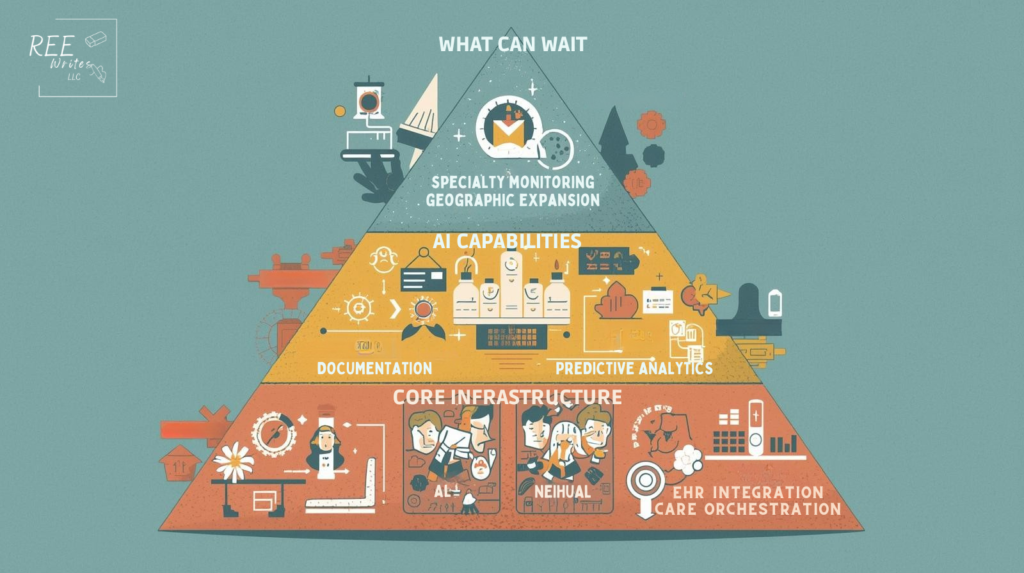
The next 2 years determine everything. You need to build technology that proves value quickly while laying foundation for longer-term expansion. Here’s where to focus your engineering resources and capital.

Core infrastructure that works across reimbursement models

Start with the basics that every home-based care model needs, regardless of how Medicare pays for it.

Remote patient monitoring devices need to integrate seamlessly with your platform. But don’t overbuild here. Start with FDA-cleared devices for vital signs (blood pressure, pulse ox, weight, glucose). Specialty monitoring for rare conditions can wait until you’ve proven your core model works.

Virtual triage and clinical communication platforms matter more than most founders realize. When a patient’s oxygen saturation drops at 3 a.m., someone needs to decide: send an ambulance, dispatch a nurse, or coach the patient through the moment remotely? That decision-making capability is what health systems pay for, not just the device data.

Care orchestration is the unsexy backbone nobody wants to build but everyone needs. Who schedules the nurse visit? Who orders medical supplies? Who coordinates with the patient’s primary care doctor? These back-office functions represent over half of the $1 trillion in annual U.S. healthcare waste. Automating them creates immediate ROI.

EHR integration isn’t optional. Payers demand it. Health systems require it. Your platform needs to pull patient data from Epic, Cerner, and other major EHRs, then push back visit notes, monitoring data, and care plans. Budget 20 to 30% of your engineering resources just for integration work.

Where to invest in AI right now

Source: Health Care Code

Ambient clinical intelligence (ACI) has reached near-universal adoption: 92% of health systems are piloting or deploying AI scribes. These tools improve documentation accuracy, leading to 10 to 15% revenue capture improvement through better coding and billing.

For hospital-at-home programs, this matters enormously. Nurses and paramedics doing home visits often struggle with documentation. They’re managing complex patients in unpredictable environments. AI that turns their verbal notes into structured clinical documentation saves 30 to 45 minutes per visit.

Predictive analytics should focus on preventing acute episodes that require hospitalization. Machine learning models can analyze vital sign trends, medication adherence patterns, and social determinants data to flag patients at risk of decompensation. One health system using predictive monitoring reduced readmissions by 23% in their hospital-at-home cohort—that’s the difference between a margin-positive program and one that loses money on every patient.

Don’t sleep on care coordination automation. If family caregivers spend 15-20 hours per week on caregiving tasks (as CareYaya Health Technologies data shows), your AI should reduce that burden. Automated medication reminders, appointment scheduling, and supply ordering aren’t flashy features, but they’re what caregivers desperately need.

The unsexy AI that saves money: Back-office automation in revenue cycle management, prior authorization, and claims integrity. These AI applications can reach 70-80% profit margins and generate $500K-$1M in annual recurring revenue per full-time employee. That cash flow funds your clinical AI development.

The Margin Math That Actually Matters
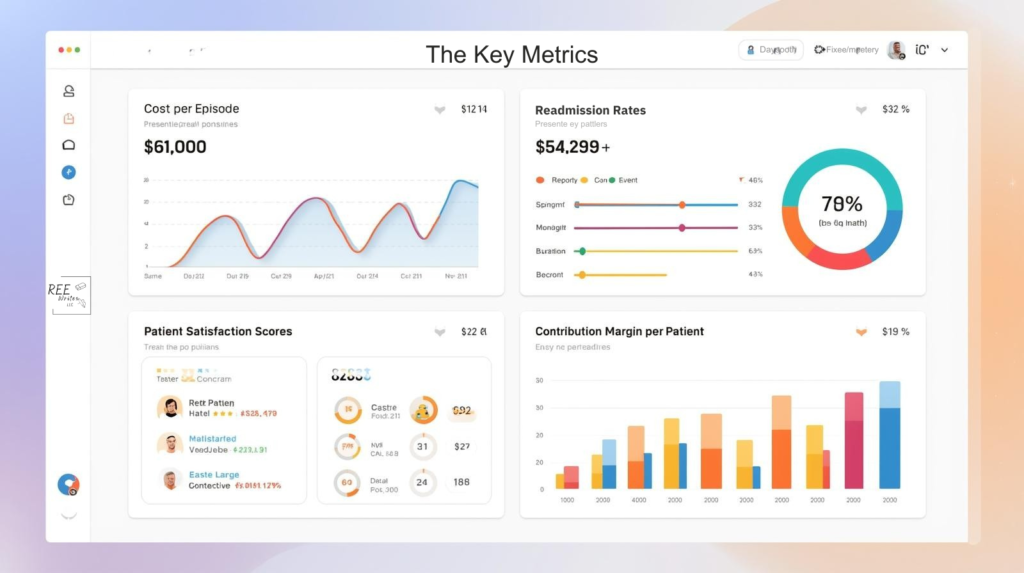
Most hospital-at-home programs lose money. Your technology needs to change that equation, or you don’t have a sustainable business.

Why most hospital-at-home programs lose money

Medicare pays $1,000 to $1,500 per day for hospital-at-home. Most programs spend $1,200 to $1,600 per patient daily on nurse visits, supplies, coordination, and tech. They’re underwater from Day 1.

The hidden costs kill you. Logistics and care orchestration require significant labor. Someone schedules visits, manages the supply chain, and coordinates with the patient’s other providers. Traditional staffing models don’t scale—you can’t apply facility-based nursing ratios to home care and expect it to work economically.

Technology that creates work instead of reducing it makes the problem worse. I’ve seen hospital-at-home platforms that require nurses to log into five different systems per visit. The documentation burden exceeds what they’d do in a hospital setting.

How AI makes care at home programs profitable

Revenue cycle optimization through better documentation can improve revenue capture by 10-15%. When a nurse describes a patient’s condition verbally and AI generates accurate, complete clinical notes with proper billing codes, you get paid more for the same work.

Source: MDhelpTEK

Reduced readmissions drive CMS quality bonuses. The hospital-at-home model already shows lower readmission rates than traditional acute care—adding predictive monitoring amplifies that advantage. Every readmission you prevent saves $10,000 to $15,000 in costs and protects against CMS penalties.

Labor cost reduction matters most. AI triage can cut nurse workload by 40%+ in pilot programs. Instead of nurses manually reviewing monitoring data for every patient, AI flags only the patients who need clinical attention. A nurse who previously managed 5-6 hospital-at-home patients can now manage 8 to 10.

The “unsexy” AI that CFOs love but VCs overlook: billing, coding, claims integrity. Administrative AI can reduce operational costs by 30-40%. That’s real margin improvement hitting your income statement immediately.

Proving ROI to your board in the next 6 months

Source: ScribeMD

Your board doesn’t care about utilization growth if you’re losing money on every patient. They care about these metrics:

  • Cost per episode: What does it actually cost you to manage one hospital-at-home patient from admission to discharge? Track this ruthlessly. Break it down by component: labor, supplies, technology, overhead.
  • Readmission rates: Hospital-at-home programs typically achieve 8 to 12% 30-day readmission rates versus 15 to 18% for traditional hospital care. If your program doesn’t beat facility-based benchmarks, you have a quality problem.
  • Patient satisfaction: CMS increasingly ties reimbursement to patient experience scores. Hospital-at-home programs score 15-20 points higher on patient satisfaction versus facility care. That’s your competitive advantage.

Structure pilot programs that generate defensible data. Work with 2 to 3 health systems willing to share financial and outcomes data transparently. You need to prove your technology improves margins, not just clinical outcomes.

The difference between utilization metrics and profitability metrics: lots of patients using your platform means nothing if each one loses money. Focus on contribution margin per patient. When does that number go positive? What’s the path to 40 to 50% gross margins?

The 3 to 5 Year Platform Expansion Strategy

Once you’ve proven your core model works and generates positive margins, you can think bigger. The next phase is about expanding beyond your initial use case.

From point solution to platform

Bessemer’s State of Health AI report describes “supernova” companies that achieve 6-10x growth trajectories by expanding from single point solutions into comprehensive platforms. Ambient scribes became full clinical documentation suites. Prior authorization tools became complete utilization management platforms.

The pattern:

  1. Start with a painful, well-defined problem.
  2. Solve it better than anyone else.
  3. Expand into adjacent workflows that touch the same users.

For hospital-at-home technology, that might mean starting with post-surgical patients recovering at home. Prove you can manage that population safely and profitably. Then expand to heart failure management, COPD exacerbations, cellulitis treatment, chemotherapy administration.

Each expansion requires clinical validation and new reimbursement navigation. But your core technology infrastructure of monitoring, triage, care coordination, documentation stays largely the same.

Value-based care integration timeline

Source: Activated Insights

Hospital-at-home is a wedge into value-based care contracts, not just fee-for-service reimbursement. Accountable Care Organizations (ACOs) and Medicare Advantage plans care deeply about reducing avoidable hospitalizations. If your platform keeps patients out of expensive facility-based care, ACOs will pay for it.

But commercial adoption lags Medicare by 18 to 24 months historically. Don’t expect widespread MA plan adoption until 2027 to 2028, even with favorable hospital-at-home policy.

Self-insured employers represent a faster path to commercial revenue. Large employers pay directly for employee healthcare. When they see data showing hospital-at-home reduces costs by 30-40% versus facility admissions, they’ll write checks. Companies like Cubby, who secured $63 million in Series A funding led by Guggenheim Partners, are targeting this employer market specifically for in-home care solutions.

To position for risk-bearing contracts in years 3 to 5, you need data infrastructure now. Start collecting outcomes data, cost data, and patient experience data from day one. Value-based contracts require you to prove your intervention changes total cost of care—not just that patients like your service.

Decision Framework for Health Tech Boards

If you’re a founder presenting hospital-at-home strategy to your board, or a board member evaluating your company’s approach, here are the right questions to ask.

5 questions your board should ask right now

  1. What percentage of our revenue depends on waiver-specific reimbursement? If it’s above 50%, you have concentration risk. Diversify your payer mix and care settings.
  2. If the waiver expires in 5 years, what’s our Plan B business model? You should have a concrete answer. Can you pivot to post-acute care? Palliative care? Chronic disease management? If the answer is “we’re screwed without waivers,” you’re not building a durable company.
  3. Are we building technology that creates value in multiple care settings? The best health tech platforms work across hospital-at-home, skilled nursing, home health, and ambulatory settings. Flexibility equals durability.
  4. How quickly can we prove margin-positive unit economics? If you can’t show positive contribution margin by month 24, extending the timeline to month 36 won’t magically fix the problem. You have a business model issue, not a scale issue.
  5. What’s our competitive moat if 10 other startups get this same 5-year runway? Policy tailwinds create competition. What’s your defensible advantage? Clinical outcomes data? Payer relationships? Technology that’s genuinely better, not just first to market?

Investor perspective on policy-dependent businesses

Source: WallStreetMojo

VCs underwrite regulatory risk by discounting valuations and requiring faster paths to profitability. A pure software company might get 7-10 years to reach profitability. A health tech company with policy dependency gets 3-5 years maximum.

The valuation discount for waiver-dependent revenue can be brutal. Health tech companies trade at 10-20% below cloud software comparables—and that’s before factoring in temporary policy risk.

Some investors love policy tailwinds. They want to ride the wave while it’s building. Others avoid policy-dependent businesses entirely, no matter how attractive the market opportunity looks.

Position your pitch carefully. Are you policy-enabled (taking advantage of favorable reimbursement to scale faster) or policy-dependent (can’t exist without specific waivers)? The former gets funded at reasonable valuations. The latter struggles.

What I Wish Existed When I Was a Caregiver

Let me bring this back to why any of this matters. The technology decisions health tech founders make over the next 24 months will determine what tools families like mine have access to in 2026 and beyond.

The gap between technology capability and real-world reliability

Source: Aptiva Medical

My husband’s Dexcom continuous glucose monitor worked beautifully—when it synced properly. The app sent alerts to my phone whenever his blood sugar went dangerously high or low. That device probably saved his life multiple times.

But it only worked because the technology was reliable:

  • The sensor stayed attached.
  • The Bluetooth connection held.
  • The app didn’t crash.

I’ve seen hospital-at-home platforms that look impressive in demos but break under real caregiver stress. The dashboard shows beautiful data visualizations—but requires three different logins to access. The monitoring devices pair easily in the clinic—but fail when WiFi is weak in rural areas.

Care coordination platforms often assume 24/7 nurse availability. They don’t account for the reality that small hospital-at-home programs can’t staff round-the-clock coverage.

Build for the worst-case scenario, not the ideal one.

Building for the sandwich generation managing multiple conditions

Source: Graying with Grace

My husband had 10 doctors. Ten! A primary care physician, nephrologist, endocrinologist, oncologist, cardiologist, and five other specialists. Your platform needs the capability to handle that complexity.

Nobody coordinated between them. I was the coordination layer. I maintained a spreadsheet with all his medications—drug names, dosages, prescribing doctors, reasons for taking them, refill schedules. The nurses loved my spreadsheet because their systems couldn’t give them the same view.

Insurance coordination created endless frustration. My employer’s insurance was primary while Medicare was secondary. Every billing department called me multiple times to confirm this. I explained the same thing to the hospital billing office, the lab, the imaging center, the pharmacy.

Your hospital-at-home platform should automate this nightmare. Pull medication lists from multiple prescribers. Flag potential drug interactions. Coordinate insurance claims automatically. Don’t make family caregivers become project managers.

Why I care about this 5-year window

Families like mine in 2026 deserve better than what I had in 2016.

The technology exists now, and the clinical models work. The question is implementation and sustainability.

Health tech founders have a moral obligation beyond shareholder returns. Yes, you need to build a profitable business and generate returns for your investors. But you’re also building tools that will serve people during the most vulnerable moments of their lives.

This isn’t about making a quick buck off temporary Medicare waivers then exiting before they expire. It’s about building something that lasts. Something that works. Something that actually helps families manage impossible complexity.

When you’re making technology decisions over the next 24 months, remember: real people will rely on what you build. Build something worthy of that trust.

The Path Forward

The proposed 5-year extension for hospital-at-home waivers isn’t a guarantee. It’s a window.

What you build in the next 24 months determines whether your company survives beyond 2030—regardless of what happens with federal policy.

The smartest founders build technology that creates value across multiple reimbursement scenarios. Focus on margin-positive unit economics. Solve real problems for real families—the kind of problems I faced as a caregiver managing impossible complexity across disconnected systems.

  • Start with the unsexy AI that makes programs profitable: revenue cycle management, clinical documentation, coding accuracy. These aren’t sexy pitch deck slides, but they generate cash flow.
  • Build your minimum viable stack around care orchestration and monitoring that works when human resources are constrained. Health systems can’t hire infinite nurses. Your technology needs to make existing staff dramatically more productive.
  • Structure pilot programs that generate defensible ROI data within 6 months. You need proof points for your next fundraise and for health system expansion.
  • Stress-test your business model. If hospital-at-home waivers expire in 2030, what’s Plan B? If you don’t have a good answer, you’re building on quicksand.

Five years is enough time to build something durable if you start with the right foundation. It’s not nearly enough time if you’re building for a policy moment instead of a market need.

The families who need hospital-at-home can’t wait for perfect policy clarity. They need technology that works today and keeps working tomorrow. So build for that reality.

Want to discuss your hospital-at-home technology strategy? Connect with me on LinkedIn or explore more health tech analysis at reewrites.com.


References

Bessemer Venture Partners. (2026). State of Health AI 2026. Retrieved from https://www.bvp.com/atlas/state-of-health-ai-2026

Fox, A. (2026). 2026 House spending bill proposes 2-year telehealth and 5-year hospital-at-home waiver extensions. Healthcare IT News. Retrieved from https://www.healthcareitnews.com/news/2026-house-spending-bill-proposes-2-year-telehealth-and-5-year-hospital-home-waiver-extensions

Gardner, S. & Hooper, K. (2026). Health tech panel to reboot after a long break. Politico Pulse. Retrieved from https://www.politico.com/newsletters/politico-pulse/2026/01/21/health-tech-panel-to-reboot-after-a-long-break-00737790

Gonzales, M. (2026). Proposed Funding Package Would Extend Hospital-at-Home Program, Medicare Telehealth Flexibilities. Home Health Care News. Retrieved from https://homehealthcarenews.com/2026/01/proposed-funding-package-would-extend-hospital-at-home-program-medicare-telehealth-flexibilities/

Stock Titan. (2026). Cubby secures $63 million in Series A funding round led by Growth. Retrieved from https://www.stocktitan.net/news/GS/cubby-secures-63-million-in-series-a-funding-round-led-by-growth-ikgye2ab40md.html

Zanchi, M. G. (2026). AI Journal. The “unsexy” revolution within healthcare AI. Retrieved from https://aijourn.com/the-unsexy-revolution-within-healthcare-ai/


How to Implement AI in Clinical Practice 

How to Implement AI in Clinical Practice 

AI Health Tech

From technical hurdles to ethical dilemmas, healthcare providers face numerous obstacles using AI in healthcare–in particular, how to implement AI in clinical practice. A 2023 survey by the American Medical Association found that 93% of doctors believe AI can improve patient care, but only 38% feel prepared to use it in their practice

In this article, we’ll discuss the obstacles and potential solutions to implementing AI in healthcare and integrating AI into an existing health system.

Contents

Challenges with Implementing AI in Healthcare

Nursing colleagues in hall

High integration costs

Implementing AI in healthcare is expensive. It takes a significant investment to buy the systems, manage data, and train staff:

  • High Initial Investment for AI Implementation: The cost of acquiring and implementing AI systems can be prohibitive for many healthcare providers. These costs include computers, data storage, and patient data security.
  • Ongoing Costs for Maintenance and Upgrades: AI systems require continuous maintenance and updates, adding to the overall cost.
  • Balancing AI Spending with Other Healthcare Priorities: Healthcare providers must balance AI investments with other critical healthcare needs.

To make a new system implementation work requires careful planning and teamwork. Help from the government and new ways to pay for it can make AI in healthcare possible (Luong, 2024).

Data quality and availability challenges

Ensuring high-quality data is crucial for effective AI implementation in healthcare. However, several challenges exist:

  • Inconsistent Data Formats Across Healthcare Systems: Different healthcare providers often use various data formats, making it difficult to integrate and analyze data efficiently (Krylov, 2024).
  • Limited Access to Large, Diverse Datasets: AI systems require vast amounts of data to learn and make accurate predictions. However, accessing such datasets can be challenging due to privacy concerns and regulatory restrictions (Johns Hopkins Medicine, 2015).
  • Ensuring Data Accuracy and Completeness: Inaccurate or incomplete data can lead to incorrect diagnoses and treatments, posing significant risks to patient safety (4medica, 2023).

Technical integration hurdles

Nurse charting

Integrating AI into existing healthcare IT infrastructure presents several technical challenges:

  • Compatibility Issues with Existing Healthcare IT Infrastructure: Many healthcare systems are built on legacy technologies that may not be compatible with modern AI solutions.
  • Scalability Concerns for AI Systems: AI systems need to handle large volumes of data and scale efficiently as the amount of data grows.
  • Maintenance and Updates of AI Algorithms: AI algorithms require regular updates to maintain accuracy and adapt to new medical knowledge.

How to address these technical challenges

Here are some ways to overcome these challenges:

  • Developing Standardized Data Formats and APIs: Standardizing data formats and creating APIs can facilitate seamless data exchange between different systems (Krylov, 2024).
  • Implementing Cloud-Based AI Solutions: Cloud-based solutions offer scalability and flexibility, making it easier to manage and update AI systems.
  • Establishing Dedicated AI Support Teams: Having specialized teams to manage and support AI systems can ensure smooth integration and operation.

Following these guidelines will help when it comes to integrating an AI platform in a healthcare system.

Privacy and security concerns

Protecting patient data is paramount when implementing AI in healthcare. Some considerations include:

  • Protecting Patient Data in AI Systems: AI systems must be designed with robust security measures to protect sensitive patient information (Yadav et al., 2023).
  • Compliance with Healthcare Regulations: Ensuring compliance with regulations, like the Health Insurance Portability and Accountability Act (HIPAA) in the U.S., is essential to avoid legal repercussions and maintain patient trust. The U.S. Food & Drug Administration (FDA) focuses on approving AI developers. Europe has made laws and data protection rules for AI use (Murdoch, 2021).
  • Managing Consent for AI Use in Patient Care: Obtaining and managing patient consent for using their data in AI systems is crucial for ethical and legal compliance.

AI and HIPAA Compliance 

security guard - credit card - shield

Balancing data use for AI with patient privacy rights is a key issue.

AI needs lots of data, more than clinical trials usually have. Some areas like eye care do well with this. However, sharing data can risk patient privacy, affecting jobs, insurance, or identity theft. It’s hard to hide patient info completely (Alonso & Siracuse, 2023).

For rare diseases, data from many places is needed. Sharing data can increase privacy risks, like identifying patients from anonymous data. Working with big companies raises concerns about data being used for profit, which can clash with fair data use (Tom et al., 2020).

AI tools that learn over time might accidentally break HIPAA rules. Doctors must understand how AI handles patient data to follow HIPAA rules. They need to know where AI gets its info and how it’s protected. Healthcare workers must use AI responsibly, get patient permission, and be open about using AI in care (Accountable HQ, 2023).

AI in healthcare needs rules that respect patient rights. We should focus on letting patients choose how their info is used. This means asking for permission often, and making it easy for patients to take back their data if they want to. 

We also need better ways to protect patient privacy. Companies holding patient data should use the best safety methods and follow standards. If laws and standards don’t keep up with fast-changing tech like AI, we’ll fall behind in protecting patients’ rights and data (Murdoch, 2021).

When using AI in clinical research, copyright problems can occur because AI uses information from many places to make content. It might use copyrighted content without knowing, causing legal issues. It’s important to make sure AI doesn’t use protected material (Das, 2024).

Scales of justice, book and scroll

We need strong laws and data standards to manage AI use, especially in the field of medicine.  Ethical and legal issues are significant barriers to using AI in healthcare, for example:

  • Addressing Bias in AI Algorithms: AI systems can inherit biases present in training data, leading to unequal treatment outcomes.
  • Establishing Liability in AI-Assisted Decisions: AI and the Internet of Things (IoT) technologies make it hard to decide who’s responsible when things go wrong (Eldadak et al., 2024). We need clear guidelines on who is liable for errors made by AI systems–AI developers, the doctor, or the AI itself (Cestonaro et al., 2023).
  • Creating Transparency in AI Decision-Making Processes: AI systems should be transparent in their decision-making processes to build trust among clinicians and patients.

How to address these ethical concerns

We should think about how these technologies affect patients and what risks they should take. We need to find a balance that protects people without stopping new ideas. Ways to overcome some of these barriers include:

  • Developing AI Ethics Committees in Healthcare Institutions: Ethics committees can oversee AI implementations and ensure they adhere to ethical standards.
  • Creating Clear Guidelines for AI Use in Clinical Settings: Establishing guidelines can help standardize AI use and address ethical and legal concerns.
  • Engaging in Ongoing Dialogue with Legal and Ethical Experts: Continuous engagement with experts can help move through evolving ethical and legal challenges.

Scientists, colleges, healthcare organizations, and regulatory agencies should work together to create standards for naming data, sharing data, and explaining how AI works. They should also make sure AI code and tools are easy to use and share (Wang et al., 2020).

The old ways of dealing with legal problems don’t work well for AI issues. We need a new approach that involves doctors, AI makers, insurance companies, and lawyers working together (Eldadak, et al., 2024).

Resistance to change and adoption

Demo of a CPR mask

Resistance from healthcare professionals can hinder AI adoption for many reasons:

  • Overcoming Clinician Skepticism Towards AI: Educating clinicians about the benefits and limitations of AI can help reduce skepticism.
  • Addressing Fears of AI Replacing Human Roles: Emphasizing AI as a tool to add to, not replace, human roles can alleviate fears.
  • Managing the Learning Curve for New AI Tools: Providing adequate training and support can help clinicians adapt to new AI tools.

AI might not work well with new data in hospitals, which could harm patients. There are many issues with using AI in medicine. These include lack of proof it’s better than old methods, and concerns about who’s at fault for mistakes (Guarda, 2019).

Training and education gaps

Nursing colleagues in hall

Lack of AI literacy among healthcare professionals is a significant barrier:

  • Lack of AI Literacy Among Healthcare Professionals: Many clinicians lack the knowledge and skills to effectively use AI tools.
  • Limited AI-Focused Curricula in Medical Education: Medical schools often do not include comprehensive AI training in their curricula.
  • Keeping Pace with Rapidly Evolving AI Technologies: Continuous education is necessary to keep up with the fast-paced advancements in AI.

How to address these knowledge gaps

We can bridge the knowledge gap by:

  • Integrating AI Training into Medical School Curricula: Incorporating AI education into medical training can prepare future clinicians for AI integration.
  • Offering Continuous Education Programs for Practicing Clinicians: Regular training programs can help practicing clinicians stay updated on AI advancements.
  • Developing User-Friendly AI Interfaces for Clinical Use: Designing intuitive AI tools can make it easier for clinicians to adopt and use them effectively.

Doctor-patient knowledge sharing

Healthcare providers need to understand AI to explain it to patients. They don’t need to be experts, but according to Cascella (n.d.), they should know enough to:

  1. Explain how AI works in simple terms.
  2. Share their experience using AI.
  3. Compare AI’s risks and benefits to human care.
  4. Describe how humans and AI work together.
  5. Explain safety measures, like double-checking AI results.
  6. Discuss how patient information is kept private.

Doctors should take time to explain these things to patients and answer questions. This helps patients make good choices about their care. After talking, doctors should write down what they discussed in the patient’s records and keep any permission forms.

By doing this, doctors make sure patients understand and agree to AI use in their care. Patients should understand how AI might affect their treatment and privacy.

How to Implement AI Platforms in Healthcare

Here are the technical steps that Tateeda (2024) recommends to implement the technical aspects of AI into an existing healthcare system:

  1. Prepare the data: Collect health info like patient records and medical images. Clean it up, remove names, and store it safely following data privacy standards.
  1. Choose your AI model: Choose where AI can help, like disease diagnosis or patient monitoring. Select AI that fits these jobs, like special programs for looking at images or predicting health risks.
  1. Train the AI model: Teach the AI using lots of quality health data. Work with doctors to make sure the AI learns the right things.
  1. Set up and test the model: Integrate AI into the current health system(s). Check it works well by testing it a lot and asking doctors what they think.
  1. Use and monitor: Start using AI in hospitals. Make sure it works within the processes doctors are accustomed to. Keep an eye on how it’s doing and get feedback to continue making it better.

Conclusion

To implement AI in clinical practice with success, we must address data quality, technical integration, privacy, ethics, and education, challenges. Healthcare providers can pave the way for successful AI adoption in clinical practice–the key lies in a multifaceted approach to: 

  • Invest in robust IT infrastructure
  • Foster a culture of continuous learning
  • Maintain open dialogue among all stakeholders. 

As we navigate these hurdles, the healthcare industry moves closer to a future where AI seamlessly enhances clinical practice, ultimately leading to better outcomes for patients and more efficient systems for providers.

References

AI in Healthcare: What it means for HIPAA. (2023). Accountable HQ. Retrieved from  https://www.accountablehq.com/post/ai-and-hipaa

Alonso, A., Siracuse, J. J. (2023). Protecting patient safety and privacy in the era of artificial intelligence. Seminars in Vascular Surgery 36(3):426–9. https://pubmed.ncbi.nlm.nih.gov/37863615/

American Medical Association (AMA). (2023). Physician sentiments around the use of AI in health care: motivations, opportunities, risks, and use cases. AMA Augmented Intelligence Research. Retrieved from https://www.ama-assn.org/system/files/physician-ai-sentiment-report.pdf

Cascella, L. M. (n.d.). Artificial Intelligence and Informed Consent. MedPro Group. Retrieved from https://www.medpro.com/artificial-intelligence-informedconsent

Cestonaro, C., Delicati, A., Marcante, B., Caenazzo, L., & Tozzo, P. (2023). Defining medical liability when artificial intelligence is applied on diagnostic algorithms: A systematic review. Frontiers in Medicine, 10. doi.org/10.3389/fmed.2023.1305756

Das, S. (2024). Embracing the Future: Opportunities and Challenges of AI integration in Healthcare. The Association of Clinical Research Professionals (ACRP). Clinical Researcher, 38(1). Retrieved from https://acrpnet.org/2024/02/16/embracing-the-future-opportunities-and-challenges-of-ai-integration-in-healthcare

Data Quality Issues in Healthcare: Understanding the Importance and Solutions. (2024). 4Medica. Retrieved from https://www.4medica.com/data-quality-issues-in-healthcare/

Definition of Limited Data Set. (2015). Johns Hopkins Medicine. Retrieved from  https://www.hopkinsmedicine.org/institutional-review-board/hipaa-research/limited-data-set

Eldakak, A., Alremeithi, A., Dahiyat, E., Mohamed, H., & Abdulrahim Abdulla, M. I. (2024). Civil liability for the actions of autonomous AI in healthcare: An invitation to further contemplation. Humanities and Social Sciences Communications, 11(1), 1-8. doi.org/10.1057/s41599-024-02806-y

Guarda, P. (2019.) ‘Ok Google, am I sick?’: artificial intelligence, e-health, and data protection regulation. BioLaw Journal (Rivista di BioDiritto) (1):359–75. https://teseo.unitn.it/biolaw/article/view/1336

Krylov, A. (2024). The Value and Importance of Data Quality in Healthcare. Kodjin. Retrieved from https://www.kodjin.com/blog/the-value-and-importance-of-data-quality-in-healthcare

Luong, K. (2024). Challenges of AI Integration in Healthcare. Ominext. Retrieved from https://www.ominext.com/en/blog/challenges-of-ai-integration-in-healthcare

Mittermaier, M., Raza, M. M., & Kvedar, J. C. (2023). Bias in AI-based models for medical applications: challenges and mitigation strategies. Npj Digital Medicine, 6(113). doi.org/10.1038/s41746-023-00858-z

Murdoch, B. (2021). Privacy and artificial intelligence: challenges for protecting health information in a new era. BMC Med Ethics 22(1):1–5.

Top 5 Use Case of AI in Healthcare: Implementation Strategies and Future Trends. (2024). Tateeda. Retrieved from https://tateeda.com/blog/ai-in-healthcare-use-cases

Tom, E., Keane, P. A., Blazes, M., Pasquale, L. R., Chiang, M. F., Lee, A. Y., et al. (2020). Protecting Data Privacy in the Age of AI-Enabled Ophthalmology. Transl Vis Sci Technol 9(2):36–6. doi.org/10.1167/tvst.9.2.36

Wang, S. Y., Pershing, S., & Lee, A. Y. (2020). Big Data Requirements for Artificial Intelligence. Current Opinion in Ophthalmology, 31(5), 318. doi.org/10.1097/ICU.0000000000000676

Yadav, N., Pandey, S., Gupta, A., Dudani, P., Gupta, S., & Rangarajan, K. (2023). Data Privacy in Healthcare: In the Era of Artificial Intelligence. Indian Dermatology Online Journal, 14(6), 788-792. doi.org/10.4103/idoj.idoj_543_23

AI-Enhanced EHR Systems: Electronic Health Records with Intelligent Technology

AI-Enhanced EHR Systems: Electronic Health Records with Intelligent Technology

AI Health Tech Med Tech

Electronic Health Records (EHRs) have become an integral part of modern healthcare. But what happens when we combine these digital records with the power of artificial intelligence (AI)? 

The result is AI-enhanced EHR systems, a game-changing technology that’s reshaping how we approach patient care, data management, and clinical decision-making. Let’s review AI-enhanced EHRs, their benefits, key features, challenges, and considerations for this exciting technology. 

Contents

What Are AI-Enhanced EHR Systems?

medical record showing on a tablet

AI-enhanced EHR systems are the next evolution of traditional electronic health records. These intelligent systems use advanced algorithms and machine learning techniques to analyze, interpret, and act on patient data in ways that were previously impossible.

But how exactly do they differ from standard EHRs? Here’s a quick comparison.

Standard EHRsAI-Enhanced EHRs
Store and organize patient dataAnalyze and interpret patient data
Require manual data entry and retrievalAutomate data entry and provide intelligent insights
Offer basic search functionality Use natural language processing (NLP) for advanced queries
Provide static informationOffer predictive analytics and personalized recommendations

AI integration transforms EHRs from passive data repositories into active, intelligent systems that can assist healthcare providers in making more informed decisions and improving patient care.

The healthcare AI market was estimated at $19.27 billion in 2023, and is projected to reach over $209 billion by 2030 (Grand View Research, 2024). The global market for electronic health records is expected to reach nearly $18 billion by 2026 (Yang, 2023).

The need to improve complex and inefficient EHR workflows and get valuable insights from historical patient data drives the demand for AI-powered EHRs (Davenport et al., 2018).

Benefits of AI in EHR Systems

periodic table showing on invisible screen with doctor pointing

The incorporation of AI into EHR systems brings a host of benefits to healthcare organizations, providers, and patients alike. Let’s look at some of the key advantages.

Improved Clinical Decision Support

AI-powered EHRs can analyze large amounts of patient data, medical literature, and clinical guidelines to provide evidence-based recommendations to healthcare providers. This can help clinicians make more accurate diagnoses and develop effective treatment plans. One study shows that AI-enhanced EHRs can provide diagnostic assistance at nearly 99% accuracy.

Enhanced Data Analytics and Insights

By leveraging machine learning algorithms, AI-enhanced EHRs use machine learning to find patterns in patient data that humans might miss. This can lead to early detection of diseases, identification of at-risk patients, and population health management improvements.

Streamlined Workflows and Reduced Administrative Burden

AI can automate many time-consuming tasks, such as data entry, coding, and billing. This allows healthcare professionals to spend more time focusing on patient care and less time on paperwork.

Better Patient Outcomes and Personalized Care

With AI’s ability to process and analyze large datasets, healthcare providers can develop more personalized treatment plans and medication planning based on a patient’s unique genetic makeup, lifestyle factors, and medical history.

Now that we’ve covered the benefits, let’s explore the specific features that make AI-enhanced EHRs so powerful.

Key Features of AI-Enhanced EHRs

Now that we’ve covered the benefits, let’s explore some of the key features that make AI-enhanced EHRs so powerful.

Natural Language Processing for Efficient Data Entry

Natural Language Processing (NLP) allows AI-enhanced EHRs to understand and interpret human language. This means clinicians can dictate notes or enter free-text information, which the system can automatically convert into structured data. This not only saves time but also improves the accuracy of patient records (Harris, 2023).

Predictive Analytics for Early Disease Detection

By analyzing patterns in patient data, AI algorithms can predict the likelihood of certain diseases or complications. This allows healthcare providers to intervene early and potentially prevent serious health issues before they occur.

However, using prediction models in healthcare settings is still challenging. A study found that most predictive models focused on blood clotting issues and sepsis. Common problems with these models include too many alerts, not enough training, and more work for healthcare teams  (Lee et al., 2020). 

Despite these challenges, most studies showed that using predictive models led to better patient outcomes. More research, especially using randomized controlled trials, is needed to make these findings more reliable and widely applicable (Lee et al., 2020).

Automated Coding and Billing

AI can automatically assign appropriate medical codes to diagnoses and procedures, reducing errors and speeding up the billing process. This not only improves efficiency but also helps ensure proper reimbursement for healthcare services.

Intelligent Scheduling and Resource Allocation

AI-enhanced EHRs can optimize appointment scheduling by considering factors such as patient needs, provider availability, and equipment requirements. This leads to better resource utilization and improved patient satisfaction.

The benefits of using AI with EHRs is clear. Now let’s discuss how healthcare organizations can implement this powerful tool in medical settings.

Implementing AI-powered EHR Systems in Healthcare

worker looking at 3 monitors on desk

Implementing AI-enhanced EHRs often requires significant changes to existing healthcare IT infrastructure and workflows, which is a complex but necessary process. However, It’s essential for ensuring seamless data flow, maintaining operational efficiency, and maximizing the benefits of AI in healthcare settings. Here are some key points to consider.

AI-powered EHR Costs

Building a custom EHR system with AI features typically costs around $400,000 to $450,000 (Madden & Bekker). The price depends on several factors, including:

  • How complex the AI functions are
  • The accuracy of the machine learning 
  • The amount of data handled
  • The number of other systems it needs to work with
  • How user-friendly and secure it is
  • Whether special approvals like FDA registration are required
  • Cloud services
  • Support and maintenance

All these elements affect the final price of creating an AI-enhanced EHR system.

AI-powered EHR Implementation Strategies

If you’re considering implementing an AI-enhanced EHR system in your healthcare organization, here are some strategies to keep in mind:

  1. Assess Organizational Readiness: Evaluate your current IT infrastructure, staff capabilities, and organizational culture to determine if you’re ready for an AI-enhanced EHR.
  1. Choose the Right Solution: Research different AI-EHR solutions and select one that aligns with your organization’s needs and goals.
  1. Develop a Phased Implementation Plan: Start with a pilot program and gradually roll out the system across your organization to minimize disruption.
  1. Focus on Training and Change Management: Invest in comprehensive training programs and change management strategies to ensure smooth adoption of the new system.

Methods of Integration with Existing Systems

nurse and doctor pointing at computer

Several methods can be employed to integrate AI-enhanced EHRs with existing healthcare IT infrastructure (Dhaduk, 2024):

  • Enterprise Service Bus (ESB): This method is ideal for integrating multiple applications and systems across the healthcare organization, enabling data exchange and orchestration of complex processes.
  • Point-to-Point Integration (P2P): Suitable for simple and straightforward integrations, such as connecting a medical device directly with an EHR system.
  • API Integration: This involves exposing and consuming APIs to enable data exchange between different systems and applications. It’s particularly useful for integrating modern, cloud-based systems.
  • Robotic Process Automation (RPA): RPA can be used to automate repetitive tasks and processes, particularly with legacy systems that have limited integration capabilities.
  • Integration Platform as a Service (IPaaS): A cloud-based solution that connects different healthcare systems quickly, without local servers.

Best Practices for Successful Integration

To ensure successful integration of AI-enhanced EHRs with existing healthcare IT infrastructure, consider the following best practices:

  1. Conduct a thorough assessment: Before integration, assess your current IT infrastructure, identifying potential compatibility issues and integration points.
  1. Develop a comprehensive integration plan: Create a detailed plan that outlines the integration process, including timelines, resources needed, and potential risks.
  1. Ensure data quality and standardization: Clean and standardize data across all systems to ensure accurate AI analysis and insights (Dhaduk, 2024).
  1. Prioritize security and privacy: Implement robust security measures to protect patient data during and after the integration process (Narayanan, 2023).
  1. Provide adequate training: Offer comprehensive training to healthcare staff on how to use the integrated AI-enhanced EHR system effectively (Narayanan, 2023).
  1. Start with a pilot program: Consider implementing the integration in phases, starting with a pilot program to identify and address any issues before full-scale deployment.
  1. Continuous monitoring and optimization: After integration, continuously monitor system performance and gather feedback from users to optimize the integrated system over time.

By carefully considering these aspects of integration, healthcare organizations can successfully implement AI-enhanced EHR systems that work harmoniously with their existing IT infrastructure, leading to improved patient care, increased operational efficiency, and better overall healthcare outcomes.

Key Concerns for AI-powered EHRs

EHR flatlay with iphone mouse keyboard

While AI-enhanced EHRs offer numerous benefits, they also come with their own set of challenges.

Data Privacy and Security Concerns

With the increased use of AI and data sharing, ensuring patient privacy and data security becomes even more critical.

Many AI technologies are developed by private companies, which means patient health information may be controlled by them. This can lead to problems if the companies don’t protect the data properly.

One big issue is that AI systems often need a lot of patient data to work well. Sometimes, this data might be moved to other countries, or used in ways patients didn’t agree to. There’s also a worry that even if data is made anonymous, new AI tools may figure out who the data belongs to (Murdoch, 2021).

To address these problems, we need strong rules about how companies can use patient data. These rules should make sure that patients have a say in how their information is used and that the data stays in the country where it came from. Companies should also use the latest methods to keep data safe and private.

Challenges of Integration with Existing Healthcare IT Systems

man doing medical coding

System Compatibility and Interoperability: One of the primary challenges is ensuring that the new AI-enhanced EHR system is compatible with existing legacy systems. Many healthcare organizations use a mix of old and new technologies, which can create compatibility issues. Achieving true interoperability between the AI-enhanced EHR and other healthcare IT systems is crucial for seamless data exchange and workflow optimization (Narayanan, 2023).

Data Standardization: Different systems often use varying data formats and standards. Integrating an AI-enhanced EHR requires standardizing data across all systems to ensure accurate analysis and interpretation (Dhaduk, 2024).

Security and Privacy Concerns: Integrating new AI systems with existing infrastructure raises questions about data security and patient privacy. Ensuring HIPAA compliance and protecting sensitive patient information is paramount (Narayanan, 2023).

Training Healthcare Professionals

Staff need to be trained not only on how to use the new systems but also on how to interpret and act on AI-generated insights. However, AI can be hard to understand, and clinicians might not trust it at first.

They’ll need to learn about data analysis and how AI makes decisions. Then they can explain AI-based decisions in a way patients can understand. Overall, medical education will need to change to include both AI skills and traditional medical knowledge (Giordano et.al., 2021).

Ethical Considerations and Bias in AI 

As AI plays a larger role in clinical decision-making, questions arise about accountability and the potential for bias in AI algorithms. This bias can come from the data used to train the models or from how the models work. For example, some datasets mostly include light-skinned people or older patients, which can lead to unfair results. It’s hard to spot these biases in complex AI models. 

Researchers are trying to make AI fairer, but some solutions might actually cause more problems for vulnerable groups. Until better solutions are found, clinicians must watch for situations where a model trained on general data might not work well for their patients (Giordana et al., 2021).

Anantomy scan with goggles stethoscope and notebook

The future of AI-enhanced EHRs is exciting, with several emerging trends on the horizon:

  • Advanced AI Algorithms for Personalized Treatment Plans: As AI technology improves, we can expect even more sophisticated algorithms that can develop highly personalized treatment plans based on a patient’s unique characteristics.
  • Blockchain Technology for Secure Health Data Exchange: Blockchain could provide a secure and transparent way to share health data across different healthcare providers and organizations.
  • AI-Powered Virtual Health Assistants: Virtual assistants powered by AI could help patients navigate their health records, schedule appointments, and even provide basic health advice.

Future EHRs should integrate telehealth technologies and home monitoring devices. These include tools like smart glucometers and even advanced wearables that measure various health metrics. The focus is on patient-centered care and self-management of diseases. Healthcare providers are likely to use a mix of vendor-produced AI capabilities and custom-developed solutions to improve patient care and make their work easier. 

While the shift to smarter EHRs is important, it’s expected to take many years to fully implement. Most healthcare networks can’t start from scratch, so they’ll need to gradually upgrade their existing systems.

It’s important to balance the benefits of AI in healthcare with protecting patient privacy. As AI keeps improving quickly, we need to make sure our laws and regulations keep up to protect people’s information.

Conclusion

AI-enhanced EHR systems will play an increasingly important role in healthcare delivery. By embracing this technology, healthcare organizations can improve patient care, streamline operations, and stay ahead in an ever-evolving healthcare industry.

Are you ready to take your EHR system to the next level with AI? The future of healthcare is here, and it’s intelligent, personalized, and data-driven.

References

Davenport, T.H., Hongsermeier, T.M., & Alba Mc Cord, K. (2018). Using AI to Improve Electronic Health Records. Harvard Business Review. Retrieved from https://hbr.org/2018/12/using-ai-to-improve-electronic-health-records

Dhaduk, H. (2024). A Guide to Modernizing Legacy Systems in Healthcare. SIMFORM. Retrieved from https://www.simform.com/blog/modernizing-legacy-systems-in-healthcare/

Giordano, C., Brennan, M., Mohamed, B., Rashidi P., Modave, F., & Tighe, P. (2021). Accessing Artificial Intelligence for Clinical Decision-Making. Frontiers in Digital Health;3:645232. doi: 10.3389/fdgth.2021.645232. 

Grand View Research. (2024). AI in Healthcare Market Size & Trends. Retrieved from https://www.grandviewresearch.com/industry-analysis/artificial-intelligence-ai-healthcare-market 

Harris, J.E. (2023). An AI-Enhanced Electronic Health Record Could Boost Primary Care Productivity. JAMA. 2023;330(9):801–802. doi:10.1001/jama.2023.14525

Narayanan, B. (2023). Challenges and Opportunities for AI Integration in EHR Systems. iTech. Retrieved from https://itechindia.co/us/blog/challenges-and-opportunities-for-ai-integration-in-ehr-systems/

Lee, T. C., Shah, N.C., Haack, A. & Baxter, S.L.. (2020). Clinical Implementation of Predictive Models Embedded within Electronic Health Record Systems: A Systematic Review. Informatics; 7(3):25. https://doi.org/10.3390/informatics7030025 

Madden, A., & Bekker, A. (n.d.) Artificial Intelligence for EHR: Use Cases, Costs, Challenges. ScienceSoft. Retrieved from https://www.scnsoft.com/healthcare/ehr/artificial-intelligence

Murdoch, B. (2021). Privacy and artificial intelligence: challenges for protecting health information in a new era. BMC Medical Ethics 22, 122. https://doi.org/10.1186/s12910-021-00687-3

Lin, W., Chen, J.S., Chiang, M.F., & Hribar, M.R. (2020). Applications of Artificial Intelligence to Electronic Health Record Data in Ophthalmology. Translational Vision Science & Technology, 27;9(2):13. doi: 10.1167/tvst.9.2.13.

Yang, J. (2023). Market value of electronic health records & clinical workflow in Smart Hospitals, from 2018 to 2026. Statista. Retrieved from https://www.statista.com/statistics/1211885/smart-hospital-market-value-of-electronic-health-record-and-clinical-workflow-forecast/