

Who Shouldn’t Donate Blood, and Why Everyone Should Know Their Blood Type
My late husband with chronic conditions used to receive monthly blood transfusions to manage his chronically low hemoglobin.
Every month, someone’s decision to donate blood gave him a little more time, and I’m grateful for that. But blood donation is NOT for everyone.
My late mother learned this the hard way. She faithfully donated with the American Red Cross every 56 days like clockwork, believing she was doing good. And she was, until her then-undiagnosed congestive heart failure (CHF) made each donation increasingly dangerous. The blood loss depleted her already-compromised system, leaving her exhausted for weeks.
Her doctors eventually told her to stop.
January is National Blood Donor Month
One pint of blood can save up to three lives. The American Red Cross says someone in the U.S. needs blood every 2 seconds, but only 3% of eligible Americans (those without contraindications) donate annually.
Who should NOT donate blood
The FDA and American Red Cross give several contraindications, meaning that if any of the following apply, you should not donate:
- Active heart disease or severe cardiovascular conditions
- Uncontrolled high blood pressure (over 180/100)
- Recent heart attack or stroke
- Severe anemia (hemoglobin below 12.5 g/dL for women, 13.0 g/dL for men)
- Active cancer or recent cancer treatment
- Bleeding disorders or current anticoagulant therapy
- Chronic kidney disease
- Certain autoimmune conditions during flare-ups
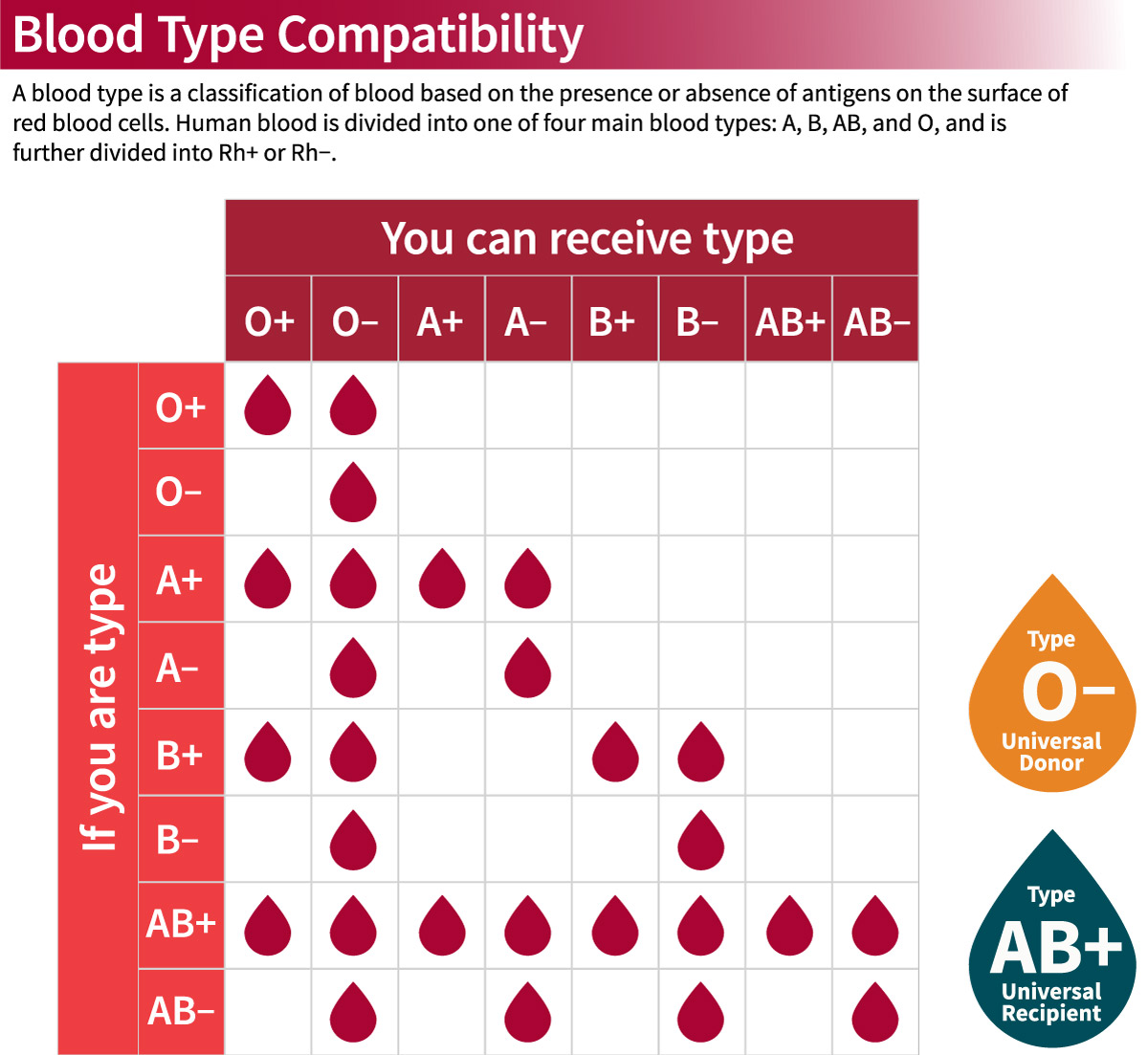
Do you know your blood type?
Only 43% of Americans do, but knowing your blood type can be lifesaving:
- In emergencies: Medical teams can administer compatible blood immediately without waiting for typing tests, which can take 45-60 minutes.
- For rare blood types: If you’re O-negative (universal donor) or AB-positive (universal plasma donor), you’re critically needed. O-negative makes up only 7% of the population but can be given to anyone.
- During pregnancy: Blood type incompatibility between mother and baby can cause serious complications. Knowing your type allows early intervention.
- For chronic conditions: People with sickle cell disease, thalassemia, or other conditions requiring frequent transfusions need closely matched blood to prevent complications
- If you need surgery: Matching blood in advance reduces transfusion reaction risks and speeds emergency response
According to the National Institutes of Health (NIH), patients who receive a transfusion from an incompatible blood type can experience severe reactions, including kidney failure and death.
The Stanford Blood Center reports that having blood typed and screened in advance can reduce emergency transfusion time by up to 30 minutes, which is critical in traumatic or crisis situations.
The Bottom Line
If you’re healthy and eligible, this is your friendly reminder to donate. So many lives depend on this.
If you have cardiovascular issues or other contraindications, prioritize your own health. Other ways to help are by volunteering at blood drives, spreading awareness, and donating money to blood banks.
Regardless of whether you can donate, know your blood type, and the blood type of anyone you care for. It could save your life or help save someone else’s.
Family caregivers face countless decisions about their loved one’s care. My free Family Caregiver Team Blueprint Email Course helps you:
- organize medical information (including blood type)
- coordinate between providers
- advocate effectively
References
- American Red Cross. (n.d.). Requirements by Donation Type. Retrieved from https://www.redcrossblood.org/donate-blood/how-to-donate/eligibility-requirements.html
- U.S. Food and Drug Administration. (2023). Compliance Policy Regarding Blood and Blood Component Donation Suitability, Donor Eligibility and Source Plasma Quarantine Hold Requirements. Retrieved from https://www.fda.gov/regulatory-information/search-fda-guidance-documents/compliance-policy-regarding-blood-and-blood-component-donation-suitability-donor-eligibility-and
- National Heart, Lung, and Blood Institute. (2025). Donate Blood. Save Lives. Retrieved from https://www.nhlbi.nih.gov/education/blood/donation
- Stanford Blood Center. (2024). Blood Type Compatibility. Retrieved from https://stanfordbloodcenter.org/donate-blood/blood-donation-facts/blood-types/